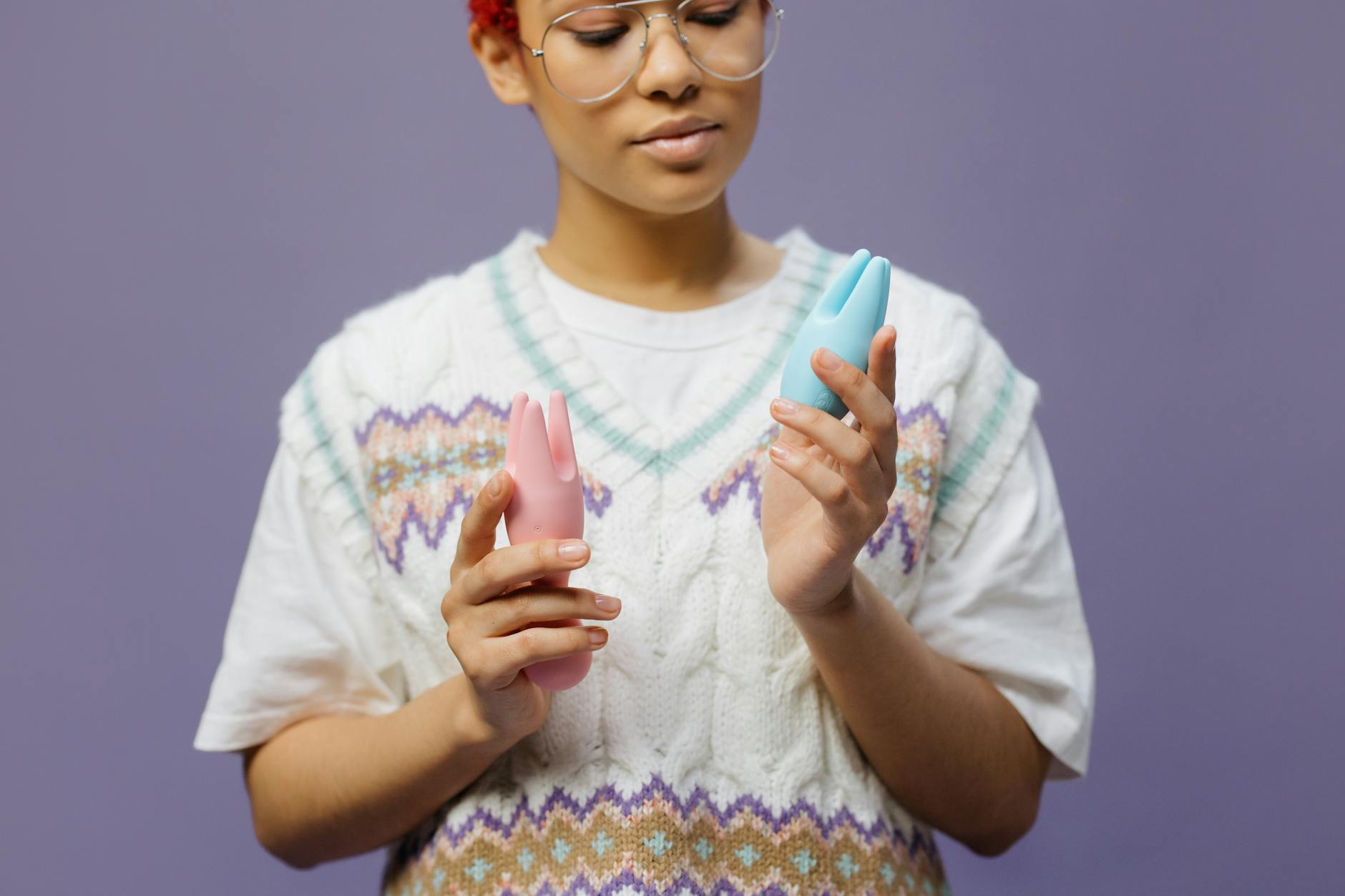
Here's what nobody tells you about hormonal birth control and pleasure
You went on birth control to prevent pregnancy. What nobody mentioned at the appointment was that your orgasms might get quieter, your arousal might feel farther away, and your entire body's response to touch could change. That's not a side effect everyone experiences. But if you're one of the people it does hit, it can feel like someone turned down the volume on pleasure without your consent.
The good news. Reduced sensitivity from hormonal birth control is real, reversible, and there are tools that work specifically well for this problem. Lemon vibrators, with their unique suction-based design, bypass the direct-pressure approach that gets muffled by hormonal shifts. They work with your nervous system instead of against it.
Let me walk you through what's actually happening in your body, and why lemon clitoral vibrators are changing the game for people in this exact situation.
Why hormonal birth control mutes sensation
Hormonal contraceptives work by suppressing ovulation, which means they suppress the hormonal fluctuations that drive the menstrual cycle. That's the point. But here's what gets quieter as a side effect.
Estrogen and testosterone both influence blood flow to the clitoris and labia, tissue sensitivity, and how quickly arousal builds. When those hormones flatten out on birth control, blood flow can decrease slightly, tissues become less engorged, and the nervous system's sensitivity to touch shifts. Your clitoris doesn't become numb. But the signal gets weaker. It's like the difference between someone tapping your shoulder and someone firmly squeezing it. The tap might not register the same way.
Some people also experience a drop in libido itself. This is partly hormonal and partly psychological. Once you realize pleasure feels muted, your brain can start anticipating disappointment, which creates a feedback loop that makes arousal even harder to access.
The clitoris has about 8,000 nerve endings. None of them stop working on birth control. But they do require a different kind of stimulation to fire effectively.
Why lemon vibrators work differently for reduced sensitivity
Most vibrators rely on vibration frequency and direct pressure to trigger sensation. When tissues are less engorged and nerves are less responsive, that approach can feel numb, ineffective, or even irritating.
Lemon clitoral vibrators work through gentle suction and pulsing pressure, which stimulates nerves in a fundamentally different way. Instead of relying on high-frequency vibration to cut through reduced sensitivity, suction creates a pressure change that the body reads very clearly. It's like the difference between a massage and a deep-tissue percussion gun. Both can feel good, but they work through different mechanisms.
Here's why this matters for hormonal birth control users specifically. Suction doesn't require the same level of tissue engagement to be effective. You can have less blood flow, less engorged tissue, and more muted nerve response, and suction still registers strongly. The stimulation works with your body's actual state instead of working against it.
Many people I've spoken with report that lemon vibrators feel "closer to the real thing" than other toys when they're on hormonal contraception. That's likely because suction mimics some of the pressure dynamics of partner sex, which the body recognizes and responds to even when overall sensitivity is dampened.
The practical setup that actually works
Okay, so you've got a lemon vibrator. Here's how to use it in a way that rebuilds sensation instead of frustrating you further.
Start with the gentlest setting. Resist the urge to jump to pattern 3 or 4. The whole point is to re-establish the connection between sensation and pleasure. Pattern 1 or 2 is your baseline. You can always turn it up.
Expect longer warm-up time. When sensitivity is dampened, arousal takes time. Budget 20 to 30 minutes instead of 10. This is a feature, not a bug. Slowing down actually works in your favor because it gives your nervous system time to recalibrate and start registering sensation more clearly.
Add lubrication. Water-based lube isn't just for comfort. It reduces friction, makes the suction sensation cleaner, and helps your body read the stimulation more accurately. This is one of the highest-leverage changes you can make.
Position matters. Experiment with the angle. Suction works best when there's a good seal, which usually means slightly pulling the clitoris away from the body and then creating that pressure wave. Small adjustments in angle can be the difference between "meh" and "oh, there it is."
How to know if birth control is really the culprit
Reduced sensitivity could be birth control. It could also be stress, relationship changes, depression, medication interactions, or something else entirely. Before you decide it's the pill, do a quick audit.
Has your sensitivity shift coincided with starting a new contraceptive method? Has it been consistent for at least a few cycles? Do you feel the dampness elsewhere in your life (like your emotional range feels flatter, or you're less reactive to things that usually excite you)? If the answer to all three is yes, hormonal birth control is likely part of the story.
It's also worth checking in with whether the specific type of contraceptive matters. Some people find that certain pills feel different than others, or that switching from the pill to the ring or patch changes things. That's because different formulations have different hormone dosages and different ratios of estrogen to progestin.
If you suspect your specific birth control is the issue, talk to your doctor or gynecologist before making changes. But in the meantime, lemon clitoral vibrators are a concrete tool you can use right now to reconnect with sensation.
What changes when you stick with it
One thing I've noticed with people using lemon vibrators while on hormonal birth control: sensitivity doesn't just stay flat. It often increases over weeks and months of consistent use.
This happens for a few reasons. First, regular stimulation sends signals to your nervous system that the clitoris matters again. Your brain starts prioritizing blood flow and nerve activation to this area. Second, once you experience pleasure happening, even if it took longer to get there, your body's arousal anticipation changes. You stop bracing for disappointment.
Many people also report that pleasure becomes more about the whole experience rather than just the intensity. When you can't chase the ultra-high-sensation version, you often get better at noticing subtler aspects of pleasure. That's not a consolation prize. That's actually deeper.
Some people, after several months of regular lemon vibrator use, find they want to try other things again (partner sex, fingers, other toys) because the baseline sensitivity has genuinely improved. That said, plenty of people just get attached to how lemon vibrators feel and stick with them. Both are totally valid.
The conversation to have with your doctor
If reduced sensation is significantly affecting your quality of life, you don't have to just live with it. There are options.
You can ask about switching birth control methods or formulations. Some people find that lower-dose pills, different progestin types, or non-hormonal options (like the copper IUD) feel better. That said, non-hormonal doesn't automatically mean sensation returns overnight. It just means you're removing one variable.
You can also ask about adding back some estrogen through topical products if the sensitivity loss is severe. This is an advanced conversation, but it's an option.
What you shouldn't do is just white-knuckle through it or assume pleasure is supposed to feel this way forever. It's worth having the conversation with someone who can look at your full health picture.
In the meantime, a lemon clitoral vibrator is a practical tool that works right now, no appointment needed. It's not a workaround for a broken system. It's a real option that restores access to pleasure while your body and mind are adjusting to hormonal changes.
FAQ
Will using a lemon vibrator on reduced sensitivity from birth control actually help me feel pleasure again?
Yes, but it works differently than it would if sensitivity weren't dampened. Because suction-based stimulation doesn't rely on extreme pressure or vibration frequency to register, it tends to work better when tissues are less engorged and nerves are less reactive. Most people report that lemon vibrators feel more effective than traditional vibrators when they're on hormonal contraception. That said, it's not magic. You still need time, lubrication, and patience.
How long does it take for a lemon vibrator to help restore sensitivity from birth control?
Many people notice a difference within a few weeks of consistent use. That said, some of that initial shift is psychological. Once you experience pleasure that actually registers, your anticipation and arousal baseline often improve quickly. The deeper neurological shift toward increased sensitivity usually takes several months. Consistency matters more than frequency.
Can I use a lemon vibrator while I'm still on hormonal birth control, or do I need to switch first?
You can absolutely use a lemon vibrator while still on birth control. In fact, that's the whole point of this approach. You don't have to choose between contraception and pleasure. The lemon vibrator helps you access sensation even while the hormonal contraceptive is at work. Some people do eventually switch birth control methods for other reasons, but that's a separate decision from whether to use a lemon vibrator.
Is reduced sensitivity from birth control permanent, or will it go away if I stop taking it?
Reduced sensitivity is usually reversible. Once you stop hormonal contraception, hormone levels rebalance and tissue sensitivity often improves within a few weeks to a couple of months. That said, it's not instant. Your body needs time to recalibrate. A lemon vibrator during this adjustment period can help you maintain pleasure access even as your hormones are shifting.
Should I switch to a different lemon vibrator model if sensitivity is dampened, or is there just one type?
Hello Nancy makes different lemon vibrator styles, and they work slightly differently depending on the shape and suction intensity. For people with reduced sensitivity, starting with the standard lemon vibrator design and using the lower intensity patterns is usually the right move. Once sensitivity returns or improves, you might experiment with other options or intensity levels. But generally, a single good lemon clitoral vibrator can handle the whole journey.
Can I combine a lemon vibrator with other techniques to help sensitivity return faster?
Yes. Adding lubrication, extending warm-up time, and using fantasy or partner involvement alongside the vibrator all help. Reducing stress where possible, getting good sleep, and staying hydrated also support better blood flow and nervous system responsiveness. That said, none of those things replace consistent use of the vibrator itself. They just make the whole process work better.
The takeaway
Hormonal birth control gives you real control over your reproductive life. It shouldn't cost you access to pleasure. If reduced sensitivity is part of your birth control experience, it's worth naming, investigating, and addressing with real tools. A lemon vibrator isn't a workaround. It's a genuinely effective option that works with how your body is actually responding right now.
If you want to explore this further or talk through whether a lemon vibrator makes sense for your situation, we're here to help. Reach out anytime at /contact.