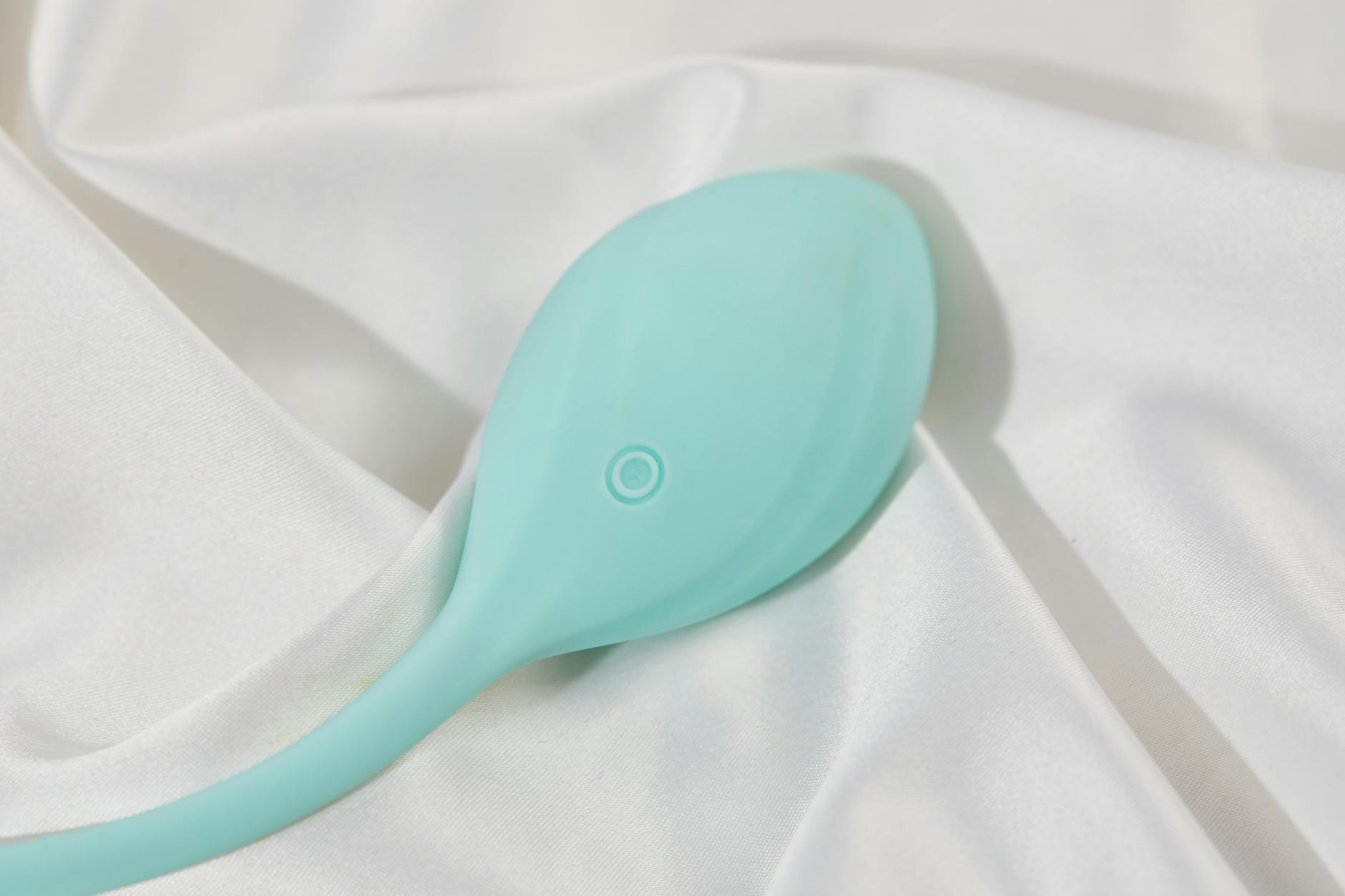
How Lemon Vibrators Work With Thyroid Medication When Libido Drops
Let's be real. Thyroid medication saves your life. It also quietly kills your sex drive.
Millions of people on levothyroxine, synthroid, or other thyroid replacements notice the same thing: desire flattens, sensation dulls, and what used to feel good just feels... muted. Your body temperature regulates, your energy returns, and your libido vanishes into a file marked "solved problems."
The weird part? Your doctor probably didn't mention this could happen. Thyroid hormones regulate metabolism, yes, but they also affect dopamine, blood flow, and how sensitive your nerve endings are. When you're replacing thyroid hormone to hit a target TSH number, you're not always hitting the sweet spot for pleasure.
Here's what I've seen work in my practice with couples navigating this exact friction: air-suction clitoral vibrators like the Lem restore sensation in ways that traditional vibrators can't. I'll explain why, and what you actually need to know to make it work.
Why thyroid medication flattens desire
Thyroid hormone doesn't just regulate your metabolism. It's wired into the same neural pathways that fire up arousal. When thyroid levels drop (hypothyroidism), you feel cold, sluggish, and disinterested in sex. When you start replacement therapy, those symptoms usually resolve.
But here's the catch. Many people end up on a dose that's therapeutically "correct" by blood work standards but physiologically off for their individual baseline. Your TSH might be 1.5, which looks perfect on paper. Your libido might still be in the basement.
Thyroid medication also affects dopamine availability in the brain. Dopamine is the primary neurotransmitter for sexual desire. When thyroid function is out of range, dopamine production stutters. Fixing the thyroid usually helps, but if your dose overshoots or if your individual sensitivity is high, dopamine can stay suppressed even after your numbers normalize.
On top of that, thyroid hormones regulate blood flow. Clitoral arousal depends on blood engorgement. Reduced blood flow means slower, shallower arousal, even when desire is technically present.
The sensation dulling that nobody warns you about
One of the most common complaints I hear from people on thyroid medication is this: "I don't feel numb, exactly. It just takes forever to get there, and it's not as sharp." That's not psychological. It's physiological.
Thyroid hormone affects nerve sensitivity. Lower thyroid activity means less nerve transmission. You're not broken. Your clitoris isn't less responsive. The signal is just taking longer to travel.
This is where traditional vibrators stop working well. A basic bullet or wand relies on direct friction. If sensation is already muted, adding more friction just feels blunt. You end up turning the intensity up higher, which can numb you further and leave you feeling more frustrated than when you started.
A suction-based clitoral vibrator like the Lem works differently. Instead of vibration or friction, it uses gentle pulses of suction and release. This stimulates the entire clitoral complex, not just the external tip. It's gentler on desensitized tissue and often requires less intensity to create strong sensation.
How air-suction vibrators bypass the medication problem
The beauty of suction-based clitoral vibrators is that they don't rely on high-frequency vibration to trigger nerve endings. They work by creating rhythmic pressure changes. This activates a broader network of nerve pathways than traditional vibrators do.
For people on thyroid medication whose sensation is dulled, this matters enormously. You're not asking your nerves to transmit a super-high-frequency signal. You're asking them to register a change in pressure. That's a lower threshold. It's easier for a medicated body to feel.
Think of it like the difference between hearing someone whisper from across a room (high-frequency, needs sharp hearing) versus feeling a gentle tap on your shoulder (pressure change, harder to miss). The suction mechanism is the tap.
A lemon vibrator's design also means you can start at a lower setting and still get real sensation. Many people report that they can achieve orgasm on settings 1 or 2, where they'd need setting 5 or 6 on a traditional vibrator. That lower intensity means less numbness buildup over time.
The timeline: when to expect sensation to return
If you've just started thyroid medication or recently had your dose adjusted, your sex drive might rebound on its own within 4 to 12 weeks as your body rebalances. This isn't guaranteed, but it's common enough that it's worth waiting for.
If you're already six months stable on your current dose and sensation is still flat, the dose is likely your baseline. This is the moment when using a lemon clitoral vibrator becomes genuinely useful. You're not waiting for the problem to fix itself. You're working with your body as it actually is.
One important caveat. If your thyroid medication was recently increased or decreased, or if you're in the middle of finding the right dose, hold off on assuming the sensation dulling is permanent. Thyroid adjustments take 6 to 8 weeks to reach steady state. Give your body that window before investing heavily in workarounds.
How to use the Lem when you're on thyroid meds
Start low. I mean actually start at setting 1, not "setting 1 is too boring so I'll jump to 3." Give yourself 5 to 10 minutes at the lowest setting to let your body register what's happening. Your nerves might need permission to wake up.
Use lube. Water-based lubricant creates a better seal for the suction cup and helps the Lem's mechanism work more efficiently. It's not about your body being dry. It's about optimizing sensation transfer.
Focus on mental quiet. Thyroid medication often comes with anxiety or brain fog, depending on your dose. These are huge libido killers. Before you use any vibrator, spend a few minutes slowing your breath or turning off your phone. Settle your nervous system first.
Try it during a moment when you're not trying to have an orgasm. Pleasure exploration is different from goal-oriented sex. Give yourself permission to just feel what happens when you're not performing for anyone, including yourself.
If you're partnered, this is actually a great time to bring your partner into the experience, not as someone who "has to make it work" but as someone who gets to witness what you're discovering. Shame about medication side effects dies when you're honest about them.
When to loop in your doctor
If your thyroid medication is genuinely crushing your libido and it's not recovering with time, talk to your endocrinologist or GP about dose optimization. The dose that keeps your TSH in range might not be the dose that lets you feel like yourself.
Sometimes a small adjustment fixes it. Sometimes you need to try a different medication formulation. Levothyroxine works for most people, but some bodies respond better to Armour thyroid or combination T4/T3 therapy. This isn't standard, but it's worth asking about if you're stuck.
If a medication-sensitive issue is affecting your relationship, that's also a conversation worth having with your partner. The honest truth "My thyroid meds have made desire harder to access, and I'm trying things to work with that" is fundamentally different from silence. One opens a door. The other one slowly closes it.
The bigger picture: medication, pleasure, and permission
Here's what I see most often in my practice. People go on thyroid medication, their libido drops, they assume that's just the trade-off for feeling healthy. They don't mention it. Their partner doesn't know. They suffer in parallel, which is the loneliest possible way to solve a couples problem.
But libido loss from thyroid medication is solvable. It requires patience, the right tools, and honesty with yourself and anyone you're intimate with. A lemon clitoral vibrator isn't a magic fix. It's a concrete, evidence-based tool that works with your medicated body instead of against it.
You deserve pleasure. Your body deserves pleasure. Thyroid medication doesn't change that. It just changes how you access it.
Frequently asked questions
Can thyroid medication permanently damage your sex drive?
No. Libido loss from thyroid medication is reversible. If sensation remains dulled even after your dose is stable and optimized, the issue is usually related to the dose itself, not permanent nerve damage. Adjusting your medication, exploring new pleasure techniques, and sometimes working with a therapist all help restore desire. The brain's capacity for pleasure doesn't change. Access to it sometimes does.
Should I stop taking thyroid medication to get my libido back?
Absolutely not. Untreated hypothyroidism crashes libido even harder and causes serious health problems. Work with your doctor on dose optimization instead. A small dose adjustment often solves the problem without sacrificing any health benefit.
Do lemon vibrators work better than regular vibrators for people on thyroid meds?
Often, yes. Because thyroid medication dulls sensation, air-suction clitoral vibrators like the Lem that work through pressure changes instead of high-frequency vibration tend to feel more effective at lower intensity settings. Traditional vibrators can work, but many people find they need higher intensities, which can lead to further desensitization over time.
How long does it take for sensation to come back after adjusting thyroid medication?
Usually 4 to 12 weeks for desire and sensation to stabilize after a dose change. Thyroid hormones affect your entire endocrine system, so rebalancing takes time. If sensation hasn't improved after 12 weeks on a new dose, the current dose is likely your baseline, and you'll want to explore either another adjustment or new approaches like air-suction vibrators.
Can I use a lemon vibrator if I'm not sure whether my libido loss is from my thyroid medication?
Yes. Even if you're not sure about the cause, exploring pleasure with a gentler, more sensation-rich tool like the Lem can help you figure out what's actually happening. Sometimes you discover that sensation is there but buried under stress or relationship tension. Sometimes you learn that thyroid medication really is the factor. Either way, you get useful information.
Is there anything else that helps libido alongside thyroid medication?
Yes. Sleep quality, stress management, and regular movement all support thyroid function and libido. Vitamin D deficiency often co-occurs with thyroid issues and crashes desire. Some people find that a small increase in iron intake (if they're deficient) or optimized sleep improves sensation. Work with your doctor on the full picture, not just the medication itself.
The practical next step
If you're on thyroid medication and your libido has flattened, you don't have to accept it as permanent. Start by talking to your doctor about whether your current dose is optimal for you as a whole person, not just your TSH number. Then, if you want to explore pleasure tools designed for medicated bodies, explore them. The Lem and other lemon clitoral vibrators are specifically designed to work with reduced sensation.
Your pleasure matters. Your partner's experience matters. Honesty about what's happening matters most of all. Reach out to Hello Nancy's contact page if you have questions about which tools might work best for your situation.