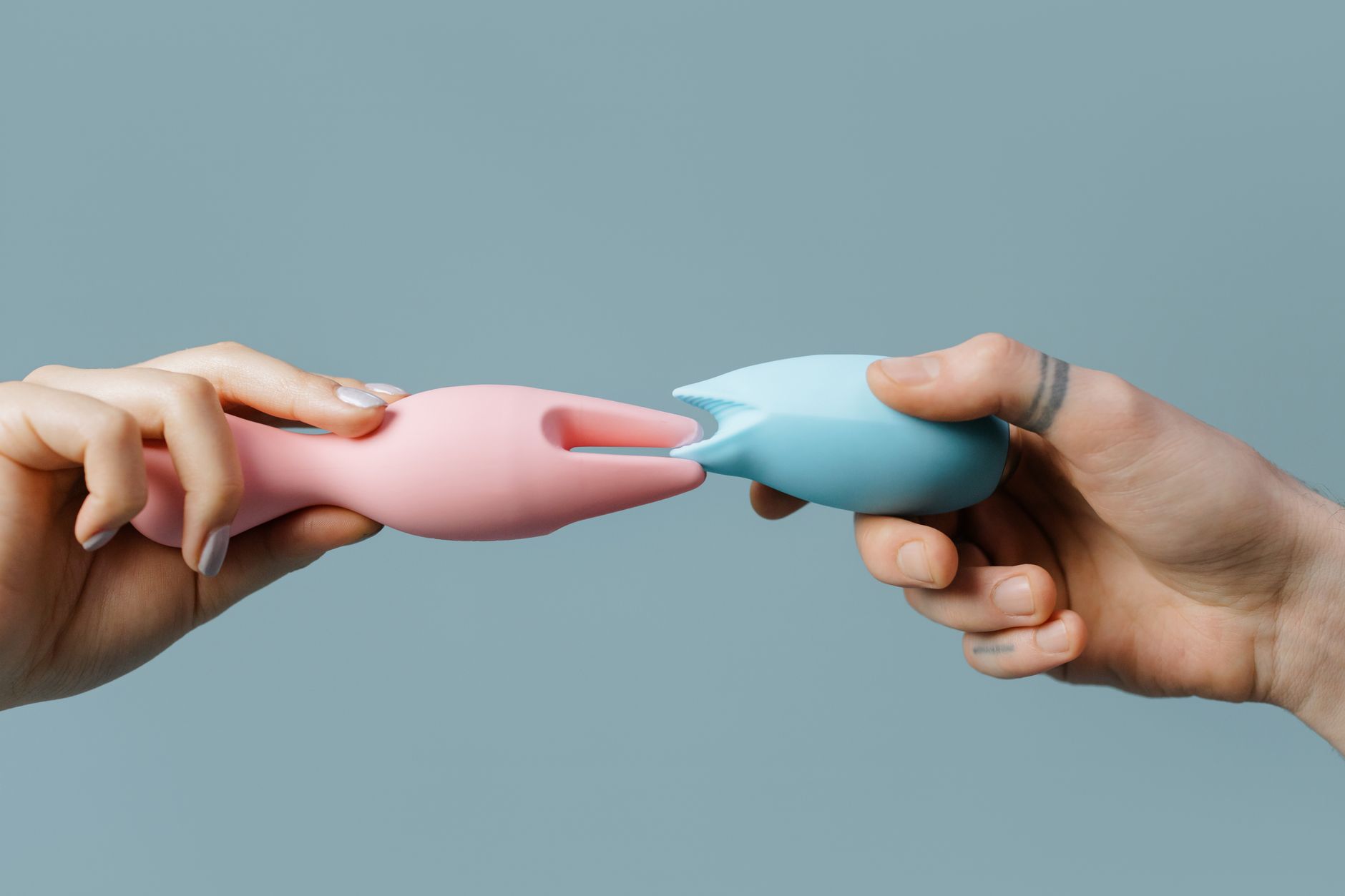
How to Use Lemon Vibrators When Antidepressants Reduce Sexual Sensation
SSRIs flatten arousal and orgasm for many people. Lemon clitoral vibrators work differently than traditional toys to restore sensation and reclaim pleasure while you're on medication.
Your therapist didn't mention it. The pharmacy label definitely didn't. But if you've been on antidepressants for more than a few weeks, you probably know: SSRIs can kill your sexual response. Not metaphorically. The numbness is real. Your brain chemistry is actually different, and that changes how your body responds to touch.
The tricky part is that you need the medication. Depression or anxiety without treatment isn't better. So you're stuck. Or you were stuck, until you realized that certain types of stimulation work where others don't.
SSRIs work by increasing serotonin availability in your brain. That's great for mood. But serotonin also regulates arousal and orgasm. Higher serotonin can mean lower dopamine activity in your pleasure centers. Your genitals might feel less responsive. Orgasm might take twice as long or feel distant and muted. Some people stop having orgasms altogether.
This isn't your imagination. Clinical studies show 40 to 60 percent of people on SSRIs experience some kind of sexual side effect. The effect varies wildly. Some people adjust after a few months. Others never do. The thing nobody tells you is that adjusting your approach to pleasure can help way more than switching medications or waiting it out.
The key is understanding that sensation isn't all or nothing. Your clitoris still has nerve endings. Your brain still responds to stimulation. But the threshold for that response might be higher, and the pathway there might be different.
Traditional vibrators use oscillation. They buzz. For many people on SSRIs, that buzzing feels numb or irritating. The stimulation is there, but it doesn't land where it needs to.
Lemon clitoral vibrators use suction and pulsing instead. The sensation is gentler but also more direct. Rather than vibrating against the tissue, suction stimulates the clitoris from all sides at once. That broader area of stimulation often bypasses the numbness threshold that oscillating toys can't cross.
Think of it like this: if your sensation is turned down to 30 percent volume, a buzz-vibrator is still just buzzing quietly. A suction vibrator actually gathers that reduced sensation and concentrates it. The effect feels less muted because the stimulation is working with your nerve endings differently, not against them.
Be patient. Your body's response has been flattened by medication. That doesn't mean it can't wake back up, but it won't happen overnight.
Start with the lowest setting on your lemon vibrator. Your nervous system is already adjusting to SSRI medication. You don't need to add too much stimulation too fast. Lower intensity actually works better here because it gives your body time to register the sensation without overwhelming the dulled nerves.
Many people report that it takes 10 to 15 minutes before sensation starts building, even with a lemon clitoral vibrator. That's completely normal. Your arousal curve has shifted. It's longer now. Budget the time. Remove the expectation that orgasm will arrive on a schedule.
Antidepressants can also reduce natural lubrication. That's separate from the sensation issue but worth naming because the two together can make penetration feel uncomfortable or pointless.
Even if you're only using a lemon vibrator for external stimulation, add water-based lubricant anyway. Wetness signals arousal to your brain, even if the orgasm feels distant. It creates a feedback loop that helps rebuild sexual confidence when the medication has made you doubt whether pleasure is still possible for you.
Warmup matters too. Spend time with your partner or alone just building sensation. Touch your breasts. Stroke your inner thighs. Read erotica. Watch what you like. The broader your arousal experience, the more your clitoris will respond when you bring the lemon vibrator into the picture.
If you're in a relationship, this conversation needs to happen outside the bedroom. That's nonnegotiable.
Say something like: "The medication I'm on affects how I experience orgasm. It's not about you or our relationship. But I need to explore what works for my body right now. I want to try using a different kind of vibrator to see if that helps." Then actually show them the lemon vibrator. Let them see that it's not some weird divergence from what you do together. It's a tool that helps you access the pleasure that the medication is blocking.
Many partners feel relieved. They've probably noticed the change. They're not sure what to do about it. Giving them a concrete way to help actually strengthens things.
Here's the hardest conversation you need to have with yourself: your orgasm might feel different now. It might be quieter. It might take longer. It might feel more like a release of tension than a fireworks explosion.
That doesn't mean it's not worth having. And it doesn't mean it won't eventually feel fuller and more intense as you adjust to your new baseline.
I've worked with hundreds of people managing this exact situation. The people who do best are the ones who let go of the "before" orgasm. They stop comparing and start exploring. They use lemon vibrators as part of that exploration, not as a way to get back to how things were.
Because here's what usually happens: once you stop chasing the old sensation, the new sensation starts to feel pretty good. Quieter can mean more focused. Slower can mean more sustainable. Different doesn't mean worse.
If sexual side effects are really affecting your quality of life, tell your doctor. They can suggest a few things: timing your dose differently, adding a medication that counteracts sexual side effects, or switching to an antidepressant that's less likely to cause this issue. Not every SSRI affects everyone the same way. Sertraline tends to have more sexual side effects than some alternatives.
But here's what I want you to know before that conversation: using a lemon vibrator isn't a Band-Aid solution while you wait for the perfect medication. It's a legitimate part of reclaiming your sexuality while you manage your mental health. The two things can coexist. You can be on medication that helps your depression and also have a strong, satisfying sex life. They're not mutually exclusive.
Your nervous system has incredible neuroplasticity. That means it can learn and relearn. The numbness from antidepressants isn't permanent, even if it feels permanent right now.
Using a lemon clitoral vibrator regularly actually helps. Each time you use it, you're sending signals to your nervous system that this area is worth paying attention to. Over weeks and months, that attention rebuilds. Sensation increases. The pathway from clitoris to pleasure center in your brain gets stronger.
This is why consistency matters more than intensity. Using your lemon vibrator for 20 minutes twice a week will do more for sensation restoration than using it frantically once a month. You're training your nervous system, not forcing it.
Many people also find that after a few months of regular use, they can achieve orgasm faster and with more intensity. Not always back to their pre-medication baseline, but often better than they expected possible.
Antidepressants save lives. Your mental health matters. But your sexual pleasure also matters, and it's worth protecting and reclaiming even while you're on medication that complicates it.
Lemon vibrators work for this specific challenge because they meet your nervous system where it actually is right now, not where you wish it was. That's the whole point. You deserve sensation. You deserve orgasm. You deserve pleasure that feels good in your body as it actually functions, not as you remember it functioning.
Start low, go slow, be patient with yourself, and reach out to your prescriber if you need to adjust your medication. You don't have to choose between mental health and sexual wellness. You can have both.
Maybe. For some people, sexual side effects disappear within weeks of stopping medication. For others, it takes months. And for some, the numbness persists even after stopping. That's why it's worth addressing it while you're still on the medication rather than waiting. Plus, you might not want to stop the medication. It's helping your depression. Building sensation recovery strategies while medicated means you're not sacrificing either your mental health or your sex life.
Most people can use any vibrator safely with other medications. The one exception is anything involving blood thinners or bleeding disorders, where tissue trauma could be an issue. But SSRIs alone are fine. If you're on multiple psychiatric medications or have other health conditions, mention it to your doctor, but a lemon clitoral vibrator is usually safe. The bigger concern is whether your medications together are creating sensation issues. That's the conversation to have with your prescriber.
That varies widely, but most people notice something within 2 to 4 weeks of regular use. Some feel a shift within days. Others need 8 to 12 weeks. The key is consistency. Using it once every couple weeks won't give your nervous system enough signal to rebuild. Use it at least twice a week. Track what you notice. Small changes in sensation, arousal time, or orgasm intensity all count as progress.
Completely normal on SSRIs. For some people it's even longer. That's not a failure. It's just your body's new timeline. Instead of fighting it, work with it. Set aside that time. Make it part of your routine. The slowness actually lets you explore your own pleasure more deeply. By the time you reach orgasm, you're more present in your body, not just checking a box.
First, give it time. Eight to twelve weeks of consistent use is a fair trial. If orgasm still isn't happening after that, reach out to your prescriber about either adjusting your medication timing or exploring alternatives. Some people genuinely do better on a different antidepressant. But also consider whether you're putting too much pressure on the outcome. Sometimes when you remove the expectation of orgasm and just focus on sensation and pleasure, orgasm shows up as a bonus rather than a goal. If this persists and is affecting your relationship or self-esteem, a sex therapist or relationship counselor can help you work through it.
Absolutely. In fact, having a partner involved can help. They can provide the kind of touch and attention that builds arousal while you use the lemon vibrator. Communication is key though. Let them know what you're experiencing. Tell them what kind of pace, pressure, and rhythm helps. Some couples find that partnered use with a lemon vibrator actually deepens intimacy because it takes away the performance pressure. You're exploring together instead of either person trying to force an outcome.