
Let's start with what's actually happening
One partner reaches arousal in minutes. The other needs thirty. Neither of you is broken. This isn't a desire problem, it's a rhythm problem. And here's the thing that most couples don't realize: a lemon clitoral vibrator doesn't speed anyone up. Instead, it creates a bridge between two different timelines.
I've worked with hundreds of couples where one person feels frustrated by how long their partner takes to warm up, and the other feels pressured by that impatience. The shame builds quietly. Sex becomes transactional. Someone starts pulling away. Then the conversation gets framed as "low libido" or "we're just not compatible anymore." Wrong diagnosis.
Why arousal speed varies so much
Arousal timing isn't about how attracted you are. It's not even primarily about desire. It's physiology mixed with attention and context.
The vulva responds to direct clitoral stimulation faster than internal pleasure does. The penis responds to visual and mental stimulation differently than a vulva does. Hormones, medication, stress, what you ate that day, whether you're thinking about the work email in your inbox all shape how quickly someone's body wakes up. Some of this is hardwired. Some of it shifts month to month.
When one partner naturally reaches arousal quickly and the other doesn't, the typical pattern is that the faster partner finishes first, or they both go through the motions at different internal speeds while pretending to be synchronized. Then resentment sets in. The slower partner feels like an obligation. The faster partner feels rejected or bored.
A lemon sucker changes the dynamic entirely because it hands agency back to the person with the slower arousal curve.
How lemon vibrators actually solve rhythm mismatch
Here's the specific mechanism: when you're using a clitoral vibrator like the Lem, you're building pleasure independently of penetration or internal sensation. That matters hugely for rhythm.
Traditional partnered sex usually goes like this: you both build arousal together, and whoever reaches climax first either has to slow down, stop, or finish alone. It's a compromise. With a lemon clitoral vibrator in the picture, the person who takes longer can receive focused, consistent clitoral stimulation while their partner does whatever feels good to them. Neither of you is waiting. Neither of you is rushing.
The penetrating partner isn't managing someone else's timeline. The receiving partner isn't performing arousal on a deadline. You're both actually present instead of both stuck in a race.
This is especially powerful if you're in a relationship where one partner loves penetration and the other finds it doesn't drive them to orgasm alone. The lemon vibrator handles the clitoral part. Penetration becomes something you both enjoy without it carrying the weight of being the only path to climax.
The conversation that has to happen first
Tool without talk is just a toy. The real work happens in how you frame this.
Don't introduce a vibrator as "we have a problem that needs fixing." That lands as criticism. Instead, approach it as exploration. "I've been thinking about how different our arousal speeds are, and I don't think either of us likes feeling rushed. I found this thing that might let us both slow down and actually enjoy ourselves. Want to try it?"
That framing acknowledges the reality without blame. It signals that you're solving a logistics issue, not diagnosing a sexual dysfunction.
Honestly though, if your partner is uncomfortable with vibrators in general, that's a different conversation. But most resistance isn't about the vibrator itself. It's anxiety about what it means. Does it mean he's not enough? Does it mean she's rejecting me? Those questions need air before anything else happens.
The practical setup that works
Timing matters. If you're trying to synchronize arousal by just adding a lemon vibrator into existing patterns, you'll miss the point.
Instead, slow down the whole process. Start touching each other earlier. The person who usually takes longer doesn't need to rush anymore because the faster partner has something to do that feels good. No waiting. No boredom.
Specific patterns I see work well: the faster-arousing partner can manually stimulate their own body or receive penetrative touch while their partner uses the lemon vibrator. You're both building pleasure on your own timelines but together. Alternatively, the vibrator can be something the penetrating partner uses on the receiving partner while also being inside them. That creates a different sensation entirely than penetration alone.
Start at lower intensities. A lot of couples jump straight to high settings thinking that's what will work fastest. It usually doesn't. Layers of sensation, building gradually, feel richer than blasting straight to intensity. The Lem has multiple patterns and intensity levels specifically because there's no one right speed.
What you're actually building
When rhythm mismatch gets solved, something bigger shifts. You're not just having sex that feels better in the moment. You're rebuilding trust in the structure of your intimacy.
Instead of one person performing arousal and the other managing time, you're both actually exploring what feels good. That creates genuine presence. You're not thinking about timing anymore. You're thinking about sensation, about what you want next, about the person next to you.
Couples who work through this often tell me that their sex life feels more creative after. Not because the vibrator itself is magic, but because you've both given permission for pleasure to happen on its own timeline instead of on a deadline.
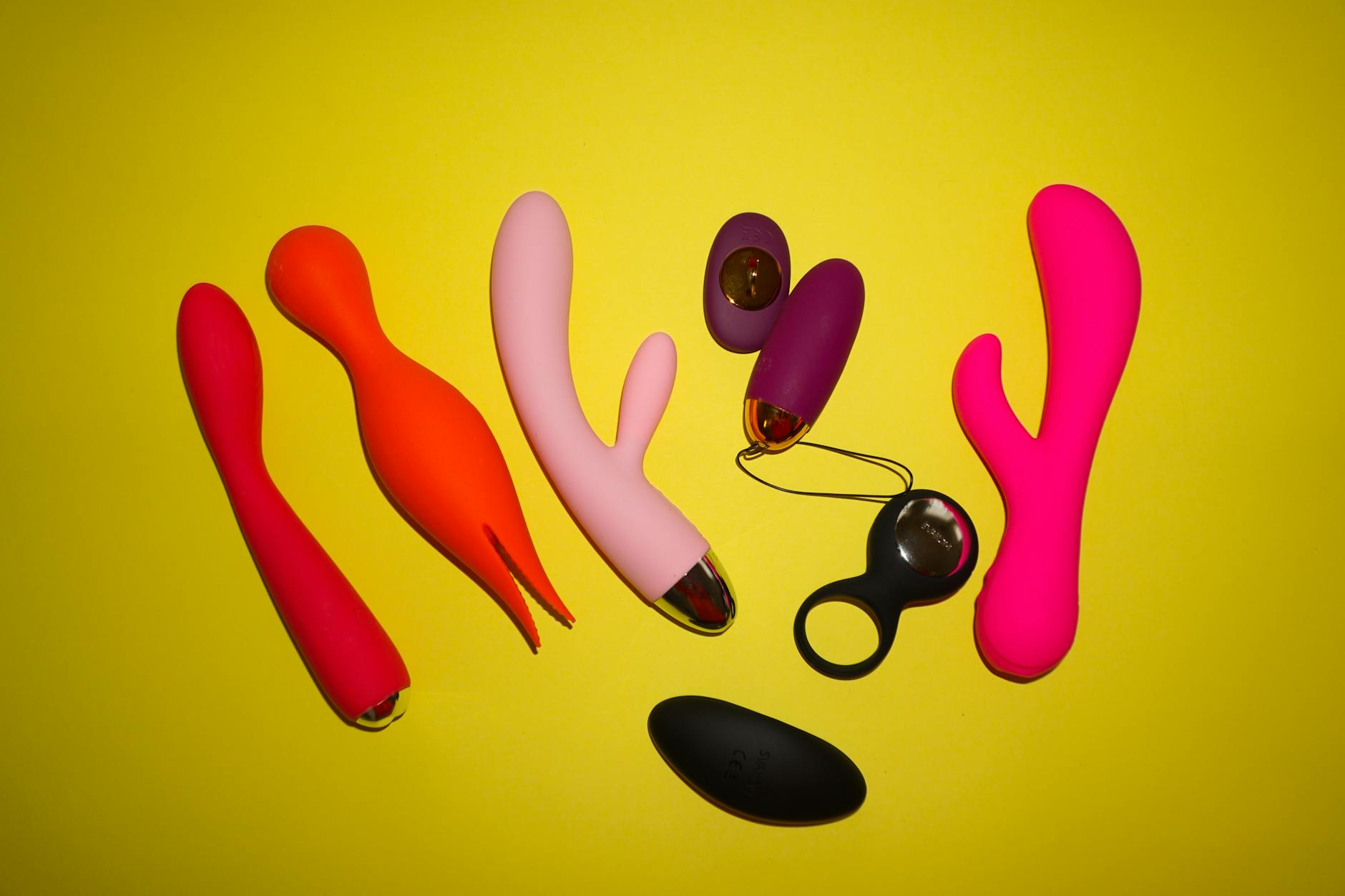
Photo by FounderTips . on Pexels
When to bring it up
Don't introduce the idea during sex when someone's vulnerable. And definitely don't lead with "I think you take too long." That's a fight waiting to happen.
Bring it up in a normal conversation, clothed, at a time when you're both relaxed. Maybe you've read something online. Maybe you're talking about trying something new. The tone should be collaborative, not corrective.
If your partner says no immediately, ask what the resistance is actually about. Sometimes it's about the vibrator. Sometimes it's about feeling inadequate. Sometimes it's worry that you're bored. Those are three different conversations with three different solutions.
The mistakes people make
Mistake one: thinking the vibrator will synchronize you perfectly. It won't, and that's not the goal. The goal is removing pressure from both of you.
Mistake two: using it as a substitute for actual intimacy. A lemon vibrator works because it frees up space for connection, not because it replaces connection. If you're both just zoned out using separate tools, you've missed the point.
Mistake three: avoiding the conversation about speed difference in the first place and just hoping a toy fixes resentment. It doesn't. The resentment stays until you talk about it.
Mistake four: assuming that if your partner resists, they don't find you attractive anymore. Vibrator resistance is almost never about attraction. It's usually about anxiety, shame, or not understanding what it actually does.
A different way to think about this
Most people frame arousal timing as a problem to be solved. I frame it as information about what each of you actually needs to feel good.
Maybe one of you needs longer touch. Maybe one of you needs mental presence and less distraction. Maybe one of you actually does warm up quickly and isn't lying about it. These differences aren't flaws. They're just different nervous systems.
When you use a tool like a lemon vibrator, you're not trying to erase those differences. You're working with them instead of against them. The faster partner isn't slowed down to prove something. The slower partner isn't rushed to fit a timeline. You're both actually building pleasure instead of negotiating it.
That's when sex stops being something you have to coordinate and starts being something you actually enjoy together.
FAQ
Why do partners have such different arousal speeds?
Arousal speed is shaped by neurology, hormones, medications, attention, stress levels, and how much direct clitoral or penile stimulation someone's receiving. It's not about desire. Two people can be deeply attracted to each other and still have completely different warm-up timelines. That's just how bodies work.
Does using a vibrator mean my partner finds me inadequate?
No. A clitoral vibrator is a tool that builds pleasure independently of penetration. Using one doesn't say anything about how attracted your partner is to you. It actually often improves partnered sex because both people are building arousal instead of one person managing time while the other tries to perform.
How do I bring this up without sounding like I'm criticizing my partner's speed?
Frame it as exploration, not correction. "I've been thinking about how we could both feel less rushed and more present" lands very differently than "you take too long." Keep it about logistics, not about inadequacy. The conversation should happen outside the bedroom when you're both relaxed.
Can we use a lemon vibrator during penetration?
Absolutely. Some couples use it during penetrative sex to add clitoral stimulation that penetration alone doesn't provide. Others use it while one partner focuses on manual stimulation or their own pleasure. There's no one right way. Find what feels good to both of you.
What if my partner still resists the idea?
Ask what the actual concern is. Is it feeling inadequate? Is it a general discomfort with vibrators? Is it shame? Those are different problems with different solutions. Pushing usually backfires. Understanding the real concern usually opens up the conversation.
Does a lemon vibrator actually work better than other vibrators for couples?
Lemon clitoral vibrators use air-suction rather than traditional vibration, which many people find more intense and precise. The sensation is different enough that couples who've tried traditional vibrators often notice a real difference. But the actual magic is in removing pressure from both partners, not in the tool itself.
The real shift
When I work with couples who have rhythm mismatch, the thing that changes fastest isn't the physical experience. It's the story they tell themselves about what the difference means.
Instead of "my partner doesn't want me as much," it becomes "my partner and I have different timelines, and that's workable." Instead of shame, there's just logistics. And when you remove the shame, you remove the resentment. Then actual pleasure has space to happen.
A lemon vibrator doesn't create that shift by itself. But it does give you both permission to stop performing synchronization and start actually enjoying yourselves. And that permission is where everything changes.
If you're ready to explore what works for your specific rhythm, we're here to help. Reach out at /contact and let's talk about what might fit your relationship.
Sources
Gottman, J. M., & Silver, N. (2015). The Seven Principles for Making Marriage Work. Harmony.
Perel, E. (2018). The State of Affairs: Rethinking Infidelity. Harper.
Villa, P., & Vigorito, C. (2014). Sexual health in the aging male. Journal of Men's Health, 11(2), 89-96.