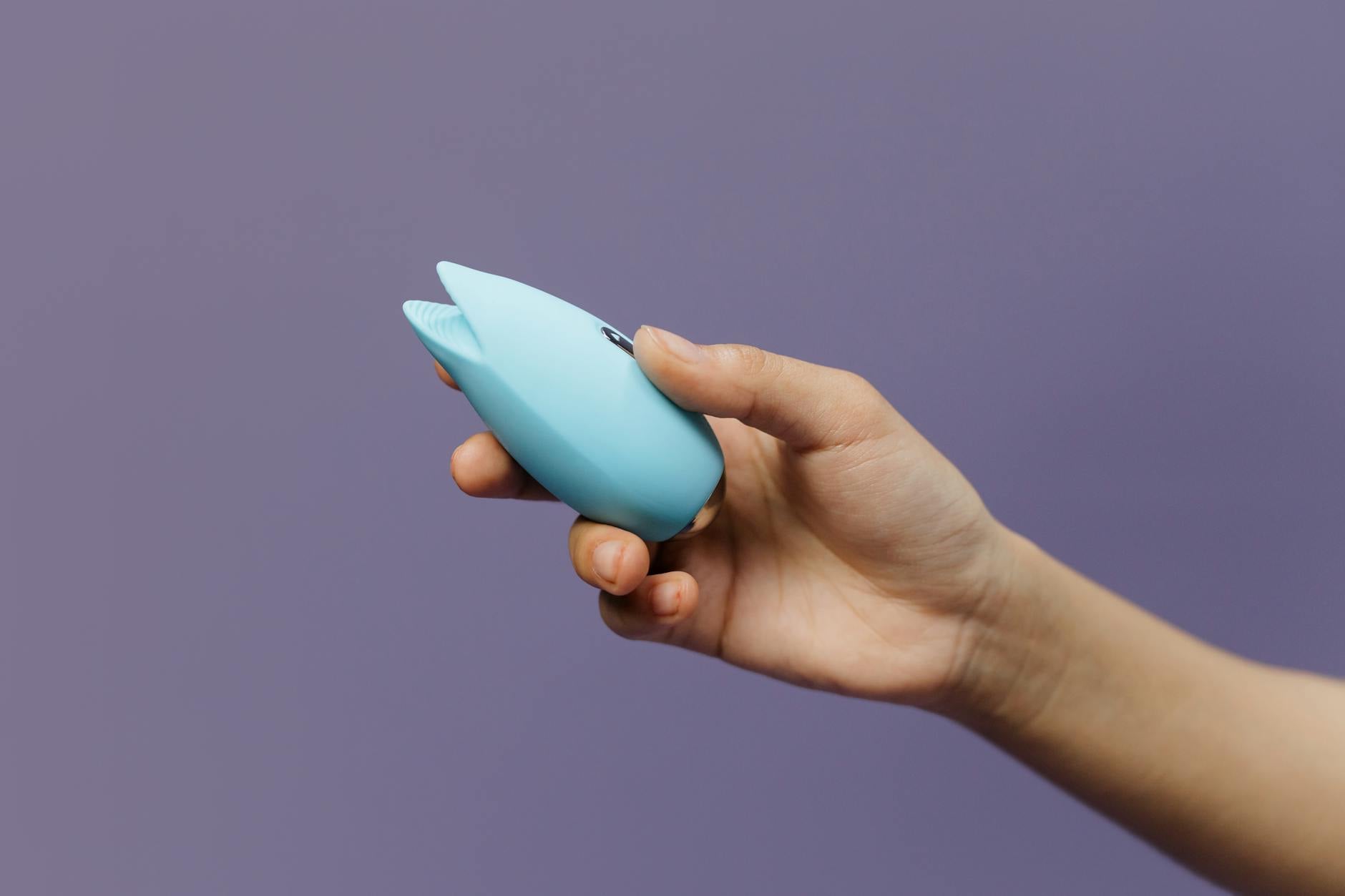
Here's the thing about new relationships and sex toys
You've been seeing each other for a few months. The sex is good, maybe great. But you know yourself, and you know that a clitoral vibrator like a Lemon vibrator would make it even better. And now you're stuck in that specific kind of paralysis: Do I bring it up? When? Will they think I'm saying they're not enough? Will it ruin the vibe?
I'm going to save you some anxiety: introducing lemon clitoral vibrators to a new partner is almost always easier than you imagine. The difficult part isn't the conversation. It's the story you've been telling yourself about what the conversation means.
What the research actually says
A 2021 study in Sexuality & Culture found that couples who introduced toys early reported higher sexual satisfaction overall. Not because the toys were magic, but because the act of talking about desire openly made everything else easier. The conversation itself was the intimacy builder.
Here's the part that surprises people: partners worry far less than you think they will. In my years of couples therapy, I've heard maybe three actual stories of rejection. What I've heard hundreds of times? "I wish we'd talked about it sooner."
The pattern is always the same. One person brings up toys nervously. The other person gets quiet. Then they say something like, "I've actually been thinking about that too." Relief floods both sides.
Why the conversation matters more than the toy
Introducing a lemon adult toy isn't really about the device. It's about saying out loud: "My pleasure matters. I know what I like. I want you to be part of exploring that with me." That's a vulnerable thing to say to someone new, and it deserves respect.
When you frame it that way, the whole dynamic shifts. You're not asking for permission. You're inviting collaboration.
How to actually bring it up (timing and language)
Outside the bedroom, before the next sexual encounter
This is key. Don't spring it mid-foreplay. Pick a moment when you're comfortable but not in the middle of intimacy. Could be over coffee, on the couch after dinner, or even during a text conversation if that feels more natural.
Opening lines that work:
"I've been thinking about something I want to try with you. Not because anything's missing. Just because I know myself, and I want to share more of that with you."
Or: "I'm curious about exploring something together. I'd love to know if you're open to it."
Or, if you're the type to lead with humor: "So I was looking at sex toys, which is terrifying to admit to a new person, but here we are."
The key in each version? You're signaling agency (you know what you want), inclusion (with you), and openness (I want to know if you're interested). All three make a huge difference.
Be specific about what you want
Don't say, "Do you think it would be weird if we used toys?" That puts them in a position to manage your anxiety. Instead: "I love clitoral vibrators. I have this one I've been thinking about bringing into our sex. I want to try it with you."
Specificity feels less scary because it's not abstract. You're not philosophizing about toys in general. You're talking about a specific moment, with a specific device, that you actually want.
What to do if they seem hesitant
Hesitation isn't rejection. Listen for what's actually underneath it. Common concerns sound like:
"Will you still need me?" Translation: This is about anxiety that you'll prefer the toy to them. Reframe: "This is something that helps me feel good. You being here while I use it is what makes it intimate." That's factually true with lemon vibrators. You're creating pleasure together, not separately.
"I don't know if I'd be good at using it." Translation: Performance anxiety. Response: "We'll figure it out together. No rush." Then actually mean it. Let them explore the toy in a low-stakes moment. No pressure, no evaluation.
"I'm not sure how I feel about toys." Translation: They need time. You respond: "That's fair. Think about it. No deadline." Then let it rest. Sometimes partners need to sit with a new idea before they're ready. That's okay.
The first time you introduce the actual device
Don't hand over a lemon clitoral vibrator cold with zero context. Walk them through what you love about it.
"This is a suction-style vibrator. It doesn't vibrate like traditional toys. It's more like a gentle pulse. Let me show you." Then maybe demonstrate on your arm, your hand, somewhere nonsexual so they get the sensation without it feeling like a performance.
Or simply: "When we're intimate, I'd love to use this. You could help, or just be there. Whatever feels natural."
Then, when you actually do use it together, start slow. Maybe it's on a night when you're not particularly expecting orgasm. It's exploratory. You're both learning how it feels, how you interact with it, what the three of you (you, them, and the lemon vibrator) create together.
Managing your own expectations
Here's what happens often: someone finally introduces a toy they love, and the sex doesn't immediately feel transformed. Why? Because now there's new equipment, new sensations, and a slight learning curve. That's not failure. That's normal adjustment.
The first time using a lemon sucker with a partner is rarely the best time. By the third or fourth time, you usually find the rhythm. You know how much pressure feels good. Your partner knows where to position themselves. It becomes seamless.
Give it grace. This is practice, not performance.
Why partners actually love when you bring this up
I'm going to tell you something most partners won't say directly: when you introduce the possibility of sex toys, you're handing them permission to think about pleasure more expansively too. You're saying, "My satisfaction is important enough that I want to talk about it." Many people are waiting for that signal before they admit they want to explore things too.
You might also discover that they've been curious about clitoral vibrators, or want to try something else entirely. The conversation opens the door in both directions.
This is also the moment to create a framework for future conversations. "I'm glad we can talk about this" lands differently when you're calm and things are going well. It sets a tone: in this relationship, desire is not shameful. It's shared. It's collaborative.
If they're genuinely not interested
Sometimes the answer is no. Not "let me think about it." No. That's important information early in a relationship.
You get to decide what that means for you. Some people are fine moving forward without toys. Some people recognize that a fundamental difference in comfort with pleasure exists, and that's a dealbreaker. Both are valid.
But most of the time, the answer is yes, or "let's figure it out." And that's when the real fun starts.
A note on choosing the right toy for shared use
If you're introducing a lemon clitoral vibrator specifically, know that they're designed with external use in mind. That means your partner can easily see what's happening. There's no mystery, no concern about internal sensation or penetration anxiety. It's straightforward pleasure.
The Lem vibrator in particular works beautifully in partnered contexts because the suction sensation is novel for most people. When a partner sees your face, hears your breathing, feels you respond to sensation, it becomes less about the device and more about the intimacy of watching you feel good.
That's a profound shift in how many couples relate to toys. You're not replacing anything. You're expanding the experience.
The conversation will probably be easier than you think
When I work with couples in therapy, the amount of relief that comes after that first "I want to introduce a vibrator" conversation is striking. Not because the sex is suddenly better. Because a door opened. Because they talked about desire without shame. Because they learned their partner is interested in their pleasure.
That is the whole point. The lemon vibrator is just the vehicle.
You know yourself. You know what your body responds to. Bringing that honesty into a new relationship is a gift to both of you. It says, "I trust you enough to tell you what I actually want." That's intimacy before it's even physical.
FAQ: Common questions about introducing toys to new partners
How long into dating should I bring this up?
When it feels relevant. That could be three weeks if things are moving fast sexually. Could be three months if you're taking it slow. The timeline matters less than comfort. When you feel stable enough that rejection wouldn't devastate you, you're probably ready. That's the sweet spot.
What if I've already used lemon vibrators solo, and I'm embarrassed to admit that?
Don't be. Your partner having self-knowledge about pleasure is attractive. "I know I like this" is different from "I need this." Frame it as experience you're bringing to the relationship, not a dependency. "I've tried clitoral vibrators on my own and loved them. I'd love to explore with you" is completely normal to say.
Will they think I'm unsatisfied with them?
Probably not, if you frame it right. "I love our sex. I'm curious about adding something that brings me extra pleasure" and "You're not enough, I need a toy" are wildly different messages. Use the first one. It's true, and it invites them in rather than shutting them out.
What if they want to use a lemon clitoral vibrator on me but I feel awkward?
That's real, and it's common. Your partner touching you while a vibrator is involved can feel more exposed than using it alone. Tell them. "I'm a little shy about this part. Can we start slow?" Most partners will slow down. Some nervousness on your end is normal. Communicate it, and it usually dissolves quickly.
Is there a difference between introducing a vibrator early versus later in a relationship?
Yes and no. Early on, there's less baggage, but also less trust. Later on, there's history, but sometimes patterns are set. I'd say earlier is generally easier because you're both still figuring things out. There's less "this is how we always do it" to work around. But if you're in a long-term relationship, introducing lemon vibrators with a partner you've been with for years follows the same principles.
What do I do if they want to use the vibrator but I don't want them controlling it?
Set that boundary. "I'd love you to watch, but I want to handle this part myself" is completely reasonable. Pleasure doesn't require shared control. Sometimes the turn-on is being present while someone you care about experiences something good. Your partner might actually prefer that anyway.
How do I know if a lemon adult toy is right for my new relationship?
If you already love clitoral vibrators, and your partner is open to exploration, then yes. The real question isn't whether the toy is right. It's whether the conversation feels good between you two. If talking about desire is easy, the toy will be easy. If the conversation feels hard, the toy won't fix that. Start with the conversation.
Introducing lemon clitoral vibrators to a new partner isn't a risk. It's an opening. You're saying: I know myself. I trust you. I want to experience pleasure with you. That's the foundation of good sex, with or without devices. The toy is just the detail.
If you're ready to have the conversation but not sure how to start, or if you want to talk through relationship dynamics around intimacy, reach out. That's what I'm here for.