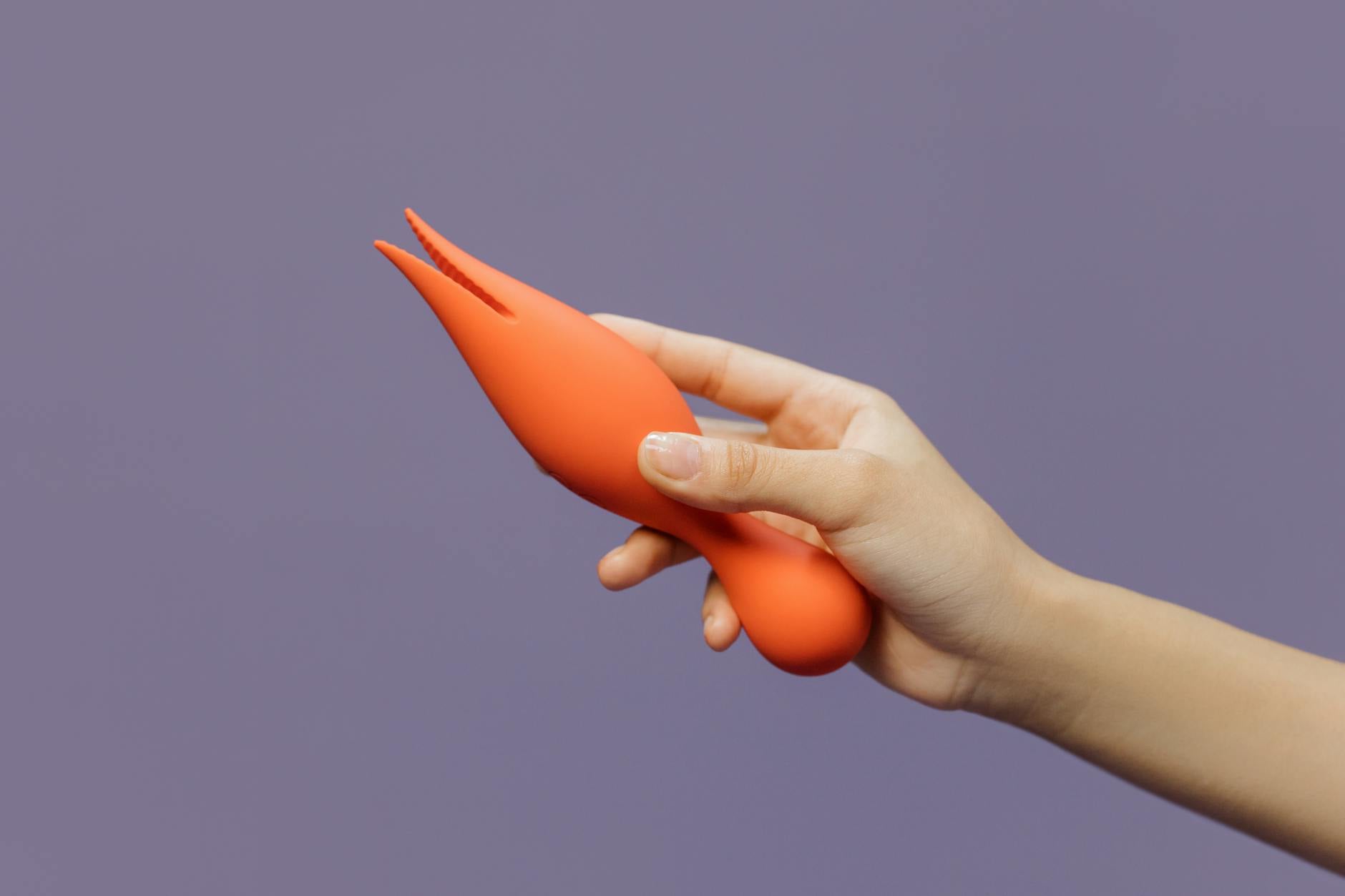
Here's what usually happens
You're thinking about introducing a lemon vibrator into sex with your partner. And then that voice kicks in: "Will they feel like I'm saying they're not enough? Like I need something else because they're not doing it right? What if they think I'm replacing them?"
That anxiety is legitimate. It sits at the intersection of vulnerability, pleasure, and comparison. But here's the thing: the anxiety is almost always bigger than the actual problem.
Why partners actually worry (and what they're really asking)
Let's be real about the subtext. When your partner hears "I want to use a vibrator during sex," what they might be hearing is: "I can't come with you" or "You're not turning me on enough" or "I'm bored."
None of that is what you're saying. But those are the stories people construct when they feel insecure.
Here's what's actually true: about 70% of people with vulvas don't orgasm from penetration alone. That's not a reflection on your partner's skill, effort, or desirability. It's anatomy. Your clitoris is wired to respond to direct stimulation, and most penises or fingers or whatever else isn't positioned to deliver exactly that sensation exactly that way. A lemon clitoral vibrator isn't a replacement for your partner. It's a solution to a mechanical mismatch, not an emotional one.
The difference matters enormously. And your partner needs to understand it from the start.
The reframe that changes everything
Instead of "I want to use a vibrator," try: "I want to be able to come reliably during sex with you, and this is what my body actually needs to get there."
See the shift? You're not critiquing them. You're solving for you. And you're inviting them into the solution.
Most partners, when they understand that, don't feel threatened. They feel relieved. Suddenly they're not carrying the weight of being solely responsible for your pleasure. And actually? That's better sex for everyone.
Start the conversation outside the bedroom. Not in bed, not mid-foreplay, not in a moment of frustration. Pick a calm, clothed moment and say something like: "I've been thinking about ways to make our sex better for me, and I want to talk about it with you because it involves both of us."
Then explain what lemon vibrators do: they use gentle suction and stimulation to deliver clitoral sensation in a way that's hard to replicate with hands or bodies. It's not about intensity. It's about consistency and precision. Your partner's touch is warm and connected. A lemon vibrator is a different tool for a different job.
Why lemon vibrators actually strengthen partnered sex
Three things happen when you stop fighting your body's needs and start working with them.
First: you get more pleasure. This sounds obvious, but it matters. When you're not struggling to come, when you're not faking it or giving up partway through, sex becomes less work and more enjoyment. That shift in your energy, your presence, your responsiveness. Your partner feels that immediately.
Second: the pressure evaporates. Your partner no longer has to be the sole architect of your pleasure. They can focus on what turns them on, what feels good for their body, instead of white-knuckling through trying to make your orgasm happen through sheer effort. That's more authentic sex. More connected sex.
Third: you can use it together. This is the part people don't always realize. A lemon clitoral vibrator isn't a solo prop. You can use it during partnered penetration. You can use it while your partner is inside you. You can use it while they watch, or while they touch the rest of your body, or while they're getting stimulated too. Suddenly you're working as a team toward a shared outcome.
How to introduce it physically (the actual mechanics)
Start slow. The first time you use a lemon vibrator with your partner, don't make it the main event. Introduce it during foreplay, when things are already warm but before either of you is expected to be at peak arousal.
Let them hold it. Let them see how it works. Remove the mystique. It's a tool, not a threat. When they understand the mechanics, it stops feeling like a replacement and starts feeling like a collaborative choice.
Position matters. If you're using it during penetrative sex, you're usually the one holding it. Your partner can feel the vibrations. They can watch your face change. They're still inside you, still connected to you. The vibrator is an addition, not a substitution.
Keep talking. "That feels good." "A little higher." "Slower." Your partner isn't a mind reader, and neither are you. The conversation is part of the intimacy. It says: I trust you enough to tell you what works. That's powerful.
What if they're still resistant
Sometimes you'll do everything right and your partner will still feel weird about it. That's worth taking seriously. But there's a difference between "I need time to adjust" and "I forbid this."
If your partner is genuinely struggling, acknowledge it without surrendering your needs. You might say: "I hear that this feels uncomfortable. I'm not asking you to love it right away. But I am asking you to try it, because my pleasure matters to me, and I think we'll both benefit."
If they're refusing outright, that's information. It might mean they have some deeper insecurity or a different philosophy about sex that you need to explore. It might mean you're not compatible on this dimension. Both of those are worth addressing directly with honesty, maybe with a therapist if the conversation keeps getting stuck.
But "I'm worried you'll feel bad" is not the same as "You're forbidding this." Don't let worry become surrender.
Why this matters beyond the bedroom
Here's something I see in my practice all the time: couples who can talk openly about pleasure have better relationships overall. Not just sex. Actual, real relationships.
When you can say "here's what I need" and your partner can hear it as information instead of criticism, you build trust. You build the ability to be vulnerable. You practice asking for what you want without apologizing for it.
That skill transfers everywhere. To conversations about work stress, to family boundaries, to money, to the small daily choices that make up a life together.
Using a lemon vibrator isn't about the vibrator. It's about building a partnership where both people's needs matter, and you solve problems together instead of suffering alone.
That's the relationship most people actually want. The vibrator is just the practice ground.
FAQ
Will using a vibrator make my partner feel inadequate?
Only if you frame it as criticism. If you say "I need this to come," they might hear "you're not enough." If you say "I need this because my body is wired this way," they can hear the truth. Your body's response to direct clitoral stimulation isn't a reflection on your partner's desirability or skill. It's anatomy.
Can we use a lemon vibrator during penetrative sex?
Absolutely. Many couples do. You can use it on yourself while your partner is inside you, or they can hold it. The vibrations don't interfere with penetration. For many people, clitoral vibration during penetration is the most reliable way to have an orgasm with a partner.
What if my partner wants to use a vibrator on me but I'm not comfortable with that yet?
That's valid information. Start with you controlling it. Let them watch. Let them gradually become more involved. Comfort builds over time. There's no rush. The goal is consent and pleasure, in that order.
Does using a vibrator mean the sex is less intimate?
Not in my experience. What kills intimacy is resentment and unmet needs. What builds it is two people working together to solve a problem. If using a lemon vibrator means you can actually come during sex with your partner, that's more intimate, not less.
How do I bring this up without sounding like I'm criticizing them?
Start outside the bedroom. Frame it as something you want for yourself, not something that's missing in them. Say: "I've learned something about how my body works, and I want to explore it with you." Then listen. Answer their questions. Reassure them. Make it collaborative.
What if we've never talked about pleasure before?
This is actually a good opening. You can say: "I want us to have better sex, and I think that starts with being more honest about what we each need." Then lead with curiosity about them too. What do they want? What would feel good? Make it a mutual conversation, not a one-way ask.
The bottom line
Your pleasure isn't a threat to your relationship. It's a foundation for it. A partner who wants you to feel good, who's willing to try things that help you come, who can separate your body's needs from a personal critique—that's a partner worth keeping.
And if using a lemon vibrator is what it takes to build that conversation? That's exactly what it's for.
If you're still stuck on how to start the conversation, reach out. I'm here to help you think through it.