
Here's the thing about desire and consistency
Desire isn't a tap you turn on and off. It's more like weather. Sometimes it rolls in on schedule. Sometimes it vanishes for weeks. Sometimes it shows up at 3 a.m. when you're stressed about work, or hides completely when you have all the time in the world.
Most people treat this as a personal failure. It's not. It's biology, psychology, and life stage colliding in ways that have nothing to do with whether you're capable of pleasure.
But here's the disconnect: your body and your partner might both be expecting pleasure to work the same way every time. When it doesn't, the whole thing feels broken. That's where lemon clitoral vibrators shift the equation.
Why inconsistent desire feels like a problem in relationships
Let's start with the actual challenge. When you're partnered, there's an implicit agreement that desire shows up roughly when you both want it to. Date nights happen. Intimacy has a rhythm. But the reality is messier.
One person wakes up wanting connection. The other is touched out from work or kids or just their own nervous system being maxed. One person's libido climbs steadily over a decade of partnership. The other's fluctuates with sleep, stress, cycle, medication, age, and things they can't even name.
This mismatch doesn't mean the relationship is dying. It means you're both human, and human desire isn't a synchronized dance. It's two separate systems trying to meet in the middle, and sometimes they do, and sometimes they don't.
The result? Sex becomes something you schedule around or feel guilty about. Pleasure gets tangled up with obligation. And when that happens often enough, desire starts hiding deeper.
How lemon vibrators separate desire from performance
Here's what changes when you bring a lemon clitoral vibrator into the picture. Suddenly, pleasure doesn't have to wait for desire to arrive on cue.
I've worked with hundreds of couples where one partner says, "I want to stay connected to you, but I don't want to have sex right now." That sentence used to feel like a dead end. With a vibrator, it opens a door.
You can be intimate without the pressure of traditional sex. You can explore pleasure without the performance anxiety that comes with trying to meet someone else's timeline. You can practice staying present with sensation even when desire feels distant.
This isn't about replacing sex with a toy. It's about building a third option between "sex" and "nothing." That option looks like fifteen minutes of touch, focus, and a lemon vibrator. No pressure. No goal-setting. Just you and your body, with your partner present if you want them to be.
That consistency of available pleasure actually rewires what happens with desire over time. When you know you can access sensation without waiting for lightning-strike arousal, you stop resisting your own touch. You stop waiting for the "right" moment. You show up more often, and showing up more often is what brings desire back online.
The three situations where this matters most
Situation one: You want intimacy but your libido is running on empty. This happens. Job stress. Parenting small humans. A long illness. Medication side effects. Sometimes desire just doesn't want to cooperate, and that's okay. But you might still want to feel close, connected, turned on. A lemon clitoral vibrator lets you have that without forcing arousal. Start at a lower intensity. Use it without pressure. Let sensation build at its own pace. Often, pleasure arrives even when desire was nowhere to be found.
Situation two: Your partner wants you, but you're not there yet. Instead of watching them get disappointed or initiating sex you're not ready for, you have an alternative. You can say yes to pleasure without saying yes to everything. Use the vibrator with them present. Let them watch. Let them participate in ways that feel good. This is connection without coercion, and it keeps desire from getting poisoned by resentment.
Situation three: You're trying to rebuild desire after months or years of mismatch. This is the longest game. When desire has gone dormant because you've been saying no for too long, you need to reteach your body that pleasure is worth pursuing. Lemon vibrators work here because they're low-stakes and efficient. You're not gambling fifteen minutes on hoping arousal shows up. You're guaranteeing sensation, and then seeing if desire tags along. Over weeks, this builds a new muscle.
How to actually use them when desire is unpredictable
Start without an agenda. I mean that literally. Don't schedule it as "sex time" or "intimacy night." Schedule it as "time to feel good." That language shift matters because it removes the implicit pressure.
When you sit down with a lemon vibrator and nothing specific is expected, your nervous system relaxes. You're not performing. You're not trying to want something. You're just seeing what happens when you pay attention to your body.
Begin at pattern one or two if you're used to the sensation, or start even lower if you're not. The Lemon Clit Suckers clitoral vibrators are designed to build sensation gradually, so you're not getting shocked by intensity. You're easing into pleasure the way your body wants.
If you're partnered, be clear about what you want them to do. Some people want their partner to observe. Some want touch elsewhere on the body. Some want conversation. Some want silence. Spell this out. "I'm going to use my vibrator for twenty minutes. I'd love it if you'd touch my back while I do that." Done. No ambiguity. No fumbling.
Stay with it even if you don't orgasm. That's the shift that matters. Pleasure doesn't end with orgasm. It can, but it doesn't have to. Some of the deepest reconnection happens in the fifteen minutes after intensity peaks, when you're both just present with the sensation.
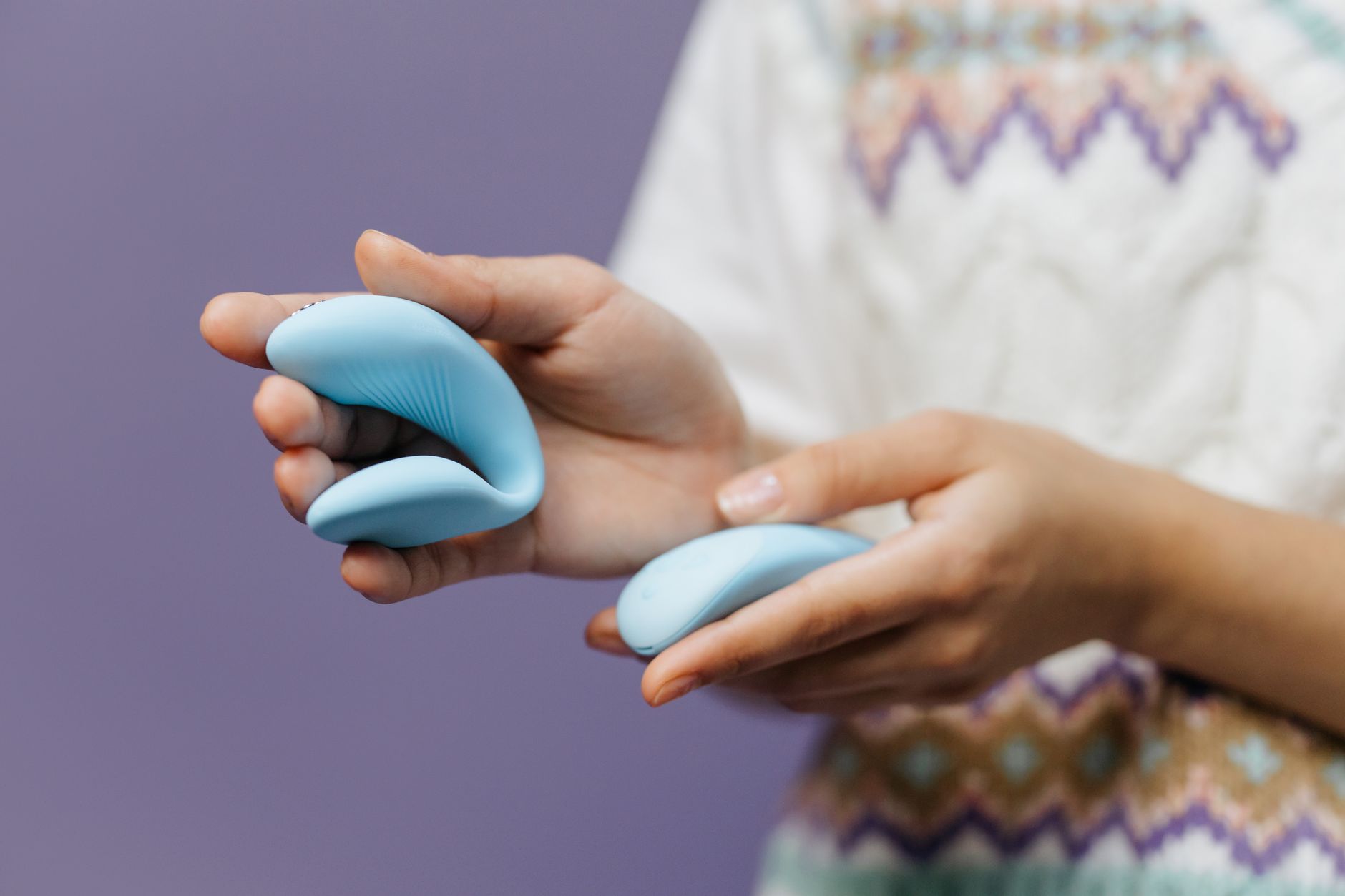
Photo by cottonbro studio on Pexels
Why this actually rewires your relationship to desire
Here's what I see happen most often. Couples who start using a lemon clitoral vibrator because desire is unpredictable end up discovering that the vibrator was never really the point. The point was creating space where pleasure didn't have to justify itself.
When you do that regularly, a few things shift. First, desire stops feeling like something you're failing at and starts feeling like something that comes and goes. That's accurate. That's normal. That's not a problem to fix.
Second, your partner stops resenting you for not being ready when they are. Instead, they get to be part of something that actually feels good for both of you. That changes the emotional texture of the whole dynamic.
Third, and this is the big one: your nervous system learns that you can trust your own pleasure. You're not waiting for permission or for the right moment. You're claiming it on a regular schedule, and that practice builds confidence in every area of your life, not just sex.
A note on the consistency part
Consistency doesn't mean every time is identical. Some days the vibrator feels amazing and you get off in eight minutes. Some days you're the same tool and you feel almost nothing. That's information, not failure.
Over time, you'll notice patterns. Maybe the vibrator feels different at different points in your cycle. Maybe your body responds better at certain times of day. Maybe it matters whether you're hydrated or stressed or how your day went. That's the data you're collecting by showing up regularly.
The goal isn't to achieve the same result every time. The goal is to keep pleasure as a regular option even when desire is taking its sweet time arriving.
When to bring a partner into this
If you're in a relationship, some couples use lemon vibrators solo and never mention it. That's fine. Some couples use them together, with one partner using it while the other watches or touches or both use vibrators at the same time. That's also fine.
My recommendation: start solo first. Get comfortable with the sensation, with the rhythm, with your own responses. Then decide if you want to share it. You might find that solo play actually improves your partnered sex because you know exactly what feels good and you can ask for it.
If you do bring a partner in, <a href="/blog/how-to-introduce-lemon-vibrators-to-a-partner-without-awkward-conversation">introducing lemon vibrators without the awkward conversation</a> starts with honesty about why. "I want to stay connected to pleasure even when my desire is unpredictable, and I'd like you to be part of that" is a completely different vibe than "we need to fix our sex life." The second one creates pressure. The first one creates partnership.
FAQ: Desire, vibrators, and what actually changes
Q: If I use a lemon clitoral vibrator regularly, will my actual desire ever come back?
Probably yes, but differently. Here's what usually happens: you start using the vibrator because desire disappeared. Over weeks, you show up consistently to pleasure. Your nervous system learns that pleasure is safe and available. Then desire starts trickling back in, not as dramatic lightning-strike arousal, but as a subtle yes that says, "oh, I remember what this is." The key is not to use the vibrator as a stand-in for desire. Use it as a bridge back to your own body. Then watch what happens naturally.
Q: What if my partner feels threatened by the fact that I'm using a lemon vibrator?
That's a separate conversation from the vibrator itself. Usually that threat is coming from a place where sex has become the only way your partner feels close to you. So the vibrator isn't really the problem. The problem is that intimacy is narrowly defined. <a href="/blog/how-to-use-lemon-vibrators-when-your-partner-thinks-toys-are-a-threat">When your partner thinks toys are a threat</a>, it's worth exploring what they actually need from you. Often it's reassurance. Sometimes it's a different conversation about partnership altogether. The vibrator is just the thing that surfaced the actual issue.
Q: Is it normal that I feel more desire after using a lemon vibrator solo than I do when my partner tries to initiate?
Completely normal. When you're alone with a vibrator, there's no performance anxiety. There's no one else's timeline. There's no fear of disappointing them or taking too long or not being attracted enough. You're just in your own body, doing your own thing. That freedom actually makes sensation easier to access. If you want more of that feeling with a partner, the work is about building safety and removing pressure with them, not about the vibrator itself.
Q: Can I use a lemon sucker vibrator if I'm on antidepressants that mess with my libido?
Absolutely. In fact, lemon vibrators work particularly well when medication is affecting desire, because they bypass some of the neurochemical barriers that make arousal harder to access. You still need to have the conversation with your doctor about the medication itself, but in the meantime, consistent use of a vibrator can keep you tethered to pleasure even when your brain chemistry isn't cooperating.
Q: How do I know if I'm using the vibrator too much and training my body to only respond to it?
This is a real concern, but it's less common than people think. The actual risk is higher if you're using extremely high intensity constantly. Start low. Vary the patterns. Sometimes use it, sometimes don't. Take breaks. Your body is more adaptable than you think. As long as you're not doing the same high-intensity pattern every single day for months, you're fine. And honestly, if the vibrator is the thing that keeps you connected to pleasure, that's not a bad outcome.
Q: Should I tell my partner I'm using a lemon clitoral vibrator if we're not talking about it yet?
That depends entirely on your relationship and your comfort level. Some people tell their partners immediately. Some people want privacy around their own body. Some people do it discreetly for months before mentioning it. None of those are wrong. What matters is that you're not being deceptive about the relationship itself. If you're using a vibrator because desire is messed up and you haven't told your partner that desire is messed up, that's a different problem. But the vibrator use itself? That's your call.
The actual point
Inconsistent desire doesn't mean your body is broken. It means you're dealing with the normal variation of being human. Some seasons are high libido. Some are low. Some are zero. That's not something to fix. It's something to work with.
Lemon vibrators work in this landscape because they separate pleasure from desire, consistency from performance, and connection from obligation. They give you a way to stay present with your own body even when your brain isn't sending the signals you'd prefer.
Use them that way. Not as a fix. Not as proof that something is wrong with you. But as a tool for staying friends with your own pleasure, even when that friendship feels complicated.
Want to talk about how to navigate this in your specific relationship? <a href="/contact">Reach out to us</a>. We're here to help.