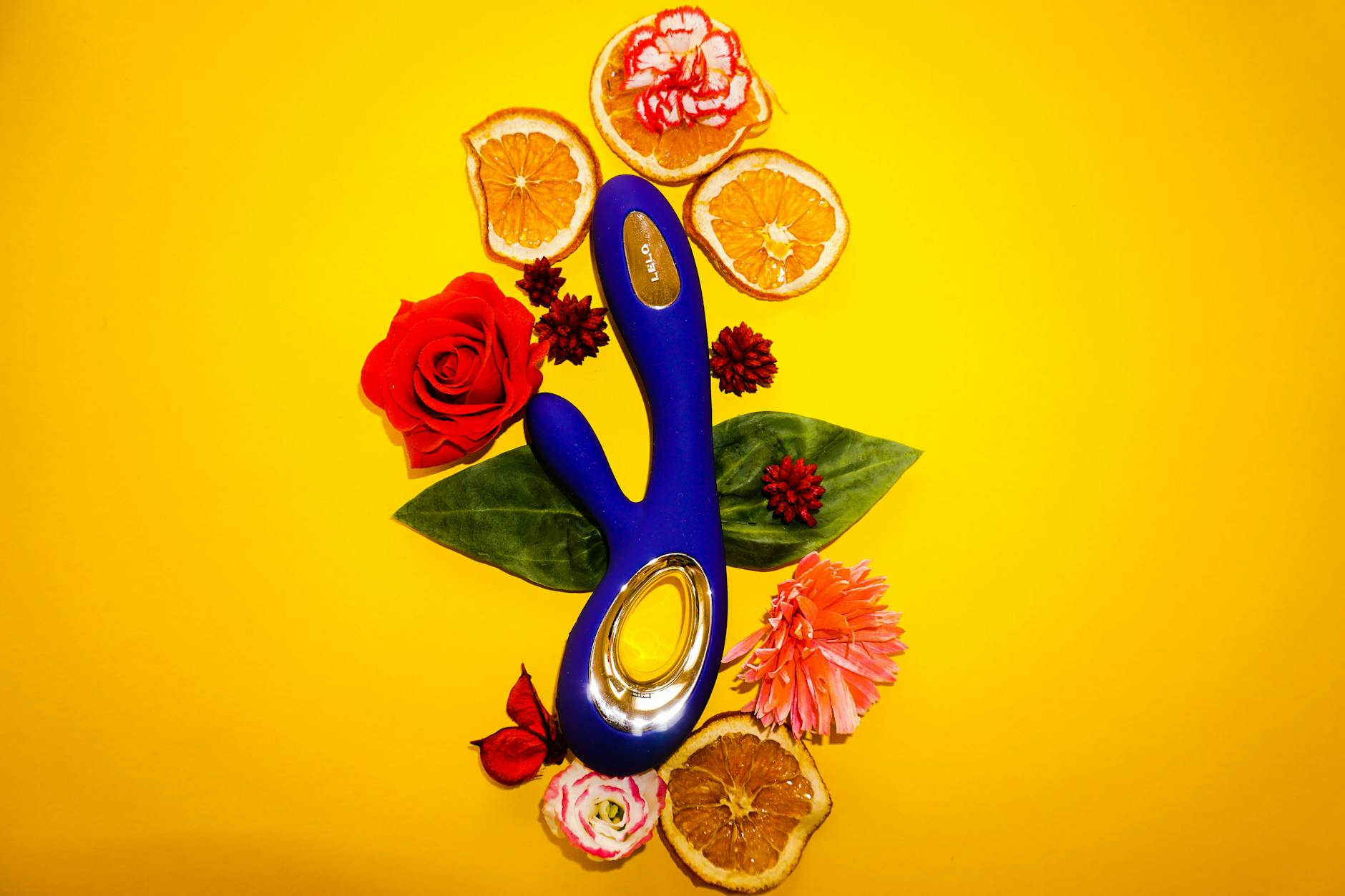
Here's what nobody tells you about menopause and pleasure
Menopause doesn't kill your ability to orgasm. It doesn't end desire. What it does do is reshape how your body responds to touch, and that's actually useful information if you know what to do with it.
I work with couples navigating this transition constantly. The story is always the same: tissue changes, arousal takes longer, sensation feels different. What's missing from most conversations is this part. Many of the women I work with report that their most satisfying orgasms come after menopause, not before. That's not platitude. It's clinical reality.
What drops and what doesn't
Estrogen decreases. This thins vaginal tissue slightly, reduces natural lubrication, and changes how quickly blood flows to your genitals during arousal. Testosterone also drops (yes, people with ovaries make testosterone, and it matters for desire in everyone). The pelvic floor loses some of its supportive tissue structure.
Here's what stays completely intact. Your clitoral nerves don't change. Your brain's pleasure pathways stay the same. Your ability to orgasm remains. And here's the thing most articles skip: suction-based stimulation actually becomes more effective during and after menopause because it works differently than vibration.
Vibration creates rapid friction. Suction creates a gentle pulling sensation that stimulates nerves without requiring the kind of direct pressure that can feel harsh on thinner tissue. That's why tools like the Lem clitoral sucker work so well for post-menopausal bodies. The mechanism matches what your body is asking for.
Why arousal shifts (and what to do about it)
Your body takes longer to warm up after menopause. Where you might have felt ready in five minutes at 35, you're now looking at 15 to 25 minutes at 55. This isn't dysfunction. It's a real physiological change that every single person with ovaries experiences.
The solution sounds simple but requires actual mental recalibration: plan for it. Don't expect spontaneous arousal in the same way. Instead, build in a genuine warm-up phase. This means extended foreplay, longer solo exploration, or simply knowing that starting with a lemon vibrator at a lower intensity and giving yourself permission to be there for a while changes everything.
I tell my clients this: this transition is actually a gift if you let it be. You're forced to slow down. You're forced to pay attention. And most of the time, that leads to better orgasms, not worse ones.
The physical setup that works
Four practical things make a massive difference:
Use water-based lube consistently. This isn't about being broken. Thinner tissue simply benefits from glide. Water-based lubes work with silicone toys (silicone lubes can degrade silicone). Apply generously and reapply mid-session if needed.
Start with your Lemon vibrator at pattern 1 or 2. Your sensitivity has probably shifted. You don't need maximum intensity to reach orgasm anymore. In fact, lower patterns often feel better because they let you stay in the experience longer instead of chasing intensity.
Build in solo practice time. Before you integrate a lemon clitoral vibrator with a partner, spend time learning what your body wants now. You've lived 50-plus years in this body. You deserve an hour to figure out what actually feels good at this stage.
Strengthen your pelvic floor, then learn to relax it. Kegels help, yes, but the real secret is learning to fully release tension. As estrogen drops, the pelvic floor naturally gets tighter. Many people do kegels and wonder why sensation doesn't improve. Because you also need to practice letting go.
Why sensation might feel different (and better)
Three reasons your orgasms can actually improve after menopause:
First, your brain. The cognitive load of fertility concerns, hormonal cycling, and societal pressure to perform lifts. Mental clarity alone transforms sexual response. You're no longer cycling through hormonal states that pull your attention. Your baseline arousal and attention don't have to fight biology anymore.
Second, you've had decades of experience. You know your body. You know what doesn't work. Many people find that post-menopause is the first time they stop performing and start actually exploring. When you finally give yourself permission to be selfish about your pleasure, the results are dramatic.
Third, you have better tools now. Lemon suction vibrators exist. They work differently than older vibration tech. A lem vibrator paired with consistent lube and genuine warm-up time creates conditions where intense orgasms are actually more achievable, not less.
When sensation feels too intense or scattered
Some people hit menopause and their clitoris feels hypersensitive. The tissue is thinner, so direct stimulation can feel sharp rather than pleasurable. This is reversible, and it's where your technique with a lemon clitoral vibrator matters most.
Use suction at lower patterns. Keep your Lem an inch or so away from direct contact initially, letting the seal build gradually. Use your lube. The combination creates stimulation without harshness. Many people find that after three to five sessions with this approach, their sensitivity recalibrates and direct contact becomes comfortable again.
If you're in a relationship, communicate this. A partner who understands that sensation is shifting can actually support you through the recalibration rather than making it awkward.
Rebuilding pleasure with a partner during this transition
If you're with someone long-term, menopause is a reset button on intimacy. And reset buttons can go two directions: toward deeper connection or toward avoidance.
The practical move is to separate two conversations. "My body is responding differently" is distinct from "I want us to reconnect." Mixing them creates confusion. Talk about one, then the other. "I'm exploring how my body feels now, and I'd love to have you be part of that" is wildly different from "Something's wrong with me, and I need you to fix it."
Consider introducing lemon adult toys as a team project. Not as a substitute for partnered sex, but as a tool you both get curious about. Let your partner watch. Let them help. Make it collaborative instead of medical.
Pleasure doesn't expire at menopause. It transforms. And the transformation often leads somewhere richer.
When to get professional support
If pain shows up during sex, don't wait. Genitourinary syndrome of menopause (GSM) is real and treatable, usually with topical estrogen creams that have minimal systemic absorption. A menopause-informed gynecologist can shift the entire experience in weeks.
If desire has completely flatlined and isn't responding to any of this, testosterone therapy is worth discussing with a practitioner. It's prescribed more conservatively in some regions than others, but it exists and changes lives for the right person.
If you're struggling emotionally with the transition separate from the physical part, a therapist who specializes in midlife transitions can be invaluable. Menopause often arrives tangled up with other life changes, and sorting that out makes everything easier.
The long view
Your sexual life after menopause is not a consolation prize. It's not a downgrade. It's a different chapter with different rules and, honestly, often better outcomes. You have fewer inhibitions. You know yourself better. You have better tools. And your body, while changed, is still completely capable of intense pleasure.
Start with lube. Start with lower intensity. Give yourself time. And then pay attention to what actually feels good instead of what you think should feel good. That's the real secret.
FAQs about lemon vibrators after menopause
How long does it take for sensation to stabilize after menopause starts?
Sensation typically stabilizes six months to two years after your last period, depending on how quickly your hormones settle. During that window, what feels good can shift week to week. This is exactly why consistent exploration with a tool like a lemon suction vibrator matters. You're gathering real data about your own body's current preferences instead of assuming it'll be what it was before.
Can I use lemon vibrators if I'm on hormone replacement therapy?
Absolutely. HRT doesn't change how clitoral vibrators work. Some people find that HRT stabilizes their sensation faster, which can make exploring your pleasure easier because things feel more consistent. Your body is still yours, and toys work the same way.
What intensity level should I start with on a lem vibrator after menopause?
Start at pattern 1 or 2. This isn't about staying "gentle" forever. It's about giving your nervous system accurate information without overwhelming it. Many people find they can build up to higher patterns after a few sessions. Some discover they prefer lower patterns permanently and have better, longer orgasms that way.
Is vaginal dryness permanent, or will it improve?
It depends. Some people find that consistent lubrication practice plus time normalizes tissue hydration naturally. Others find that dryness persists and water-based lube becomes a permanent part of their routine, which is completely fine. Either way, lube isn't a sign that something's wrong. It's just a tool that makes pleasure easier.
Can a partner use a lemon clitoral vibrator on me, or should it only be solo?
Partners can absolutely use lemon vibrators on you. The only adjustment is communication about pressure and pacing. Some people find it easier to guide a partner toward the right intensity using verbal cues. Others prefer their partner observing while they use their own lemon vibrator so everyone can see what's working. Both are valid.
Does menopause permanently change orgasm, or does it return to normal?
Orgasm doesn't "return" to what it was because what it was is connected to younger hormones. What actually happens is that your orgasm evolves into something different, which is often more intense and easier to reach if you adjust your expectations and your approach. "Normal" after menopause looks different, and different usually means better.
Resources and next steps
If you're navigating this transition with a partner, reading about menopause together removes a lot of the mystery and awkwardness. If you want to explore lemon vibrators and aren't sure where to start, the right choice depends on your sensitivity and whether you prefer a smaller, more targeted tool or something with broader coverage.
Your pleasure matters just as much after menopause as it did before. Sometimes more, because you finally have the confidence to actually claim it. Start with curiosity instead of pressure, and let your body tell you what it needs.
Have questions about navigating pleasure after menopause or how to introduce lemon sexual toys into your routine? Reach out at /contact. I'm here to help.