The thing nobody tells you about new-partner sex
Early attraction is real. Chemistry is real. But so is the fact that your body doesn't always cooperate on a first (or fifth) date. You're managing three simultaneous jobs: feeling attracted to this person, feeling comfortable enough to be vulnerable, and actually reaching orgasm. Most of us fail at the third one while pretending the first two are automatic.
Here's what happens in most new relationships. One person finishes, the other person is still working on it, and suddenly there's this unspoken pressure to "catch up" or wrap things up. Neither of you wants to ask what actually works. So pleasure becomes negotiable instead of non-negotiable.
Lemon clitoral vibrators change that equation fast.
Why consistent pleasure matters more in early relationships
When you're new to someone, you don't yet have the shorthand that long-term couples build. You don't know each other's body language. You haven't learned the rhythm that works. So when you can reliably reach pleasure on your own terms (with a partner present), it removes about 60% of the awkwardness from the conversation.
Think of it this way. If you know that a lemon vibrator gets you there in 10 minutes, you stop trying to get there through partnered stimulation alone. You're not failing. You're adding a tool that works. Your partner isn't "not enough." They're just part of a full picture instead of carrying the whole load.
Consistency also does something psychological that matters early on. It proves to you that you're capable of pleasure with this person in the room. That's a form of confidence that bleeds into everything else.
The conversation you actually need to have
Let's skip the preamble. Here's what works: "I want to make sure I finish too, and I know what works for my body. Can I use this?" That's it. Most partners will say yes immediately. Some will want to watch. Some will want to incorporate it into what you're already doing. The point is you're asking, not apologizing.
If your partner seems hesitant, the real question isn't about the vibrator. It's usually about one of three things: they're worried it means they're not "enough," they're uncomfortable with something that looks clinical, or they're not sure how it fits into the experience they imagined. You can address all three.
"It's not about you. It's about me knowing what I need." That's true and non-negotiable.
"It actually feels better for me when we use it together because I'm more relaxed." Also true for most people.
"This is just part of how my body works best. Same as you using your hand." Straightforward logic that removes the pressure.
Three ways to incorporate lemon vibrators early on
1. Use it solo first, then bring your partner in.
This takes the performance pressure off you. Spend time alone with your lemon vibrator so you know exactly what intensity, angle, and rhythm gets you there consistently. Then show your partner. "This is what works for me." They can watch, they can touch you elsewhere, they can use a separate vibrator on themselves. The point is you're no longer guessing.
2. Use it during partnered sex as a complement, not a replacement.
You don't have to choose between penetration and vibration. You can have both. A lot of early-stage partners actually find this easier than trying to do everything manually. One person is focused on one sensation, the other person has a job too. It's collaborative.
3. Use it in a way that lets them participate if they want to.
Some partners love holding the lemon vibrator for you. Some love watching while they touch themselves. Some love integrating it into foreplay. There's no single right way. The point is you're deciding what feels good first, then inviting them in.

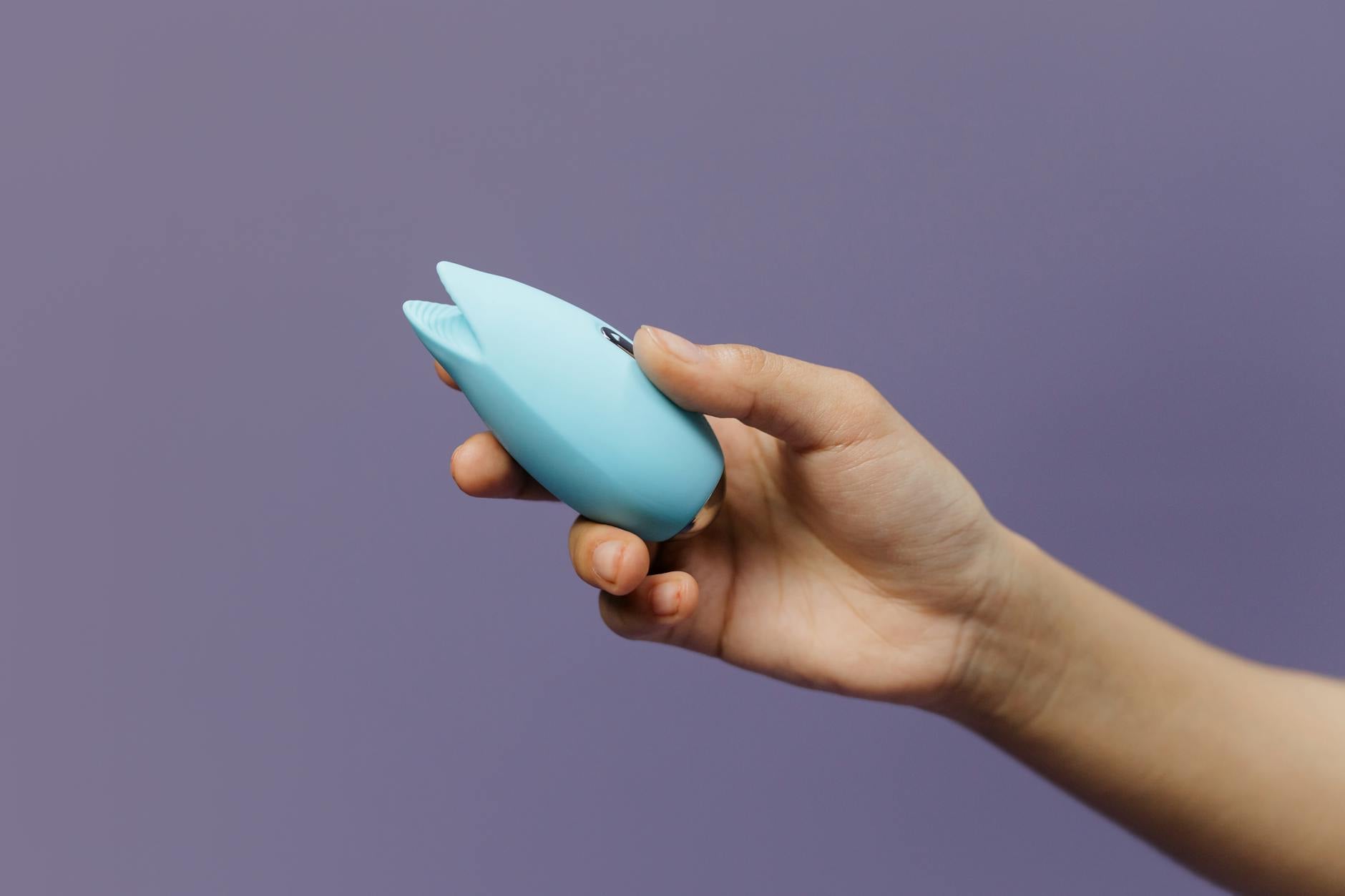
Photo by cottonbro studio on Pexels
What actually changes when you know your own pleasure
Let me be direct about the psychology here. When you show up in a new relationship knowing what your body needs, you're already solving about half the problem that keeps most early-stage couples from enjoying sex. You're not in your head wondering if it's happening. You're not performing for your partner. You're actually present.
Your partner can feel the difference. Presence is attractive. Confidence is attractive. Someone who knows what they want and isn't apologizing for it is incredibly hot.
Over time, this actually deepens connection faster. You're not building a relationship on the fantasy of perfect chemistry. You're building it on the reality of two people who know themselves and can communicate about what works. That foundation is way stronger.
Lemon clitoral vibrators also solve the logistical problem that kills desire in new relationships. You don't have to wait 45 minutes for something that might not happen. You can both finish satisfied, which sounds basic but actually removes a lot of resentment that creeps in quietly over the first few months.
The timing question
When should you introduce a vibrator to a new partner? Whenever feels right to you. There's no "too early." If it comes up naturally in conversation, use it from the first time you have sex. If you'd rather wait until you've been together a few times, that's fine too. The point is it should feel like a tool you're adding, not a Band-Aid for a problem.
Most people find that mentioning it after the first or second time together feels natural. "I want to try something that helps me finish." That's a normal sentence. Your partner is either going to be cool with it or they're going to be weird about it. If they're weird about it, that's information you need early.
The practical setup that actually works
A few small things make this way less awkward. One, make sure your lemon vibrator is charged before sex. Nothing kills the mood like "hold on, I need to charge this." Two, keep it on the nightstand or under the pillow so it's accessible without digging around. Three, start with a lower intensity setting if your partner's around. You can always turn it up. You can't un-escalate gracefully.
If you're worried about it looking clinical, remember that your partner has already seen you brush your teeth and scratch your butt. A vibrator is not the weirdest thing in a bedroom. Most partners are actually relieved because it takes pressure off them.
What happens after
The beautiful thing about knowing your own pleasure in a new relationship is that it actually accelerates genuine intimacy. You're not building a relationship on the myth of perfect sexual chemistry. You're building it on communication, self-knowledge, and the willingness to ask for what you need.
Over time, lemon vibrators often become less necessary because you and your partner learn each other's body better. But plenty of couples keep using them because they just feel good. Both things are fine. The point isn't "graduate from vibrators." The point is consistent pleasure, which keeps you present and connected.
You also get to skip the weirdness that builds when one person consistently doesn't finish and nobody talks about it. That silence is what kills desire. Communication is what builds it.
FAQ
Should I tell a new partner about my vibrator before we have sex?
You don't need to announce it in advance, but you also don't need to hide it. If it comes up naturally (you're talking about sex, or you're in bed and you want to use one), just mention it. Most partners will be fine. Some will be excited. A few might be weird about it, which is also information you need early.
What if my partner thinks the vibrator means I'm not attracted to them?
That's the fear, but it's almost never the reality. A vibrator is a tool, like lube. It doesn't replace them. If you're worried, say it directly: "I'm attracted to you. My body just needs this to finish, and I want to actually enjoy sex with you." That's not insulting. That's honesty.
Can I use lemon vibrators during penetration?
Yes. You can use a clitoral vibrator during penetration with a partner. It actually works really well because it lets you both have a job. Some people find it easier to relax and finish when they're not trying to do everything at once.
How do I bring up a vibrator without making it weird?
Don't frame it as a problem. Frame it as something that helps you. "I know what makes me finish, and I want to use that with you so we both get there." That's not weird. That's practical and kind.
What if my partner wants to use a vibrator on me but I'd rather do it myself?
That's completely fine. You're in charge of your pleasure. If you want to hold the vibrator, say so. Some partners love the control of holding it for you, but you're never obligated. This is about your consistency, which means your preferences matter.
Does using a vibrator with a partner change how sex feels?
Yes. It usually feels less stressful because you're not trying to will yourself to an orgasm while also managing your partner's experience. It feels more present because you can actually focus on sensation instead of timing. Most people say it feels more intimate, not less.
The bottom line
New relationships are where a lot of people lose connection to their own pleasure. You're nervous, you want to impress, you're learning someone new. Lemon vibrators solve that by giving you a reliable path back to your own body. That consistency ripples into everything else. You're more confident. You're more present. You actually enjoy the sex.
That's the relationship you want to build. Start there.
If you're ready to have this conversation with a new partner or you need help navigating early-stage relationship dynamics, reach out. That's what I'm here for.