
Let's be real about body anxiety after 40
Your body is not what it was at 25. Neither is mine. And somewhere between the gravity, the stretch marks, the softness in places that used to be firm, there's a voice that says: maybe this is it for pleasure. Maybe you're too old, too changed, too much of a stranger in your own skin to enjoy it anymore.
That voice is lying.
Body anxiety after aging is one of the biggest unspoken obstacles to pleasure, and it shows up differently than you might expect. It's not always loud or dramatic. It's quiet. It's the reason you avoid mirrors during intimacy. It's why you hold your breath instead of letting pleasure build. It's the small voice that whispers you should be grateful for what you get, not asking for more.
What actually happens when body anxiety blocks pleasure
When you're anxious about how you look, your nervous system stays in a low-grade alert mode. Your pelvic floor tightens. Your breathing gets shallow. Blood flow that should be flooding toward your clitoris stays peripheral. Your brain, which is responsible for about 70% of sexual response, is too busy running a critical commentary to actually process sensation.
This isn't failure. It's just physiology. Anxiety and arousal can't occupy the same nervous system space. You have to choose which one gets your attention.
Here's what lemon clitoral vibrators do differently than expecting yourself to magically bypass that anxiety through willpower alone. They give your nervous system something to focus on that's so direct, so concentrated, that the critical voice has to take a back seat. A suction-based vibrator like the lemon works on the principle of intense, targeted stimulation to the clitoral complex. You're not waiting to feel aroused. You're not hoping sensation will build gradually. You're actively creating it through consistent, reliable input.
For someone whose nervous system is locked in anxiety, that's permission to stop performing and start receiving.
Why external-only sensation matters when body anxiety is high
When you're anxious about your body, penetration can amplify the problem. You're hyperaware of internal sensations, which means you're hyperaware of every change, every difference from memory. You're performing self-consciousness from the inside out.
Lemon vibrators and other clitoral vibrators solve this by keeping stimulation completely external. Your focus narrows to one body part. You don't have to think about your stomach, your thighs, the way things fit or don't fit anymore. You're just receiving sensation on the clitoris, which has roughly 8,000 nerve endings and hasn't aged a single day, by the way.
That singular focus is everything.
How to start when shame is in the room
If body anxiety has made you avoid pleasure for months or years, starting small is crucial. Not because you need to "ease in." But because your nervous system needs proof that pleasure is safe before you ask it to fully relax.
Here's the protocol I recommend:
First session: sensation only, no outcome. Use your lemon vibrator on the lowest setting for 5-10 minutes. The goal is not an orgasm. The goal is to remind your nervous system that sensation feels good and doesn't require you to be young or look a certain way. You're literally just building the neural pathway between stimulation and safety.
Second and third sessions: gradually increase time and intensity. Move to medium settings. Stay for 15-20 minutes. You're teaching your body that sustained pleasure is possible without shame.
Fourth session onward: let orgasm emerge, don't chase it. Once your nervous system knows pleasure is safe, orgasm usually follows naturally. The lemon's consistent stimulation makes this almost effortless compared to partnered sex or hand stimulation, where you might tense up waiting for sensation.
The mental shift that changes everything
Here's what I tell people in therapy who are struggling with this: your body at 40, 50, 60, or beyond is not a downgrade. It's accumulated experience. Your skin has housed decades of living. Your pelvic floor has supported you through everything. Your clitoris has been working beautifully the entire time, waiting for you to show up.
The invitation from a tool like a Lemon clitoral vibrator isn't "ignore your aging body." It's "stop making your body's changes the price of pleasure." The lemon doesn't care what you look like. It just delivers sensation. That's almost absurdly freeing once you let it land.
Many people in long-term relationships tell me that returning to pleasure after body anxiety required separating pleasure from being seen. When body anxiety is high, being watched during sex amplifies every worry. Solo pleasure with a tool like the lemon lets you reclaim sensation on your own terms first. Then, once pleasure feels safe and familiar again, partnered sex becomes less about performance and more about connection.
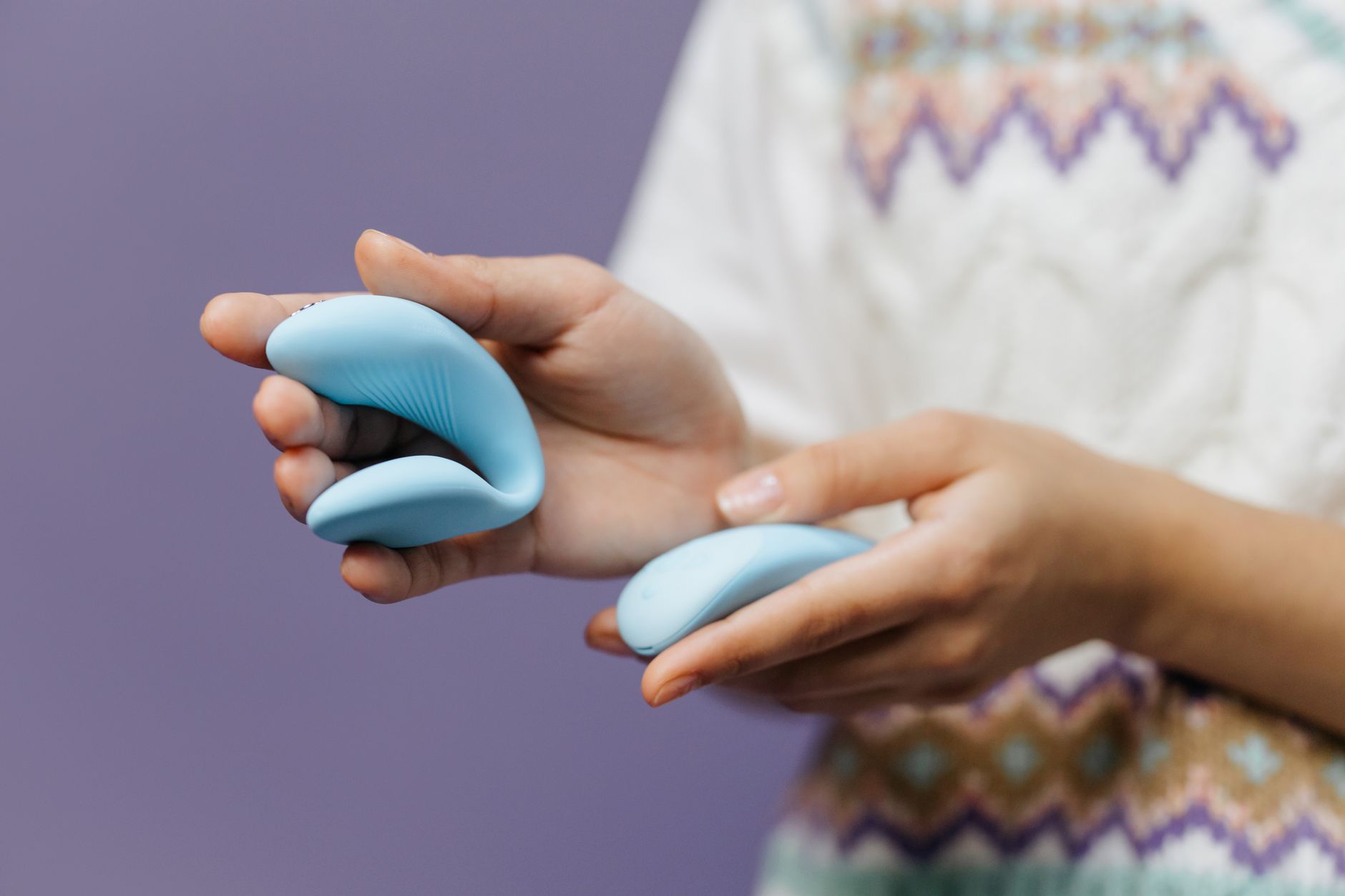
Photo by cottonbro studio on Pexels
Practical setup matters more than you think
When body anxiety is present, your environment directly affects your nervous system's ability to relax. Here's what actually helps:
Lighting. Dim or warm light, not overhead brightness. You want to feel held by the space, not exposed.
Positioning. Don't lie flat staring at the ceiling. Recline, sit up, angle yourself so your awareness can stay with sensation instead of drifting to how your body looks in this position. The clitoral vibrator works great from almost any angle, so choose what feels comfortable and private.
Phone off. Not just silent. Off. Body anxiety loves the background hum of possible interruption. Remove that variable.
Time when you're not rushed. 20 minutes where no one needs you. This is non-negotiable for nervous system safety.
Some people find that using a clitoral vibrator in the shower or bath first helps. The water creates a barrier, a literal buffer against self-consciousness. Once pleasure feels natural there, moving to other spaces becomes easier.
When to reintroduce partnered pleasure
If you're in a relationship, your partner doesn't have to be absent forever. But the timing matters.
Once you've had solo sessions where orgasm felt achievable without performance pressure, you can introduce your partner back in. The protocol is: partner present but not necessarily watching. They can be nearby while you use the lemon vibrator. They're learning that your pleasure is happening, and it doesn't require them to fix or manage it.
Then, very gradually, you can move toward them touching you while you use the vibrator, or using it together as foreplay. But the critical first step is proving to yourself that your body delivers sensation regardless of who's watching or not watching.
For people rebuilding trust after infidelity, or reconnecting after years of emotional distance, this staged return to solo pleasure first is especially important. You're not asking your partner to love your aging body more. You're asking yourself to love it first. That shift in permission radiates outward.
When body anxiety needs more support
If body anxiety has calcified into something deeper, like disordered eating patterns, persistent shame about appearance, or avoidance of medical care, pleasure devices alone won't solve it. Therapy with someone trained in body image and sexuality is essential. A lemon vibrator is a tool for reconnecting with sensation once shame isn't blocking the path entirely.
But here's what's true: shame thrives in silence and isolation. The moment you name it, the moment you say out loud "I'm anxious about my aging body and I miss pleasure," it loses some of its power. And a tool designed for direct, efficient stimulation? That's not fixing your body. It's proving that your body works just fine without your permission first.
Your pleasure is not negotiable because you've aged. Try treating it that way.
FAQ: Common questions about body anxiety and Lemon vibrators
What if I still feel self-conscious even alone with a vibrator?
That's normal. Start with eyes closed. Start in a dark room. You're rewiring a nervous system that's learned to be hypervigilant. The lemon vibrator's job is to give your brain something other than self-criticism to focus on. Over time, sensation crowds out shame naturally. If it doesn't improve after a few weeks of consistent use, exploring this with a therapist trained in sexual response can help.
Does using a lemon clitoral vibrator alone mean I don't want my partner anymore?
Not at all. In fact, reclaiming solo pleasure often deepens partnered intimacy because you're no longer asking your partner to fix your relationship with your own body. You show up with pleasure already in the equation instead of performing for it. Solo pleasure and partnered pleasure serve different needs. Both can be true.
How long does it take for body anxiety to stop blocking pleasure?
Depends on how long it's been sitting there. Some people notice a shift in 2-3 weeks of consistent use. Others take 8-12 weeks for their nervous system to genuinely believe pleasure is safe. There's no timeline that's "wrong." What matters is consistency, not speed. Using a lemon vibrator once a month won't rewire your system. 2-3 times a week creates actual nervous system change.
Can I use a lemon vibrator if I'm not sure I can have orgasms anymore?
Absolutely. And honestly, orgasm shouldn't be the goal when you're rebuilding your relationship with pleasure. The goal is sensation, safety, and remembering that your body can feel good. Orgasm is the side effect, not the outcome. Focus on "does this feel good?" and orgasm usually shows up on its own timeline.
What if my partner wants to help but I'm too self-conscious to be seen?
Tell them exactly that. "I need to rebuild my relationship with my own pleasure first." A partner who loves you will get it. Then, once you've had solo sessions that proved sensation is possible, you can invite them back in at your pace. Some couples find that using a lemon vibrator together, with you controlling it, bridges that gap. You're directing the experience, not being directed.
Is it normal to need vibration instead of hand stimulation as you age?
Completely normal. Hand stimulation requires sustained, consistent pressure that can be hard to maintain at the exact angle and intensity your nervous system needs. A vibrator delivers that precision automatically. It's not a sign of decline. It's smart tool use.
You're not too old, too changed, too much
Body anxiety tells you that aging disqualifies you from pleasure. That your changing body is punishment for time passing. That you should be grateful for whatever physical attention comes your way instead of asking for what actually feels good.
None of that is true.
Lemon vibrators and clitoral vibrators exist partly because our bodies change and our pleasure deserves to evolve with them. A tool designed for direct, efficient stimulation isn't a compromise. It's you saying: I'm not waiting for the perfect body or the perfect moment. I'm having pleasure now, in this body, today.
That's the beginning of every good thing.
If you're ready to start rebuilding your pleasure and have questions about what works best for your body, reach out. I'm here to help you navigate this transition with honesty and without shame.