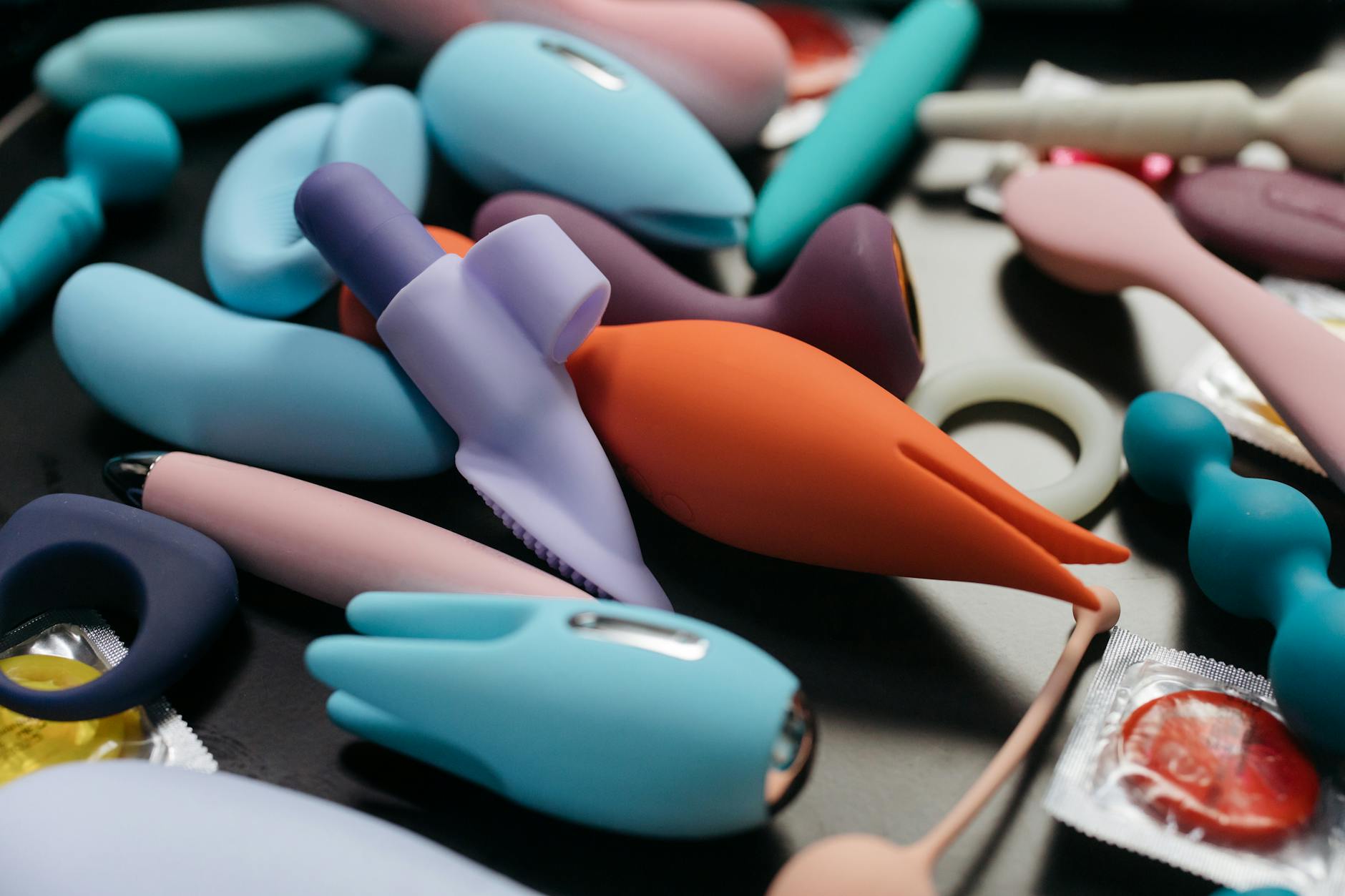
Here's what nobody tells you about shame and pleasure
Sexual shame isn't just a feeling. It's a somatic experience. Your nervous system learned, over time, that pleasure was dangerous, forbidden, or tied to guilt. That belief doesn't live in your head alone. It lives in your body, in how you breathe, where you hold tension, and how quickly you pull away from sensation.
Healing from that takes more than intellectual permission. It takes a real, gradual rewiring of your nervous system. And that's where lemon vibrators, particularly tools like the Lem, become quietly powerful for this specific journey.
Why shame makes pleasure feel complicated
When you've carried sexual shame for years—whether from religious upbringing, trauma, or simply absorbing the cultural message that your desires are "too much"—your body develops a protective mechanism. Arousal starts to feel dangerous. Pleasure feels selfish. And the thought of exploring your own body can trigger guilt or disgust before it triggers desire.
Many of my clients describe this as a kind of disconnect: the intellectual part of them wants to feel good, but their nervous system is saying no. They'll start to feel pleasure, then suddenly freeze. Or they'll feel guilty mid-experience. Or they'll worry about what they're doing, what they should be doing, what it means.
That's not a character flaw. That's a nervous system that learned, very well, to protect you. You're not broken. You're protected. And now we're slowly, safely helping your system understand that pleasure is actually okay.
Why lemon clitoral vibrators work differently for shame recovery
The reason I recommend suction-based tools like Lemon Clit Suckers' vibrators—especially for folks rebuilding after shame—is that they create a different sensation than traditional vibrators. The suction rhythm mimics what naturally happens during arousal. It's not an invasion. It's not something you have to mentally "allow." It's more like your body recognizing something familiar and being able to relax into it.
Second, and this matters: you're not touching yourself directly. That small distance sometimes makes all the difference for people carrying shame. If you were told your hands were dirty, or that touching yourself was wrong, a tool creates a gentle boundary that helps your nervous system feel safer. You're not breaking a rule. You're using an object.
Third, suction tools let you control intensity without controlling your brain. The Lem offers different patterns, starting at low, which means you can build sensation gradually and retreat if your nervous system says stop. That agency is crucial when you're learning to trust your own cues again.
The permission piece (which is the hardest part)
Let's be direct: using a lemon vibrator won't work if you haven't actually given yourself permission. And giving yourself permission isn't something you can force through shame.
Here's what I recommend instead. Start by separating the act from the meaning. You're not being immoral. You're not being selfish. You're testing whether your body can feel good, and gathering data about what works. That's it. No narrative. No identity shift. Just data gathering.
Second, set a boundary with your internal critic. When shame shows up (and it will), your job isn't to argue with it or overcome it. Your job is to notice it and keep going anyway. Think of it like walking past a guard dog that barks. The dog is doing its job. You're just walking past. Don't pet the dog. Don't argue with it. Walk.
Third, build in a ritual. Shame often comes with isolation. Create a small routine: dim the lights, maybe light a candle, maybe put on music you actually like. This tells your nervous system: "This is intentional. This is safe. This is mine." The ritual matters more than the vibrator.
A step-by-step approach for first use
If you're starting after shame, go slower than you think you need to. Your nervous system will thank you.
1. Explore without turning it on. Hold the lemon vibrator. Smell it. Get familiar with the weight and shape. This might feel silly. Do it anyway. Shame thrives on secrecy and rushing. Slowness is revolutionary.
2. Turn it on at the lowest setting, fully clothed. Yes, over your jeans. Feel the sensation through fabric. Let your brain register: "This is a thing that exists. I can touch it. Nothing bad is happening." Spend three to five minutes here. This is not foreplay. This is introduction.
3. The next time (could be the next day, could be a week later), use it over underwear. Again, lowest setting. Same rhythm. Let your body adjust to each new layer of closeness.
4. Only when that feels genuinely okay—not just tolerable, but actually okay—try direct contact. Still lowest setting. Still totally fine to stop. Still totally fine to just hold it and breathe.
5. Increase intensity when you genuinely want to, not because you think you should. There's no timeline. Three months in, if you're still at pattern one of the Lem, that's exactly right for where you are.
When grief shows up (and it will)
Here's something nobody warns you about: as you start reconnecting with pleasure, sometimes grief comes too. You might feel sad about the years you didn't let yourself feel good. You might feel angry at whoever taught you shame. You might cry during or after.
This is healing, not a sign something went wrong. Your nervous system is releasing something it's been holding. Let it. Cry. Take a break. Come back when you're ready. There's no rush.
Signs your nervous system is actually shifting
You'll know this is working when a few things happen. First, the guilt gets quieter. Not gone, just quieter. Second, you start enjoying the sensation for its own sake, not despite shame but actually separate from it. Third, you become curious about what else might feel good. That curiosity is your nervous system saying: "Okay, I'm starting to believe this is safe."
Some of my clients also notice they stop holding their breath. They actually breathe during pleasure, which sounds small but is neurologically huge. Breath is how the nervous system knows it's safe. When you can breathe during pleasure, your system is healing.
What not to do
Don't rush this to "prove" you're healed. Don't use the vibrator while mentally replaying shame narratives. Don't compare your healing timeline to anyone else's. Don't treat this like homework or obligation. The moment it becomes a "should," you've lost the whole point.
Also: if you find yourself unable to enjoy sensation even after several months of trying, or if using the vibrator consistently brings up trauma memories, that's information too. You may benefit from working with a trauma-informed therapist alongside this. There's no shame in that either. Some nervous systems need professional support to rewire.
Deepening the practice when you're ready
Once the basic nervous system shift starts happening, you can layer in other things. Maybe you explore different patterns on your Lem vibrator. Maybe you experiment with longer sessions, or different times of day, or different environments. Maybe you eventually use lemon vibrators with a partner, when you're ready.
The key is: each layer is optional. You're not building toward some destination of "normal" sexuality. You're building a life where you get to have pleasure without carrying shame. That looks different for everyone. Your version is the right one.
The quiet power of reclaiming your own body
Using a lemon clitoral vibrator after sexual shame isn't really about the tool. It's about deciding, slowly and carefully, that your pleasure matters. That you deserve to feel good. That what your body wants is information, not sin.
That reclamation is political. It's personal. And it happens one breath, one slow pattern, one moment of actual relaxation at a time. The vibrator is just the vessel. You're the one doing the healing.
People also ask
Is it normal to feel guilty while using lemon vibrators if you have sexual shame?
Completely normal. Guilt shows up because your nervous system is doing exactly what it learned to do. The goal isn't to eliminate guilt before you start; it's to use the vibrator anyway and gradually teach your body that pleasure is safe. Each time you use it despite guilt, you're rewiring. That guilt will get quieter over time, but you don't have to wait for it to disappear first.
How long does it take to reconnect with pleasure after shame?
There's no standard timeline. Some people feel a shift in weeks. Others take months or years. What matters is consistency, not speed. Using a lemon vibrator once every two weeks is fine. Using it once a week is fine. What's not fine is forcing yourself into a timeline that doesn't match your actual nervous system. Your pace is the right pace.
Can I use lemon vibrators if I was sexually abused or traumatized?
Maybe, with support. If your trauma was recent or deeply embedded, you'd benefit from working with a trauma-informed therapist first. But many survivors do find lemon suction vibrators helpful as part of a broader healing practice—especially because they're not invasive and you control all the stimulation. Always check in with your therapist first, and always honor your body's signals.
Should I tell my partner I'm using a lemon vibrator while healing from shame?
That depends on your relationship and what feels safe. Some people heal privately first, then share later. Others want to involve their partner early. If you do share, reframe it: "I'm working on reconnecting with my body, and this tool is helping me." Most partners respond with support once they understand it's about your healing, not about them.
What if lemon vibrators don't feel good—does that mean I'm doing it wrong?
Not necessarily. Some bodies don't respond to suction sensation, and that's totally fine. Try different patterns, different intensities, different contexts. Or try a different tool entirely. The point is finding what your nervous system actually enjoys, not forcing yourself to like something because it's recommended. You get to have preferences.
Can using lemon clitoral vibrators while healing from shame actually rewire my nervous system?
Yes, but slowly and alongside other healing work. Your nervous system learns through repetition and safety. Each time you use a vibrator while feeling okay (not panicked, not forced), you're creating new neural pathways around pleasure. That's neuroplasticity. That's real. But it works best when it's paired with actual permission, a safe environment, and sometimes professional support.
What comes next
Healing from sexual shame isn't a destination. It's a practice. Some days will feel harder than others. Some days you'll feel that old guilt creeping in. That's not failure. That's just your nervous system being nervous.
The point of using lemon vibrators during this journey is to gradually convince your body that pleasure is possible, that sensation is safe, and that you're allowed to want things for yourself. That's radical. And it's worth doing slowly, on your own terms.
If you're struggling with how to move forward, or if you want guidance tailored to your specific situation, reach out. We're here to help.