
The antidepressant arousal problem nobody warns you about
Your mental health got better. Your sex drive didn't. That's the cruel trade-off that hits roughly 50 to 60 percent of people taking SSRIs or SNRIs. You finally got relief from depression or anxiety, and in return, your body stopped responding the way it used to. Orgasms feel harder to reach, sensation dulls, desire flatlines. It's not your imagination, and it's not a personal failure.
Here's what actually happens, and why lemon vibrators work differently than other toys when medication dampens your arousal.
Why antidepressants mess with pleasure in the first place
SSRIs and SNRIs increase serotonin, which is fantastic for your mood. But serotonin also suppresses dopamine and norepinephrine. Those two chemicals? They're the gas pedal for sexual arousal and orgasm. Less of them means the nervous system takes longer to fire up, sensation feels muffled, and the whole chain reaction from stimulation to climax gets sluggish.
It's a neurochemical problem, not a psychological one. Your brain isn't broken. The medication is doing its job so well that it's also dampening the neural pathways for pleasure. This matters because it means the solution isn't about trying harder or wanting it more. Your body genuinely needs stronger or different stimulation to cross the threshold into arousal.
Why lemon vibrators specifically help with medication-induced numbness
Traditional vibrators rely on penetration or direct buzz intensity. If your clitoris is numb from medication, a standard vibrator often feels like holding a phone on buzz mode. Unpleasant. Too much. Not enough. Nowhere in between.
Lemon clitoral vibrators work through suction and gentle pulsing, not intense vibration. That matters hugely when medication has dulled your nerve endings. Suction creates a build-up of blood flow and stimulates deeper nerve clusters without the surface-level intensity that can feel overstimulating or dead when you're medicated. It's like the difference between poking someone and slowly drawing them toward you. One registers as sensation. The other barely registers at all.
Plus, the pulsing patterns on a lem vibrator tend to ramp up gradually. You're not jumping straight into high intensity. You start low and let your body's own arousal response build the foundation. For someone whose medication has flattened that response, a slow ramp is essential.
The medication timing question
Here's something your psychiatrist won't volunteer: when you take your SSRI matters for sexual response. Most SSRIs peak in your system 4 to 6 hours after you take them. If you take your dose in the morning, early evening might be slightly better for arousal. Not dramatically. But measurable.
Talk to your prescriber about this. Some people have shifted their dosing time specifically to preserve a window for sexual response. Others have explored different medications in the SSRI class. Sertraline, for instance, sometimes affects sexual function less than paroxetine. You have options, and they're worth asking about directly.
Meanwhile, you can also strategically time your lemon vibrator sessions. If you notice a slight dip in the medicated effects 8 to 10 hours after your dose, that's your window. Not foolproof, but it helps.
How to use a lemon vibrator when your body feels numb
Start lower and slower than you think you need to. Your instinct, when sensation is muted, is to reach for maximum intensity immediately. Resist that. Intensity alone won't bypass the medication. Consistency and patience will.
Begin at pattern 1 or 2 on the lem vibrator. Spend 3 to 5 minutes there. Let your body wake up. Then move to pattern 3. Spend another 3 to 5 minutes. This gradual escalation gives your nervous system time to register sensation and build arousal, even through the medication fog.
Use a good water-based lubricant. Medication often reduces natural lubrication too. Lube isn't optional here. It reduces friction, makes the suction feel more comfortable, and actually improves the stimulation quality because there's better contact between the toy and your skin.
Focus on mindfulness rather than outcome. When medication flattens arousal, the brain often gets impatient and switches into performance mode. That kills arousal faster. Instead, notice sensation as it arrives. Temperature of the toy. Rhythm of the pulsing. Micro-sensations your medicated body might be registering but your conscious mind is ignoring. This sounds abstract, but it's neurologically sound. You're training your attention toward pleasure rather than chasing an orgasm.
What to discuss with your prescriber
Don't suffer silently. Sexual side effects are a legitimate medical concern, not something you have to accept as the cost of mental health.
Ask your doctor about:
- Timing adjustments (shifting your dose to a different time of day)
- Adding bupropion, which can counteract sexual side effects by increasing dopamine
- Switching to a different SSRI or trying a non-SSRI antidepressant
- Drug holidays (skipping a dose on weekends), which some prescribers will consider for certain medications
Your mental health comes first. But sexual pleasure is part of your overall health. A good psychiatrist will take this seriously and work with you on options.
The patience part
If you've been on an SSRI for weeks or months, your nervous system has adapted to lower dopamine. Using a lemon vibrator is helpful, but it's not an instant fix. You're retraining your body's response, and that takes time. Some people feel improvement within days of switching to a toy designed for medicated arousal. Others need 2 to 3 weeks of consistent use before sensation really returns.
This is normal. Stick with it. Your pleasure capacity is still there. You're just working around a neurochemical obstacle.
When to consider other options
If lemon vibrators aren't working after 3 to 4 weeks of consistent use, the issue might not be numbness alone. Medication can also suppress desire at a neurochemical level. That's different from muted sensation, and it might require a medication adjustment rather than a toy change.
Also, if your antidepressant is working well for your mental health, don't mess with it just for sexual side effects. Have the conversation with your doctor. There are real solutions that don't mean sacrificing your mental stability.
The bigger picture
Antidepressant-induced sexual dysfunction is common, fixable, and absolutely worth addressing. Your medication keeps you stable. A lemon clitoral vibrator works with your medicated body to restore pleasure. Both things are true. Both things matter.
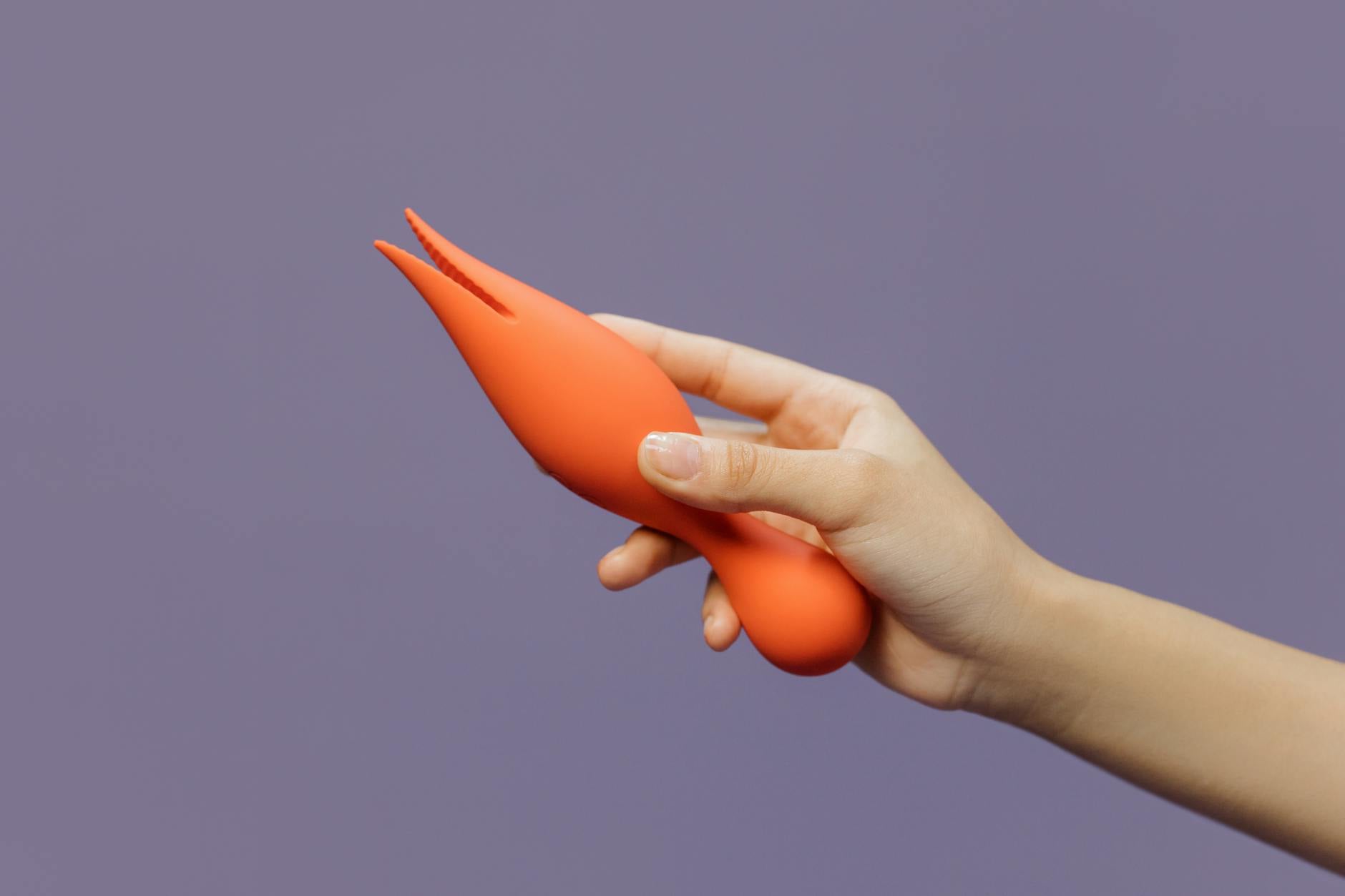
Photo by cottonbro studio on Pexels
Your mental health is worth protecting. So is your sexual pleasure. You don't have to choose between them.
FAQ: Antidepressants, medication, and lemon vibrators
Can I use a lemon vibrator safely while taking SSRIs?
Absolutely. There are no drug interactions between antidepressants and silicone toys. Lemon vibrators are body-safe, medical-grade silicone devices. The medication doesn't change how the toy works or make it unsafe. What changes is your baseline sensitivity, which is why the suction-based design of a lem vibrator often works better than traditional vibration when you're medicated.
Will a lemon vibrator give me the same orgasm quality I had before antidepressants?
Eventually, yes, but it might take time. The goal isn't just to trigger an orgasm. It's to retrain your nervous system to register and build arousal despite the dopamine suppression. Many people report that after consistent use with a lemon clitoral vibrator, orgasms return to their previous intensity. Some say they feel different, but equally satisfying. Your mileage varies, but the potential is there.
Should I tell my doctor I'm using a lemon vibrator?
You don't have to, but you should tell your doctor about sexual side effects. You can skip the toy-specific details and just say: "I'm experiencing reduced sensation and difficulty with orgasm since starting this medication. What are my options?" A good psychiatrist will have a conversation about this. It's medical information, not something to be embarrassed about.
Do other types of vibrators work if lemon vibrators don't?
Lemon vibrators work through suction and pulsing, which is different from traditional vibration. If a lem vibrator isn't effective after a few weeks, the issue might be deeper than sensation dampening. It could be desire suppression, which requires a medication adjustment. A different toy probably won't solve that. Talk to your prescriber before trying multiple devices.
How long does it take for sensation to return after starting a lemon vibrator?
It varies. Some people notice improvement within a few days of consistent use. Others need 2 to 4 weeks. Your nervous system is rebuilding pathways that the medication has suppressed. That takes time. Use the vibrator 3 to 5 times a week for the first month, then assess. Patience is part of the process.
What if I don't want to change my medication but sexual side effects are still bad?
You have options. A lemon vibrator is one. Your doctor might also recommend adding bupropion or switching your dose timing. Some people combine strategies: medication timing plus a lem vibrator plus a mindfulness practice. Work with your psychiatrist to build a plan that keeps you stable mentally while restoring sexual pleasure. This is solvable.
Related reading
For more on how different stimulation tools work with your body, check out how lemon vibrators compare to traditional vibrators for clitoral pleasure and how to use lemon vibrators for stronger orgasms with less direct pressure. If anxiety is part of your picture, how to make lemon vibrators work better when anxiety gets in the way covers practical strategies for managing the mental side.
Your mental health matters. Your pleasure matters. You deserve both.