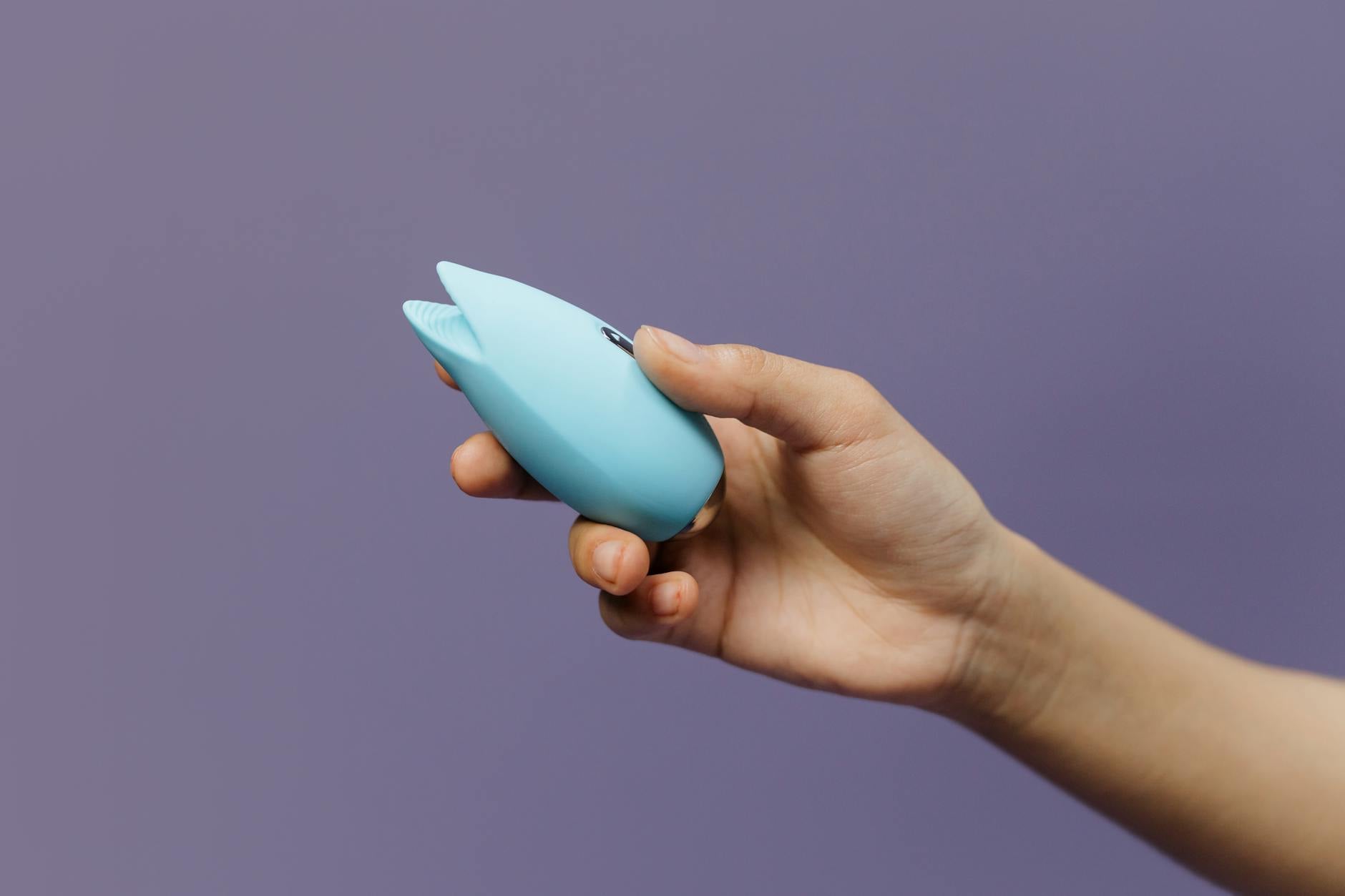
The conversation you're actually dreading
Here's what I hear from couples most: "I want to try a lemon clitoral vibrator, but I don't know how to bring it up without making things weird." The word "weird" shows up in maybe eight out of ten conversations I have about this. What's interesting is that the awkwardness isn't usually about the toy itself. It's about what we're afraid it means. "Will my partner think I'm not satisfied?" "Will they feel replaced?" "Is this admitting something's wrong?"
None of those fears are logical, but they're real. Let me cut straight through them.
Introducing lemon vibrators to partnered sex is one of the simplest ways to expand what both of you experience. Full stop. It's not a referendum on your partner's performance or a sign your relationship is in trouble. It's an upgrade. And the conversation to get there doesn't require scripts or vulnerability hangovers.
Why the conversation matters more than you think
Timing is not about "the perfect moment." It's about removing the pressure of a perfect moment. The best couples I work with bring this up during a regular conversation, not in bed, not during sex. You're at breakfast. You're in the car. You're sitting on the couch watching something. The setting should feel low-stakes because the topic isn't actually high-stakes.
What you're doing is gathering information, not negotiating a contract. "I've been curious about lemon vibrators lately. I've read some good things about how they work. Have you ever thought about trying one together?" That's the shape of it. Notice there's no pressure in that sentence. You're not asking for permission. You're not suggesting your partner has failed you. You're saying "I'm interested in this thing, and I'd like to explore it with you."
The response you get tells you exactly where to go next. If your partner seems interested, you talk about what appeals to you both. If they seem hesitant, you ask why. Maybe they think it's going to hurt. Maybe they're worried it's messy. Maybe they don't understand what a suction-based toy does differently than a traditional vibrator. Those are solvable questions.
If they're genuinely not into it? That's information too, and it's worth respecting. But I've found that most resistance isn't "no forever." It's "I don't understand yet."
The thing your partner might actually be worried about
Let me name this directly: if you're partnered with someone, they might worry that introducing a lemon vibrator means they're not enough. They might think the goal is for them to be replaced during sex, or that you've secretly been unsatisfied the whole time.
This is worth addressing head-on, not by reassuring them (reassurance doesn't actually work), but by being clear about what you're actually after. "I want to try this because it feels good in a different way. I want us to experiment together. Your hands, your mouth, your body still matter. This is an addition, not a replacement." Then show them how you'd use it.
Here's something that helps: talk about how lemon vibrators are specifically designed to work alongside partnered sex, not instead of it. A toy like the Lem is built for a partner to use on you during foreplay or sex. You're not disappearing into solo pleasure. You're literally involving them in the sensation.
If your partner is still hesitant, ask what would make them more comfortable. Maybe they want to research it together. Maybe they want to watch you use it alone first so it feels less mysterious. Maybe they need time. All of that is workable.
How to actually introduce it during sex (three practical approaches)
Once you've had the conversation and you're both on board, the next part is the mechanics. Here's what works:
Approach one: Start during foreplay. You've been kissing, touching, whatever your normal warm-up is. You reach over to your nightstand and grab the lemon vibrator. You turn it on and use it on yourself while your partner watches or touches you. This removes the pressure of it being a surprise and lets both of you see how it works. It's literally showing, not telling. Most partners find it quite hot to watch. It's intimate without being demanding.
Approach two: Hand it to them. After some foreplay, you can say "Want to try?" and hand them the lemon vibrator. Guide their hand to where you want it. This is collaborative. You're directing, they're driving. It shifts the dynamic in a way that can feel really good for both of you because it puts them back in an active role instead of watching from the sidelines.
Approach three: Integrate it into penetration. If you have penetrative sex with your partner, a lemon clitoral vibrator works brilliantly alongside it. Your partner enters, and you use the vibrator on yourself, or they hold it against you. The sensation changes completely because you're getting stimulation from two sources at once. This is where a lot of couples find the magic happens. The pressure's off your partner to be the only source of pleasure. Everyone's getting something they want.
Whichever approach you choose, keep talking. "Does this feel good?" "What do you like?" "Should I change the setting?" These aren't sexy questions, but they're actual communication, and actual communication is what makes good sex better.
What changes when you add lemon vibrators to partnered sex
One thing I notice with couples who start using lemon vibrators together: the whole dynamic shifts. You're not in a performance mindset anymore. Your partner isn't frantically trying to "do it right." You're both exploring something new together.
Lemon vibrators also tend to speed up arousal. That's both practical and psychological. Practically, the suction mechanism works on nerve endings in a way that direct vibration doesn't. Psychologically, something new feels exciting. Couples often report that adding a lemon clitoral vibrator actually makes them feel closer because they're trying something together. The vulnerability of that is bonding.
One more thing: lemon vibrators are quiet and unobtrusive compared to traditional vibrators. That matters if you're concerned about noise or if you travel. It also means you don't have to interrupt the moment to hunt for a toy or manage a loud buzzing sound.
How to make it feel natural, not clinical
The difference between a toy feeling like a tool and a toy feeling like part of your sex life is usually just repetition. The first time you use a lemon vibrator with your partner, it might feel a little novelty-driven. By the third or fourth time, it's just part of what you do. It stops being "the time we used the toy" and becomes "regular sex for us."
Keep it in an accessible place. Keep the conversation going. If something isn't working, change it. If your partner is interested in trying how lemon vibrators compare to traditional vibrators for clitoral pleasure, let them research. If you want to explore how to use lemon vibrators for stronger orgasms with less direct pressure, do that together.
The goal here isn't to become experts overnight. It's to normalize pleasure as something you both care about and something you can talk about without cringing. That conversation skill alone is worth more than any toy.
FAQ: Partners and lemon vibrators
What if my partner feels threatened by a toy? Talk about why. Usually the threat isn't about the toy. It's about feeling adequate or worrying that their body isn't enough. Reassurance doesn't fix this. Direct conversation does. "I love your body and what we do together. This is a tool to enhance that, not replace it." Then show them how it works. Seeing it in action often dissolves the threat.
Can my partner use the lemon vibrator on themselves while I watch? Absolutely. Partnered sex doesn't mean you always have identical roles. If your partner enjoys using the toy on themselves while you watch, that's totally valid. You're still together. You're still sharing the experience.
How do I know if my partner is actually comfortable or just going along with it? Ask directly. "I want to make sure you're actually into this. If it's not your thing, that's okay." Watch their body language. If they seem tense or checked out, pause and ask. The best sex happens when both people genuinely want to be there.
Is it weird if my partner wants to use the lemon vibrator on me every time? Not at all. If that's what feels good to both of you, that's your rhythm. Sex isn't supposed to be varied for variation's sake. It's supposed to feel good.
What if we've been together a long time and this feels like admitting something's been missing? It's not. Long-term couples often benefit most from adding toys because you've exhausted the basic permutations. Introducing something new is a way to stay curious about each other. It's actually a sign of a healthy relationship, not a broken one.
How do I bring this up if we don't usually talk about sex? Start small. "I read something about lemon vibrators and it seemed interesting. Would you ever want to try something like that?" You don't need a full conversation. You need permission to explore. Everything else builds from there.
The bottom line
The awkwardness you're anticipating usually evaporates the moment you actually start talking. Most partners aren't threatened by a lemon vibrator once they understand what it is and how it works. Most are curious, sometimes even relieved that someone's opened the conversation about pleasure. And once you've used one together, it stops being a big deal. It's just part of what you do.
The conversation matters more than the toy. The communication matters more than the sensation. And if you can talk about pleasure without shame, you've already won the thing that makes partnered sex actually good.
If you want to go deeper on this, reach out to me. I'm here to help couples navigate pleasure without the performance pressure.