One of you wants sex twice a week. The other wants it twice a month. Or one person is always ready and the other needs to be warmed up for 45 minutes. Or you're both tired, but one of you is willing to be tired and have sex anyway. This is not a sign your relationship is broken. It's the most normal relationship problem there is, and it's also the one that kills the most otherwise-good partnerships because nobody wants to talk about it honestly.
Mismatched desire doesn't get better with willpower or by ignoring it. It gets worse. One partner feels rejected. The other feels pressured. You both start avoiding sex entirely because the negotiations are too loaded. Then sex becomes a source of resentment instead of connection.
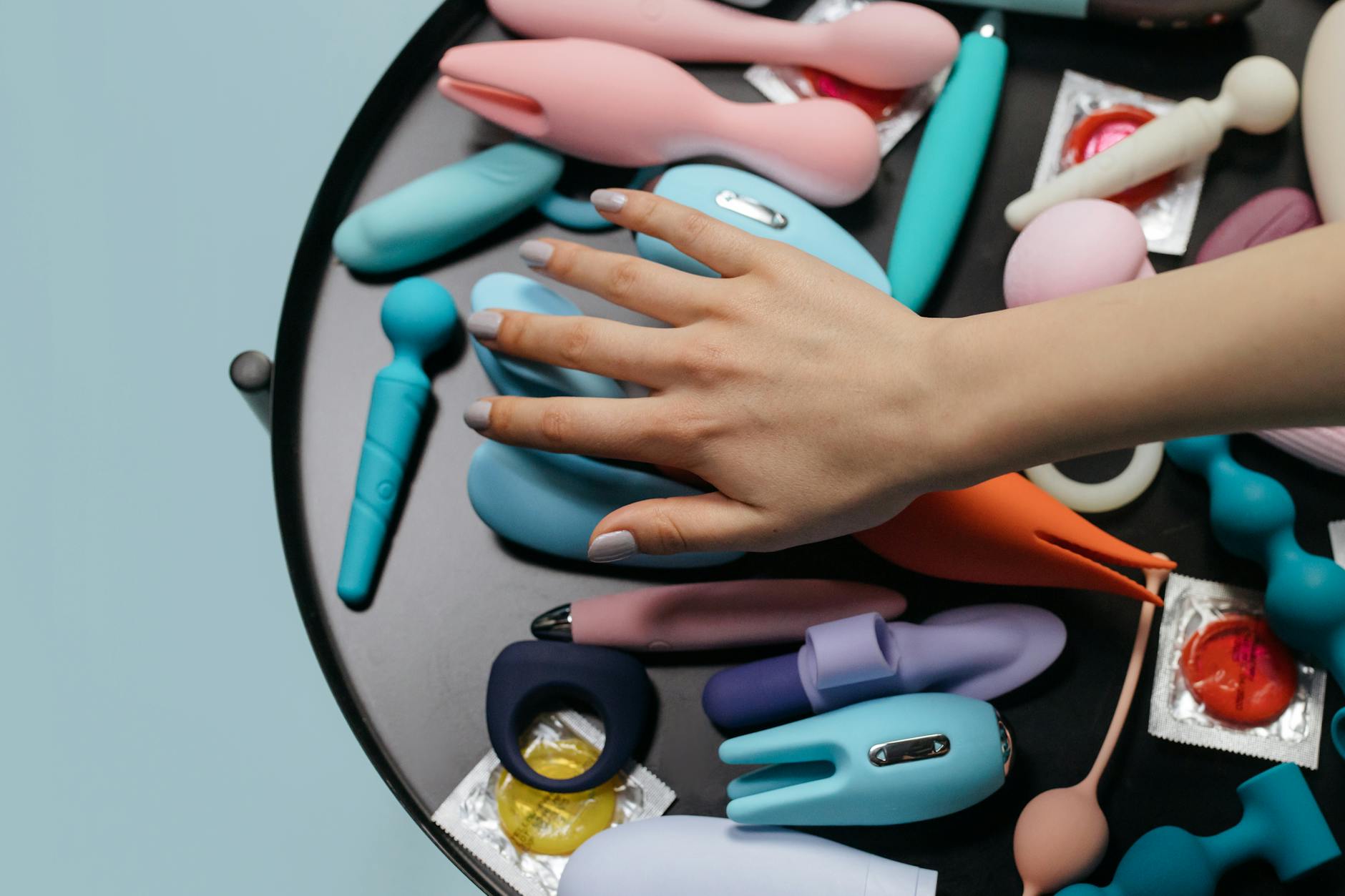
Lemon vibrators can help. Not as a substitute for the conversation you need to have, but as a practical tool that lets both partners actually enjoy physical contact without one person performing desire they don't feel.
Desire lives on a spectrum, and most long-term couples don't sit in the same spot on that spectrum. Biology plays a role. Stress plays a role. Past sexual experience plays a role. How safe you feel with your partner plays a role. Hormones, medication, sleep deprivation, work pressure, and whether you feel emotionally connected right now all feed into whether you want sex today.
Here's what almost never actually causes it: your partner stops finding you attractive. Or your relationship is fundamentally incompatible. Those things happen, sure, but most couples think they have those problems when what they actually have is a logistics problem disguised as a desire problem.
When one partner is higher desire and the other is lower desire, the lower-desire person starts to feel like a gatekeeper. The higher-desire person starts to feel perpetually rejected. Then even neutral physical contact feels charged with negotiation. You stop touching casually because it might lead to sex and all the baggage around that.
A lemon vibrator breaks that cycle because it gives the lower-desire partner a way to participate in pleasure without the pressure of needing to sustain arousal, perform orgasm, or extend an encounter beyond what they genuinely want.
Don't just show up with a lemon clitoral vibrator and expect your partner to understand what you're doing. You're going to accidentally say "I want to use this because you're not enough" even if you don't mean that at all.
Instead, frame it like this: "I've been thinking about how we could both feel better during sex. What if we used a toy sometimes so you could enjoy yourself without having to do all the work? That way we could actually connect more often instead of this thing where one of us is always compromised."
The key is separating two conversations. Conversation one: "Our desire levels don't match and that's normal and we need to talk about it." Conversation two: "Here's a practical tool that might help us both feel good." Most couples try to have those conversations simultaneously and it blows up because the emotions are too high.
Have the first conversation without any toy in sight. Let your partner say what they actually feel. Listen. Don't defend. Then, after that's sitting with both of you for a few days, bring in the tool.
A lemon vibrator (sometimes called a lemon sucker or lemon sexual toy) works through air-pulse suction, not vibration. That matters because it's fundamentally different from what fingers or a penis can do. It's also not going to feel like a "replacement" for the other person's body the way a traditional vibrator might.
For the lower-desire partner, that means less pressure to stay aroused for a set amount of time. You can use it for five minutes or 25 minutes, whatever you actually want. No performance required. The sensation is different enough that it often feels easier to orgasm with a lemon vibrator than it does with your partner's direct stimulation, which means less time spent chasing an orgasm you're not sure you want anyway.
For the higher-desire partner, you get to actually have sex or partnered play more often, and you're having it with someone who's genuinely interested instead of someone performing interest out of obligation. That changes everything about how the experience feels.
You can also use a lemon vibrator together in ways that feel collaborative rather than one person doing something to another. One partner can use it while the other person is inside them. One partner can use it on the other during foreplay. One partner can use it solo while the other partner is there, close, making eye contact. These are all ways to be sexual together without the pressure structure that usually accompanies partnered sex.
If you're new to lemon clitoral vibrators, start slow. The lower-desire partner should get to control it. Not as punishment, but as permission. You get to say how much sensation you want and for how long.
Set a time frame if that helps: "Let's have 20 minutes together where you can use this or not, whatever you want." That containment actually reduces pressure because both people know it's not going to extend infinitely.
Start at a lower intensity. Most lemon vibrators have several intensity levels. The point is not to race to orgasm. The point is to figure out what actually feels good without an audience in your head telling you that you should want something different.
If the higher-desire partner is being touched at the same time, there's a collaboration happening that's different from "you do this and I'll just lie here." Maybe one person uses the lemon vibrator while the other person is touching their breasts, or their inner thighs, or just holding them. The physical closeness matters more than the sex mechanics.
Let's be honest: sometimes the lower-desire partner doesn't want sex at all. Not even a little. They're touched out or tired or dealing with something that's killed desire completely. A lemon vibrator isn't going to fix that, and I don't want you to think it will.
But here's what it can do. It can let the higher-desire partner have a release that includes the other person's presence without requiring the other person to want sex. One partner can use it while the other person is there, maybe not even touching, just present. That's not the same as the full sexual experience, but it's not the same as being pushed away either.
That said, if one person has zero desire for an extended period, that's a conversation that needs professional support. It could be medical. It could be relationship dynamics. It could be unprocessed trauma. A sex toy is not going to resolve any of that. When anxiety gets in the way, sometimes the real issue is deeper than mechanics.
Don't skip this part. Afterward, when you're both calm and clothed, ask questions. "How did that feel?" "Would you want to do it again?" "What would make it better next time?" The lower-desire partner needs to know you're genuinely interested in what they experienced, not just checking a box.
If it didn't work, that's information too. Maybe the toy didn't feel good. Maybe the context didn't work. Maybe you need to try a different approach. The point is that you're treating your lower-desire partner as someone whose experience matters, not as someone you're trying to convince.
Over time, if you keep having this conversation, something shifts. The lower-desire partner stops feeling pressured because they can see you're not trying to fix them or trick them into wanting sex. The higher-desire partner stops feeling resentful because they're actually getting to have partnered physical experiences again. Neither person is performing. Both people actually want to be there.
That's the goal. Not more sex. Better sex, with more honesty in it.
If mismatched desire is the only problem in your relationship, tools like lemon vibrators can genuinely help. But if desire mismatch is actually a symptom of something deeper, you need to address the root.
Talk to a sex therapist or relationship counselor if: one partner has completely withdrawn from physical intimacy for months, there's infidelity or a trust break, one person feels coerced or pressured regularly, or the desire mismatch is part of a pattern of control. Those situations need human expertise, not toys.
For typical desire mismatch in an otherwise-solid relationship, lemon vibrators and honest conversation can genuinely change things. Try it. Talk about it. Adjust. Try again.
Start outside the bedroom. Not right before sex, and not right after rejected sex. Pick a calm moment and use "I" statements: "I've noticed our desires don't match and it's making me feel disconnected." Avoid blame. The goal is information sharing, not accusation. Your partner didn't choose to want less sex. You didn't choose to want more. It's a mismatch, not a failure.
No. If your relationship has been sexless for a year or more, the problem is usually emotional distance, not logistics. A toy won't rebuild that distance. You need to understand why sex stopped. Was there an injury, a betrayal, a shift in attraction, unresolved conflict? A lemon vibrator is a tool for couples who want sex but struggle with frequency or pressure. It's not a fix for couples who don't want sex with each other.
That's the conversation you have before you introduce the toy. Frame it clearly: "This isn't about you not being enough. It's about finding a way we can both feel good without one of us performing desire we don't actually feel." If your partner still feels threatened, that's deeper work. You might benefit from a sex therapist who can mediate that conversation and help him or her understand that toys are not replacements, they're additions.
There's no "should." If using it twice a month helps both of you feel connected, that's perfect. If it's weekly, that's also perfect. The point is that it's on the table as an option that makes both people feel good. Some weeks you'll use it, some weeks you won't. The key is that it's available without negotiation or pressure.
Respect that. Forcing or pressuring someone into using a toy, even a really good one, will backfire. Instead, ask if there's something else that might work. Maybe they want longer foreplay. Maybe they need less frequency but better quality. Maybe they need to feel more emotionally connected before sex. Listen to what they actually want instead of pushing a solution that works in theory.
Partially. If one partner wants penetration and the other doesn't, there are techniques where a lemon vibrator lets both people get what they want without compromise. But if the gap is wider, you might need more complex conversations about boundaries and what's actually negotiable.
Mismatched desire is solvable. It requires honesty, a willingness to see your partner's perspective as valid even if it's different from yours, and practical tools that make compromise actually feel good instead of like sacrifice. A lemon vibrator is one of those tools. Use it as part of a bigger conversation, not as a replacement for one.
Your partner's pleasure matters. Your pleasure matters. And a relationship where both people actually want to be there sexually is not a luxury. It's foundational. Start talking about it.