Here's what nobody tells you about angle
Most people think the clitoris is one button. It's not. It's an entire organ, most of it hidden under the hood. The visible part is maybe a third of the actual structure. Which means where you point your lemon vibrator matters wildly more than how hard it vibrates.
I've worked with hundreds of people who spent years thinking they had low sensitivity, when really they were just aiming at the wrong angle.
The clitoris is bigger than you think
The clitoral complex extends internally in a wishbone shape, with bulbs and crura running along both sides of the vaginal opening. The external tip we usually call the clitoris is technically the glans. The shaft sits underneath the hood.
Why this matters: if you're only stimulating the glans head-on, you're missing the shaft, the hood, and the entire lateral surface. A lemon clitoral vibrator like the Lem works best when you're engaging multiple zones, not just pressing down on the tip.
Think of it this way. If the glans is a cherry, the entire clitoral complex is a bunch of grapes. Your vibrator should be exploring the whole cluster.
The five angles that unlock sensation
Angle 1: Dead center (12 o'clock). Direct stimulation of the glans head. This is the most intense and often the fastest route to orgasm. It's also the most likely to become numb if you stay here too long. Use this angle to build momentum, then rotate.
Angle 2: The hood approach (11 and 1 o'clock). Instead of going straight down the center, approach from the sides with the hood still covering the glans. This is less intense but wider in sensation. Many people with sensitive tissue prefer starting here because there's a buffer layer.
Angle 3: Lateral shaft (3 and 9 o'clock). Move to the sides of the entire clitoral structure. You're not on the glans anymore; you're alongside the internal crura. This angle feels different. Wider, deeper, less sharp. Some people find their strongest orgasms here.
Angle 4: The tilt (30-degree angle from center). This is a hybrid. You're hitting the glans but at an angle, so you're also catching the hood and the upper shaft. It spreads sensation rather than concentrating it. It's less overwhelming than dead center but more focused than pure lateral.
Angle 5: The upstroke (10 o'clock to 2 o'clock, moving). Instead of staying still, trace a small arc along the top edge where the hood meets the glans. You're riding the contour, not pressing into one spot. This takes longer but tends to build more complex, full-body responses.
How pressure changes everything
Angle without pressure is just direction. Pressure is what activates nerve endings.
With a lemon vibrator, you've got three pressure zones: feather (barely touching), medium (steady contact), and full (pressing down as if you wanted to move the skin). Most people default to full pressure because it feels like "more." It's often actually less.
Here's the counterintuitive bit: feather pressure with the Lem's suction mechanism often produces stronger sensation than medium or full pressure. The suction cup creates its own kind of intensity. You don't need to press hard to activate it.
I recommend starting at feather pressure with the angle positioned at 2 o'clock (off-center) and gradually increasing pressure while keeping the angle constant. You'll feel the point where sensation sharpens. That's your sweet spot for that angle.
The clock method for finding your pattern
Imagine your clitoris as the center of a clock. Twelve is straight up (toward your body), six is toward your opening, three is to your right, nine is to your left.
Start at 12 o'clock for 20 seconds on pattern 1 of your lemon vibrator. Notice what you feel. Move to 1 o'clock, same duration. Continue around, noting which angles create tingle versus ache versus deep pressure versus that specific "oh there it is" response.
You'll probably find 2-3 angles that feel revelatory. That's your map. The rest of your session, rotate between those angles in a sequence. Spend 30-45 seconds at each, then switch before numbness sets in.
The role of the hood
Your clitoral hood isn't in the way. It's part of the anatomy that creates sensation. Some people have hoods that sit higher (less coverage), some lower (more coverage). Neither is better; they're just different.
If your hood sits low, you have two options: work with it by using the hood-approach angles (11 and 1), or gently pull it back with one hand while stimulating with your lemon vibrator in the other. Don't force anything. The goal is access, not discomfort.
If your hood sits high, you can go direct to the glans, but the lateral angles often feel richer because there's more hood tissue to engage indirectly.
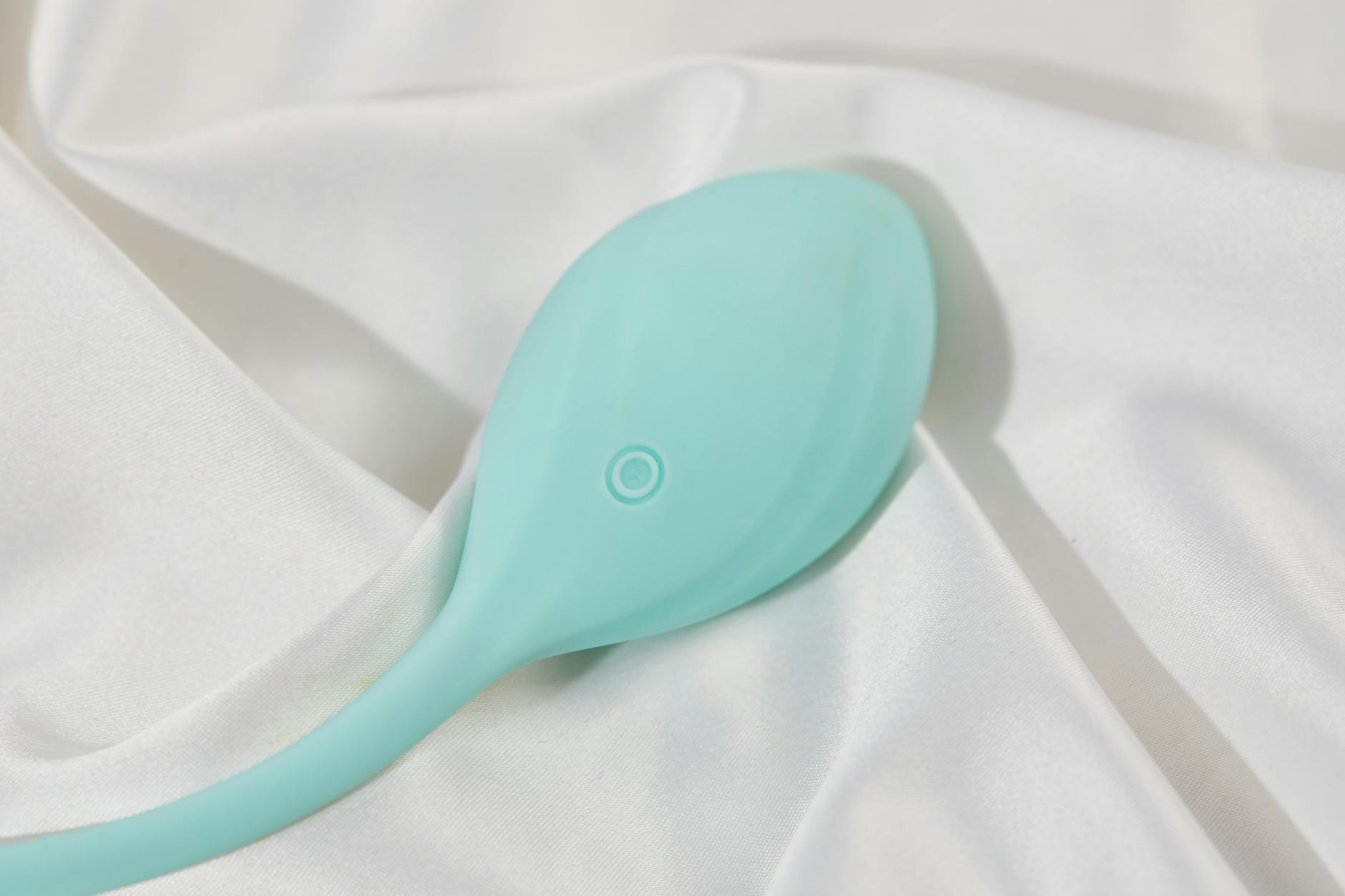
Photo by IFONNX Toys on Pexels
The sensation hierarchy over time
Your body doesn't respond the same way every time. Hormones, stress, hydration, and arousal levels all shift what feels best.
Early arousal (first 2-3 minutes): lateral angles and lower pressure feel good. The glans is often too sensitive at this stage.
Building phase (3-8 minutes): you can increase pressure and move toward the center. The 1-2 o'clock angle often becomes magnetic here.
Pre-orgasm phase (last 2-3 minutes before climax): most people want consistent angle and pressure. Stop rotating. Find the angle that's working and stay with it.
Post-orgasm (if going for multiple): move immediately to a different angle (opposite side of the clock) at lower pressure. The glans will be sensitive. Give it different input.
This isn't a rule; it's a pattern I've seen repeated. Your body might have its own sequence. The point is to notice the shift and adjust accordingly.
Integration with a partner
If you're using a lemon sucker with a partner, the angle conversation matters even more because they can't feel what you're feeling.
Start by showing them the clock method on yourself, even just pointing. "Right now, 1 o'clock feels best." Let them hold the vibrator while you guide it. After 30 seconds, you guide again. This is a conversation, not a performance.
Partners often assume harder = better. It doesn't. A partner who understands that you're exploring a 1-2 degree angle shift, not increasing speed, is a partner who's learning your actual body. That's worth the slightly awkward conversation upfront. If you're looking to navigate this together, our guide on how to use lemon vibrators with a partner for the first time covers the communication part.
What happens when you've found your angle
Once you know your angles, pleasure becomes more reliable. You're not hunting. You're executing.
But sensation still evolves. Your body changes. What worked at 25 might be different at 35. Pregnancy, birth, hormonal shifts, aging, medications—all of these shift what feels good. That's not a regression. It's an invitation to explore again.
The lemon vibrator framework—angle, pressure, duration—works whether you're starting fresh or relearning your body after a transition. The technique is the same. Only the specific angles change.
How lube affects angle and sensation
A good water-based lubricant changes how the lemon vibrator glides. More friction without lube; smoother glide with it. This affects which angles feel stable.
Without lube, you might prefer angles that create a bit of grip (lateral angles with medium pressure). With lube, even light pressure produces sensation because the tool moves smoothly. You can use feather pressure on nearly any angle.
Start dry, add lube if sensation flattens, and notice the difference. That feedback teaches you about your own sensitivity and preferences.
FAQ
What if the straight-on angle never feels good?
Some people's anatomy just doesn't respond to direct glans stimulation. Neither lateral angle does, and that's completely normal. Your strongest sensations might live entirely in the hood area or at one specific angle (3 o'clock, consistently). That's your blueprint. You're not broken; you just have a narrower angle range than others. Once you find it, sessions become predictable and satisfying.
Can I damage my clitoris by using the wrong angle?
No. Nerve tissue isn't fragile in that way. What can happen is numbness from overstimulation in one area, which is why rotating angles matters. If you spend 20 minutes at 12 o'clock, the glans can go numb. That's not damage; it's temporary desensitization. Switch angles and sensation returns in minutes. Keep a timer if you're prone to getting stuck in one spot.
Does the angle matter less if I use lower settings on the Lem?
Actually, lower settings make angle matter more. At pattern 1 or 2, the sensation is quieter, so precision in positioning becomes the difference between "nothing much" and "oh wow." At higher patterns, the vibration intensity can overcome mediocre angle. But if you want reliable, repeatable pleasure, learn angle on lower settings first. You'll have a more durable skill.
Is there an angle that works for everyone?
No. What does work universally is the clock method as an exploration tool. Two people might find 2 o'clock and 9 o'clock as their best angles, respectively. The process is universal; the answer is personal. Spend an afternoon finding yours, and you've solved a year of guessing.
My favorite angle suddenly stopped working. Why?
Hormone shifts, especially around your cycle. Stress and hydration affect sensation too. Medication changes, sleep debt, even caffeine intake can alter sensitivity. Before assuming the angle is broken, ask: what's different in my body right now? Usually, rotating to a second-favorite angle solves it for this session, and the first angle returns next week. Your body isn't inconsistent; it's responsive to context.
Can I combine angles in one session?
Yes. The clock rotation I mentioned earlier is exactly this: spending 30-45 seconds at each of 3-4 angles, cycling through. This creates complexity in sensation and tends to produce fuller orgasms than staying at one angle for the entire session. It also prevents numbing. Rotate every minute, and you'll stay fresh for much longer.
The angle is your most powerful variable
I've coached people who thought their lemon vibrator wasn't working for them, only to discover they'd been positioning it wrong the entire time. One angle shift changed everything.
This is why understanding your anatomy matters. It's not clinical; it's practical. Your clitoris is bigger, stranger, and more capable than you probably think. A lemon clitoral vibrator becomes genuinely transcendent once you stop aiming for one spot and start exploring the entire landscape.
Take an afternoon. Map your clock. Find your angles. You've just built a skill that works forever. If you're still exploring what works for your body, how to use lemon vibrators solo for maximum pleasure and comfort walks through the foundation. But angle? That's the upgrade that changes everything.