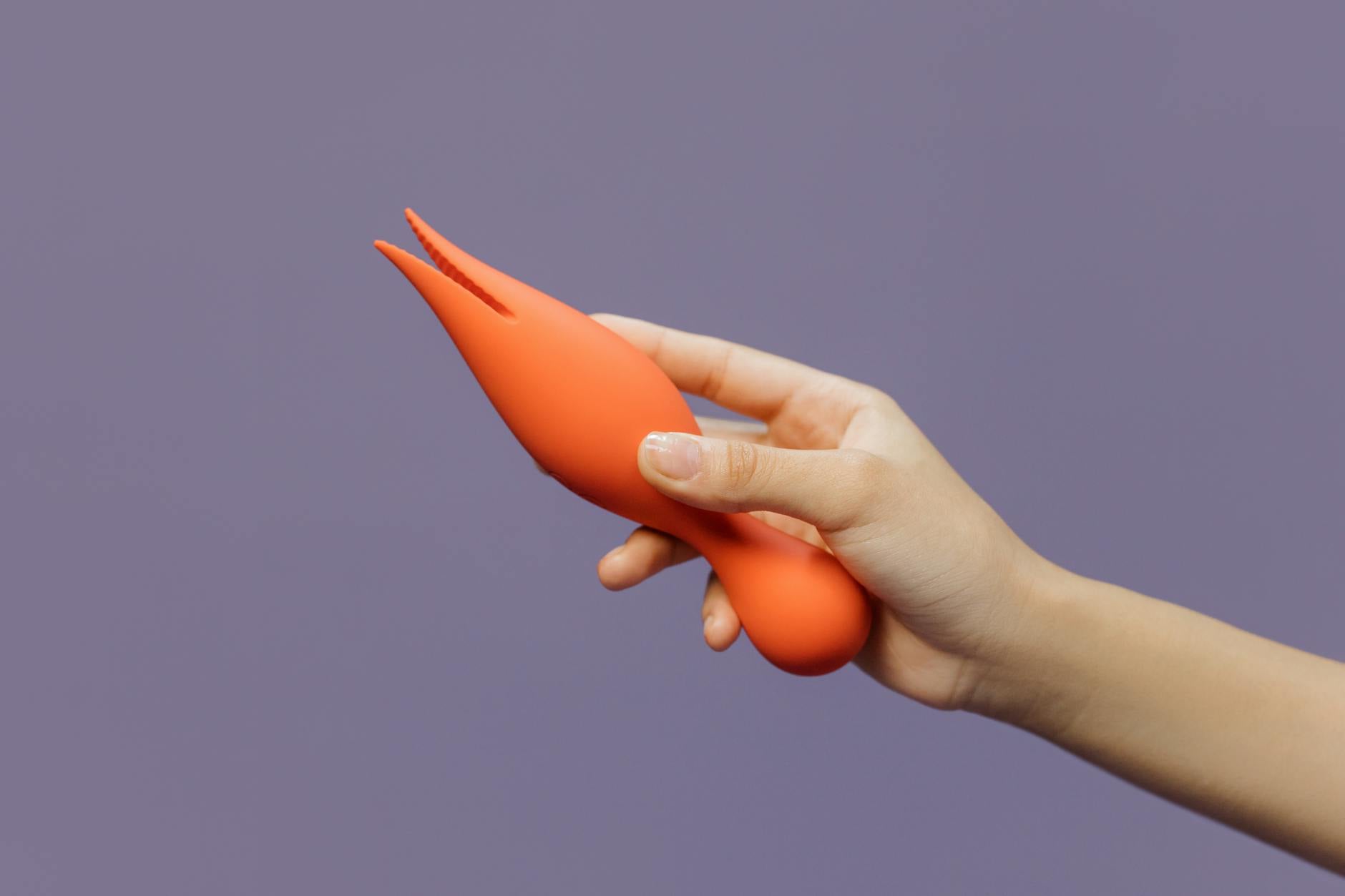
Your clitoris is not static
Here's the thing nobody tells you: your clitoris responds differently to stimulation on day 7 of your cycle than it does on day 21. Not because something's wrong. Because hormones are literally reshaping the tissue, blood flow, and nerve sensitivity. Understanding this changes how you use lemon vibrators, when you use them, and whether you're chasing an orgasm that won't come or one that's just waiting for the right setup.
I'm not talking about mood swings or bloating. I'm talking about the actual architecture of pleasure shifting week to week.
What estrogen and progesterone do to clitoral tissue
Estrogen peaks around ovulation. When it does, blood flow to the clitoris increases, tissue swells slightly, and nerve endings become more sensitive. This is why many people find that the days before ovulation feel electric. Your Lem vibrator might feel intense those days, even on a lower setting.
Progesterone rises after ovulation and stays elevated through your luteal phase (the second half of your cycle). Progesterone doesn't amplify sensation the way estrogen does. It can actually dampen it. The clitoral tissue firms up a bit, swelling decreases, and sensitivity drops. This is why that same vibrator setting feels gentler, or sometimes too gentle, in week three.
Then menstruation arrives, hormone levels bottom out, and everything resets.
This isn't a flaw in how lemon sexual toys work. It's just biology. Understanding it means you stop blaming yourself or the toy when what's actually happening is a simple phase shift.
Why sensation feels sharper around ovulation
During the follicular phase (cycle days 1 through ovulation), estrogen rises steadily. Your clitoris engorges with blood. The outer folds become more pronounced. Nerve sensitivity increases.
Most people find that orgasms around ovulation are easier to reach, more intense, and sometimes arrive multiple times in a session. This is the phase where a lemon clitoral vibrator on pattern 3 or 4 feels absolutely perfect. You might be tempted to stay there all month. You won't be able to, and that's okay.
The kicker: increased sensitivity also means increased vulnerability to overstimulation. If you're someone who likes pressure, ovulation is your jam. If you're someone who prefers gentleness, you might want to dial back intensity those days, even though you could probably handle more. Your clitoris is telling you something about what it needs.
The luteal phase slowdown is real
After ovulation, progesterone climbs and estrogen starts a gentle decline. The clitoris de-engages slightly. Blood flow normalizes. Nerve sensitivity moderates.
This is also when many people report that arousal takes longer to build, and orgasms require more direct, focused stimulation. The air-suction design of lemon sucker vibrators becomes especially valuable here because the suction mechanism doesn't rely on a user building momentum through friction. It does its work steadily, regardless of how quickly your body is responding.
Some people mistakenly think something's broken when their usual routine stops working in the luteal phase. Nothing's broken. Your body's asking for patience and consistency, not intensity and variety.
Menstruation changes the game yet again
Once bleeding starts, hormone levels crater. Progesterone and estrogen both drop sharply. The uterus is shedding its lining, and pelvic blood flow increases overall.
Many people report heightened sensitivity to clitoral stimulation during menstruation. Others find it uncomfortable. Some feel nothing different. The variation is huge because baseline hormones are tanked, and individual sensitivity to hormonal shifts is genuinely different person to person.
If you want to use lemon vibrators during your period, water-based lubricant becomes even more important because menstrual fluid alone might not provide enough glide, and you're not menstruating the entire month (that's only three to seven days, typically). A good lube bridges that gap.
Also worth knowing: you can absolutely use any Lem vibrator during menstruation. It won't make your period heavier or change your flow. That's a myth with zero medical basis.
How to track what works for you
The first month you start paying attention to this, keep a simple note. Nothing obsessive. Just three things: the day of your cycle, which pattern you used on your Lem vibrator, and how that felt (easy, hard, numb, perfect, too much, too little).
After two cycles, a pattern emerges. You'll know that days 10 through 15 are your sweet spot for patterns 4 and 5, and days 20 through 27 need pattern 2 or 3. You might find that your menstrual days prefer a specific setting that feels nowhere near comfortable other times.
This isn't about optimization. It's about literacy. Knowing your cycle is knowing yourself.
Lube strategy shifts by cycle phase
Water-based lubricant is always safe with lemon clitoral vibrators, but the amount you need changes. Around ovulation, your body produces more natural lubrication, so you might need barely any added lube, if any.
In your luteal phase, a more generous application helps significantly. Not because you're dry or broken, but because less blood flow to the area means less natural lubrication. A quick application transforms the experience from friction-y to smooth.
During menstruation, if you're menstruating and using a vibrator, lube again helps tremendously. Menstrual fluid isn't the same as arousal lubrication, and adding a thin layer of water-based lube removes any sensation of friction entirely.
This is why understanding your cycle transforms how you use any clitoral vibrator, especially one like the Lem that relies on direct contact.
When hormonal shifts are extreme
If your clitoral sensitivity or arousal response varies wildly across your cycle, that's often just how your particular biochemistry works. Some people are hormonal responders; some barely notice the shifts.
But sometimes wild swings signal something else: PMDD, thyroid issues, or other hormonal imbalances. If your pleasure map becomes chaotic (like, never the same twice, no patterns, unpredictable discomfort), it's worth checking in with a doctor. You're not broken, but something might need attention.
The case for cycle syncing your pleasure
Here's what I've learned from years of talking to people about this: syncing your pleasure routine to your cycle isn't about forcing your body into a schedule. It's about listening to what your body is already trying to tell you.
During the follicular phase, your brain has more dopamine and norepinephrine. You're more exploratory. That's the phase where trying new patterns on your lemon vibrator, or inviting a partner to learn your body with you, actually lands differently. You're wired for novelty.
During the luteal phase, your brain favors serotonin and GABA. You want consistency, safety, reliability. The same comfortable pattern on your Lem feels like home. There's nothing boring about that. It's physiology supporting what you actually want to do.
Working with that, instead of against it, means more pleasure with less fighting.
FAQ: Hormones and lemon vibrators
Why does my Lem vibrator feel numb during my period?
Your period itself doesn't cause numbness, but the hormonal crash that comes with menstruation sometimes mutes clitoral sensation temporarily. This is normal. It typically returns within a few days as estrogen starts rising again in your follicular phase. If numbness persists beyond a week into your cycle, or if it happens in other phases too, talk to a doctor. Sometimes low iron during heavy bleeding can temporarily affect sensation.
Can I use air-suction lemon clitoral vibrators safely around ovulation when sensitivity is highest?
Completely. In fact, many people find that the suction mechanism of devices like the Lem is excellent around ovulation because it delivers consistent, even stimulation without requiring you to do the work of building friction. If you're worried about overstimulation, start on a lower pattern and work up, just like any other time. Your body will tell you what it wants.
Does hormonal birth control change how lemon vibrators feel?
Yes, significantly. Hormonal birth control (the pill, the patch, the ring) suppresses the hormonal peaks and valleys of a natural cycle. People on hormonal birth control often report that their clitoral sensitivity feels more stable throughout the month, which is a genuine benefit. Some find lemon sucker vibrators work even more consistently because there's no weekly adjustment needed. Others miss the intensity of ovulation. Both responses are common and valid.
What if my cycle is irregular? How do I track what works?
Instead of tracking by cycle day, track by sensation and hormonal markers. When do you notice your cervix feels higher? That's often ovulation time. When do you feel bloated or notice breast tenderness? That's usually luteal phase. Use those markers instead of calendar days, and track which lemon vibrator patterns feel best during each phase. You'll build a map even if your cycle is unpredictable.
Is it normal for orgasms to feel different on different days?
Completely normal. Orgasm intensity, type (clitoral vs. blended), and ease of reaching orgasm all shift across your cycle. Around ovulation, orgasms often feel sharp and powerful. In the luteal phase, they might feel deeper, more full-body, or take longer to build. Neither is better. They're just different expressions of your body's capacity for pleasure.
Do I need to change lube brands during my cycle?
No. A single water-based lube works all month. What changes is the amount. Around ovulation, you might use almost none. In the luteal phase and during menstruation, use more generously. The quality of the lube stays the same. The application just shifts.
Your cycle is a feature, not a bug
For years, the narrative around hormones and sex has been: they get in the way. Your period makes you less interested. Hormones make you moody. The messaging is basically that your cycle is something to work around, not work with.
That's garbage.
Your cycle is information. It tells you when your body wants exploration and when it wants consistency. When intensity feels good and when gentleness is the move. When you need lube and when you don't. When a lemon clitoral vibrator is exactly the right tool and when you might want something different.
Understanding this doesn't require an app or a spreadsheet or turning yourself inside out trying to optimize. It just requires noticing. Using your Lem vibrator across a full month and paying attention to what happens. Realizing that the week it feels numb isn't a failure of the toy or your body. It's your body saying something.
Once you start listening, pleasure gets easier. That's the whole story.
For more on tailoring your approach to your body's needs, check out our guide on how lemon vibrators improve with water-based lubricant and our piece on why lemon vibrators work better for sensitive tissue. Both dig deeper into the mechanics of what makes lemon sexual toys so effective across different sensitivities and states.
Have questions about how your cycle affects your pleasure, or how to find the right settings for your body? Get in touch. We're here to help.