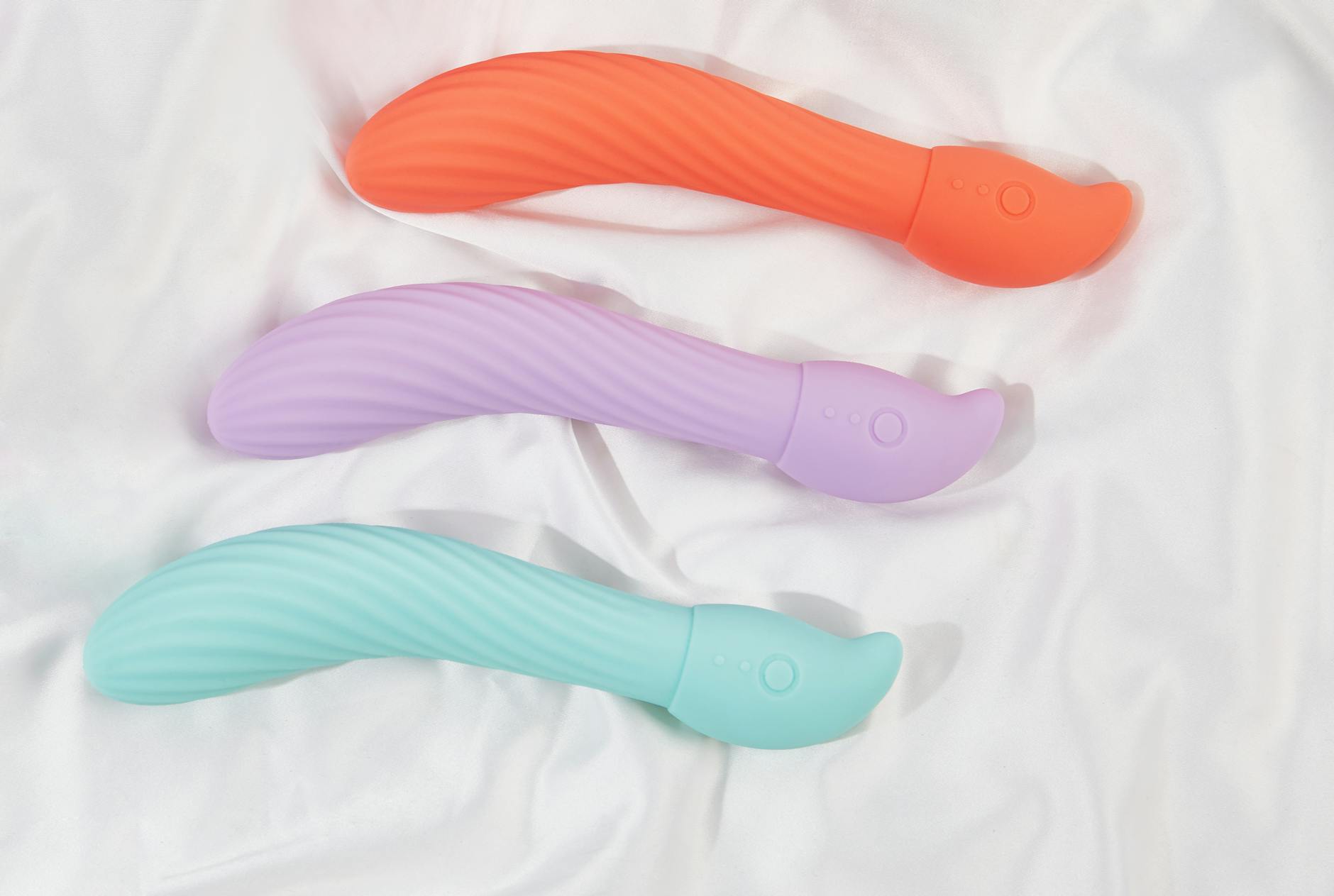
Let's talk about the sensitivity surprise
You'd think menopause would dull everything down. Thinner tissue, lower hormones, less responsiveness. Except here's what actually happens for plenty of people: the clitoris gets sharper, not duller. More reactive. Sometimes almost startlingly so. If that's you, welcome to a club nobody talks about because everyone's too busy mourning hypothetical dryness.
Increased clitoral sensitivity after menopause is real, and it's not a glitch. It's a shift. And if you're using the wrong tool or the wrong settings, it can feel overwhelming instead of amazing.
Why your sensitivity might spike
Here's the weird paradox: while estrogen drops and tissue thins, the nerve density in the clitoral complex doesn't change. What does change is how those nerves respond when there's less cushioning tissue around them. Think of it like turning up the volume on an already-sensitive speaker. The speaker didn't get bigger; the sound just got louder and more direct.
Some research also suggests that post-menopausal clitoral tissue becomes slightly more vascularized, meaning more blood flow. More blood flow can mean faster arousal and more intense sensation. Combined with the mental freedom many people feel after menopause (no fertility clock, no hormonal cycling), the nervous system can actually become more reactive, not less.
This isn't universal. Some people do experience decreased sensitivity. But if you're in the camp where things feel almost too much, you're not alone and you're not broken.
Why lemon vibrators are perfect for this shift
Traditional vibrators rely on direct vibration against the clitoral head. If you're already hyperresponsive, that can feel like someone's jackhammering your nerve endings. Lemon clitoral vibrators work differently. They use gentle suction and air-pulse technology instead of buzzing. The sensation is more like a soft, rhythmic pressure. It stimulates the entire clitoral complex without the same aggressive friction.
This matters because your body isn't asking for more intensity. It's asking for a different kind of intensity. The lem vibrator, for instance, lets you control the exact pattern and rhythm. Start at the lowest setting, and you're working with barely-there waves of sensation. Move up, and you add complexity, not just force.
For post-menopausal bodies with heightened sensitivity, this graduated approach is a game changer. You get to explore what feels good without the risk of that oversaturated, almost painful sensation that can happen with traditional vibrators on max.
The settings that actually work
Forgot the idea that you need high settings to feel anything. You probably don't right now. Here's what I recommend to clients:
Start with pattern 1 or 2. These are the gentlest rhythms. If you're new to air-pulse technology, spend at least five minutes here even if it feels like nothing's happening. Your body's learning the sensation. Then move to pattern 3. Notice where the shift happens, where it starts to feel genuinely good rather than just perceptible.
Most people with post-menopausal hypersensitivity peak somewhere between patterns 3 and 6 on lemon vibrators. Not the top of the dial, not a midrange buzz. A specific sweet spot that lets them feel every nuance without going numb or getting overwhelmed.
One note: the intensity dial and the pattern dial are separate. You can have a complex, interesting pattern at a low intensity. That combination often works better than simplicity at high intensity. Play with that.
Lubrication and warm-up matter more
Even though your clitoris might feel more responsive, you still need good lubrication. This isn't about what you're missing; it's about what makes sensation clearer. Water-based lube creates a smooth glide and helps the clitoral hood move against the vibrator properly. Without it, everything feels sharper and less nuanced, even if you've got sensitivity to spare.
Warm-up also matters. Fifteen to twenty minutes of foreplay or solo exploration before you bring out the lem vibrator lets your body shift into a genuinely aroused state. That makes the hypersensitivity feel purposeful instead of janky. Your nervous system settles, and pleasure becomes more textured.
Many post-menopausal people notice their best orgasms come after patient warm-up, not quick escalation. Your body's asking for attention, not speed.
When you've got a partner
If you're sharing this with someone, here's the conversation that matters: "My sensitivity has changed, and I want to explore what that means." Not apologetically. Not as a problem. As information. Your partner doesn't need to understand the physiology. They need to understand that you might need lower settings, slower escalation, and more time.
Some couples find that using the lem vibrator together is actually easier than penetrative sex post-menopause because the sensitivity isn't about pressure or friction inside. It's about external, controlled sensation that you can guide. That can be genuinely good news for mismatched desire or just for rediscovering pleasure as a team.
Read our full guide on how to use lemon vibrators with your partner for conversation templates that actually work.
Tracking what feels good
Sensitivity is individual and it shifts. What felt perfect last week might feel different next week. This isn't random. It correlates with stress, sleep, cycle remnants (yes, hormonal cycles can persist for a while after menopause officially starts), and just general nervous system tone.
Keep a low-key mental note: what patterns worked? What time of day? How much warm-up time? Was lube involved? You're building your own map of your body. That's where actual pleasure comes from, not generic advice about settings.
Many people find they're more reactive in the morning or after stress relief, and less reactive when they're tense or tired. This is normal. Hypersensitivity doesn't mean constant high arousal. It means your nervous system has a narrower range between nothing and too much.
When sensitivity veers into pain
There's a line between heightened sensation and actual pain. If you're experiencing sharp, shooting pain or burning, that's worth mentioning to a doctor. Genitourinary syndrome of menopause (GSM) can actually coexist with hypersensitivity, and topical estrogen cream can help recalibrate the tissue.
Also, some medications that people take for other post-menopausal stuff (certain anxiety meds, some blood pressure meds) can weirdly amp up genital sensitivity. If you've recently started something new and suddenly everything feels too much, mention it to your prescriber. Sometimes a dosage shift or a different class of drug makes a difference.
But ordinary heightened sensitivity? That's usually just your nervous system recalibrating. Uncomfortable sometimes, sure. But not concerning. And absolutely workable with the right approach.
What this actually means for pleasure
Post-menopausal hypersensitivity gets framed as a problem because menopause gets framed as loss. But increased clitoral reactivity paired with mental clarity and decades of self-knowledge? That's often a recipe for some of the best sex and pleasure of your life. Not because of the sensitivity itself, but because you finally have both nerve and intention aligned.
Lemon vibrators help because they meet you in that sensitivity without fighting it. They let you feel everything without getting numb. They give you control. And honestly, that's what pleasure after forty is really about: knowing what you want, having the tools to get there, and taking your time.
If you're just starting to explore this and aren't sure what device might work, check out our beginner's guide to choosing lemon vibrators. Or if sensitivity after menopause has made intimacy feel complicated with a partner, we have resources on navigating desire mismatch too.
Your body's not broken. It's just different. And different is often better.
People also ask
Can increased clitoral sensitivity after menopause go away?
Usually it stabilizes rather than disappearing entirely. Many people find that after the first year or two post-menopause, their sensitivity settles into a new baseline that feels manageable and even preferable to what they had before. Stress, sleep, and general health still affect it day to day, but the sharp learning curve passes. If it never settles and it's genuinely painful, that's worth mentioning to your doctor. But hypersensitivity itself tends to become part of your new normal, and most people learn to work with it pretty quickly.
Is it normal for my clitoris to feel almost numb some days and hypersensitive others?
Completely normal. Your nervous system isn't a light switch. It's affected by stress, sleep quality, where you are in your post-menopausal cycle (yes, some residual cyclical sensitivity can linger), medications, and just general fatigue. If you're sleeping poorly or stressed, your clitoris might feel duller. After a good night and some relaxation, sharper. This is why tracking what works and being patient with fluctuation matters so much more than finding the one perfect setting and expecting it to work every time.
Will using a lemon vibrator with high sensitivity make me numb eventually?
Not if you use it thoughtfully. Numbness usually comes from over-stimulation at intense levels. Since you're working with lower settings and gentler air-pulse technology, you're actually less likely to develop sensation fatigue than you would with high-intensity traditional vibrators. Give yourself rest days. Vary the pattern. Don't treat the lem vibrator as your only source of stimulation. Paired with partnered touch, manual exploration, and mental engagement, you're unlikely to develop the numb adaptation that comes from repetitive, intense stimulation.
How do I know if my sensitivity is from menopause or from something else?
Timing is your clue. If sensitivity ramped up around the time your periods became irregular or stopped, it's almost certainly hormonal. If it appeared suddenly without any other menopause symptoms, or if it's paired with pain, that's worth checking with a doctor. Vulvodynia (chronic pain or hypersensitivity without an obvious cause) is real and different from post-menopausal sensitivity. But in the context of other menopause stuff, heightened sensitivity is a textbook symptom and nothing to worry about.
Can lemon vibrators help if I have both hypersensitivity and low arousal?
Yes, because the two often go together and they require different solutions. Hypersensitivity without arousal means you need gentler input (which lemon vibrators provide) and more mental engagement and warm-up. The suction technology is less triggering than buzzing, which can help your nervous system settle into genuine arousal rather than shutting down defensively. More time, lower intensity, air-pulse patterns instead of vibration. Your lem vibrator becomes a tool for slow, patient exploration rather than quick climax chasing, which often works better anyway for this exact combination.
Should I see a doctor if my clitoral sensitivity increased after menopause?
Only if it's painful or if it's paired with other concerning symptoms like burning, discharge, or pain during other kinds of touch. Ordinary heightened sensitivity is a normal variation of menopause. Painful sensitivity, though, can be a sign of GSM or another condition that benefits from topical estrogen or other treatment. So yes, if it hurts, mention it. If it's just more reactive than it used to be and not painful, that's just your body recalibrating, and lemon vibrators are honestly perfect for navigating that change.