How to Introduce Lemon Vibrators to Your Partner When You're Nervous About Rejection
Your partner might surprise you. Here's how to bring up vibrators without shame, defensiveness, or awkwardness. A therapist's framework for the conversation you've been avoiding.
It's not the "no." It's what the "no" means. You're worried it means you're broken, that your desires are too much, that wanting more pleasure makes you selfish or unsatisfied with them. None of that is true, but your nervous system doesn't know that yet.
Here's what I've learned from twenty years of relationship counseling: the partners who panic most about this conversation are the ones most afraid of being seen. Once you say "I want to use a vibrator," you can't unsay it. You've just handed someone a piece of your actual desire.
We grow up absorbing a very specific story about female pleasure: it should happen to you, not for you. It should be responsive, not initiatory. And it should definitely never require equipment. Suggesting otherwise feels like admitting failure.
Except it's not. Research consistently shows that how to use lemon vibrators with your partner without awkwardness isn't about dissatisfaction. It's about exploration. It's about knowing your own body well enough to ask for what gets you there. That's actually the opposite of failure.
The nervousness you feel isn't a sign you shouldn't do this. It's a sign that the conversation matters, and that's exactly why you should.
Here's the shift: you're not asking permission. You're offering information.
Instead of "Do you think it would be okay if I..." try "I've been thinking about something that might be really fun for us." The first sounds tentative and apologetic. The second sounds like you've already decided it's good for you, and you're inviting them into that.
Big difference.
Your partner doesn't need to understand why you want this before you introduce the idea. They just need to know that it's something you're curious about, that it isn't about them, and that you want to explore it together. Those three things are enough.
Not during sex. Not when you're angry. Not in the car. Have it when you're both awake, clothed, and not rushed. Sitting on the couch with tea is better than standing in the kitchen before work.
Start with something like: "I've been thinking about something, and I want to talk to you about it without it being weird. Can we do that?" This frames it as something worth a real conversation, not a confession.
Then: "I'm interested in exploring with a vibrator during sex. Not instead of you. With you. I think it could be really fun for both of us."
Stop talking. Let them respond. Don't fill the silence with justifications. That's where people ruin it—they panic and start explaining why they need this, which makes it sound like a problem instead of an opportunity.
If they ask questions, answer them honestly. If they seem uncomfortable, that's okay. Discomfort isn't rejection. It's usually just unfamiliarity. Give them space to sit with it for a day or two before pushing for a yes.
Sometimes partners panic. They might think you're bored, or that they're not enough, or that vibrators are some threat to their ego. All of those are fears, not facts.
If that happens, you can say: "I'm not saying anything is wrong. I'm saying something could be really good. And I want it to be something we do together, not something that feels like it's happening to you."
Then give them time. A week or two. Most partners come around when they realize you're not asking them to disappear from the experience. You're asking them to be in it differently.
If they continue to refuse after a genuine conversation where you've explained what you want and why, that's worth examining deeper. Not because they're wrong to say no. But because your desire to explore your own pleasure deserves to matter in the relationship. If that doesn't happen, that's a relationship issue, not a vibrator issue.
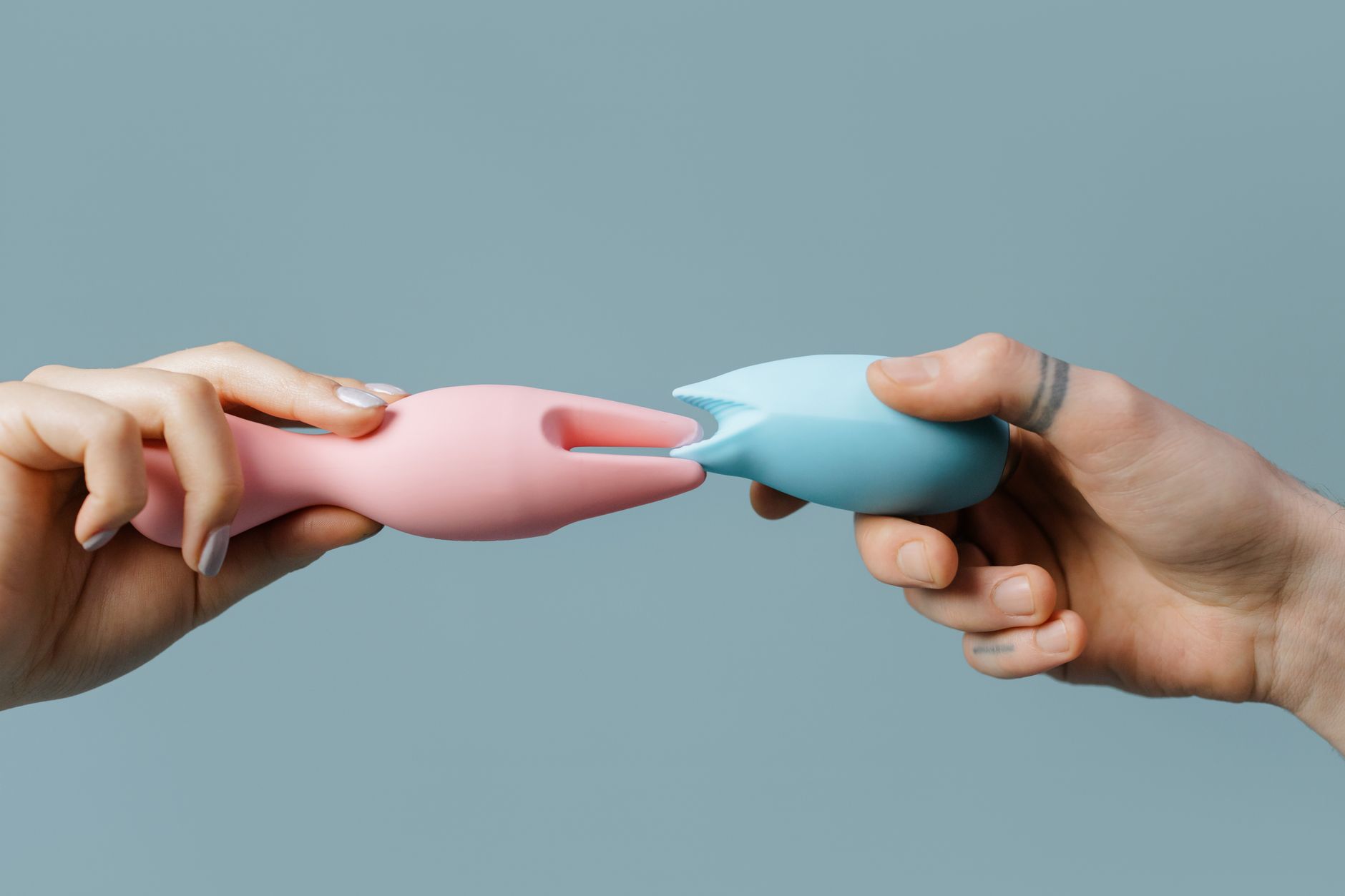
Don't start with something overwhelming. A simple clitoral vibrator like the Lemon works beautifully for couples because it's intentional—you're not replacing penetration, you're adding sensation specifically where it tends to matter most.
Photo by cottonbro studio on Pexels
Show them the device before you use it. Let them hold it. Demystification is half the battle. A Lemon Clit Sucker is just a tool. It's not threatening. It's not a judgment. It's just a thing you're both choosing to explore together.
Start slow. Foreplay, everything normal, and then introduce it when you're already aroused. Let your partner be the one holding it at first if they're willing. That gives them agency and keeps them engaged.
Talk during it. "A little more to the left." "That feels amazing." Narration isn't sexy in movies, but it's essential in real life. It keeps you both present and connected instead of you disappearing into your own experience.
After, check in. Not a heavy debrief. Just "That was good" or "I liked that" or "Let's try that again next time." Short. Simple. It normalizes it immediately.
Sometimes what you're actually nervous about isn't the vibrator at all. It's how to use lemon vibrators when partners have different pleasure speeds, or mismatched desire, or feeling disconnected from your partner entirely. The vibrator is just the vehicle for the conversation you actually need to have.
That's worth knowing. If you get the vibrator and still don't feel connected, then the issue is bigger than equipment. And it's worth addressing separately.
They might say yes and surprise you. They might get excited. They might want to use it differently than you do. That's all fine. The goal isn't a perfect first experience. It's proving to yourself that your desire is valid, that your partner can hear it, and that you can ask for what you want without apologizing.
Once you've had that conversation, something shifts. You're not ashamed anymore. You've been seen, and the world didn't end. Next time you want something, it's easier. Next time, even easier.
That's their fear talking, not reality. You can counter it directly: "This isn't about you not being enough. It's about me exploring what feels good. And I want you there with me." Repeat as necessary. Sometimes partners need to hear it more than once before it lands.
That's actually a good sign. It means they're engaged. You might have preferences about what you want, so circle back: "I appreciate that. I've been thinking about this style because..." You're collaborating, not debating.
Then this conversation is for you both. Tell them your concerns. They might surprise you with understanding. Shared nervousness is actually an opportunity to build trust.
Most partners say yes. Not immediately, maybe. Not without questions. But yes. Because deep down, they want you to feel good. They want you to ask for things. They want to be invited into your desire instead of always being the initiator.
You've probably been waiting for permission that you never needed to ask for in the first place. Your body, your pleasure, your choices. The conversation isn't asking permission. It's just letting someone you love know what you're about to explore.
Start there. Everything else follows.
If you're wrestling with deeper relationship issues around pleasure or connection, reach out. That's what I'm here for.